Single economic area creates chances
In the cement industry of the single economic area of the countries Kazakhstan, Russia and Belarus, comprehensive corporate restructuring measures are being implemented.
The cement industry in Russia
The official representative of the “Eurocement Group” Holding, Alexander Stepanenko, emphasizes that from January to May 2012 the biggest growth in cement production volume was observed at three plants: OAO “Mordowcement” (+ 515 800 t), OOO “Tulacement” (+ 316 600 t) and OAO “Leningradslanets” (+ 281 800 t).
A decrease in production volume was registered for the following plants: OAO “Noworoscement” (- 38 000 t), OAO “Wolskcement” (- 32 800 t) and OOO “Angarskij Cement” (- 27 700 t). “A significant reduction in production rate was only recorded in the southern federal region (- 94 700 t) and in the Dalnewostotschnij federal region (- 28 400 t). No decrease was registered in other federal regions. The largest growth took place in the Priwolzhskij federal region (+ 1 016 900 t), in the central federal region (+ 820 900 t) and in the north-west federal region (+ 500 400 t)” said Stepanenko.
According to the leading expert of the management company “Finam”, Dmitri Baranow, a number of reasons were behind the increase in production. The first reason is the recovery of the construction market sector. Secondly, there had been an increase in the construction volume, particularly in the housing sector. This was reinforced by a number of infrastructure projects that are being implemented in the country. Naturally, the main impetus has been provided by the construction of individual buildings, e.g. the housing renovation sector. Alexander Stepanenko stated that in the past years from 2000 to 2011 the average annual growth in cement consumption in Russia was 7–10 %, despite the global crisis. By 2020, an average annual growth of at least 8 % is to be expected. The growth in capacity corresponds completely to the development of cement demand.
In the course of the 15 years leading up to 2005, the cement production rate of numerous plants had been dropped back, but starting in 2005 production capacities were built up again and construction of new cement plants commenced. By 2012, almost all the previously shutdown capacities had been compensated for and the total growth amounted to 22 million t. It is expected that by 2020 an additional 30 million t of production capacity will have been added. The ZAO “Eurocement Group” alone is planning to add 6 million t, which will account for 20 % of this volume. Forecasts indicate that by 2020 the total volume of production capacities in Russia will exceed the 120 million t mark.
According to the experts of the management company “Finam”, the most important current investment projects that could influence the development of the Russian cement market are finalizing the modernization of kiln line 1 at Spasskcement, which was started in 2009, commencement of construction of Eurocement Holding’s new cement plant in Samara, completion of the “Noworoscement” plant and the forthcoming commissioning of Eurocement’s new, modern production line in the town of Podgorenskij in the region of Voronezh.
Information provided by the “Eurocement Group Holding” shows that at the beginning of 2010 only 15 % of all capacities in the Russian Federation were operating with the energy-efficient dry process. However, by the beginning of 2012 this figure had increased to 19 %. By 2020, the proportion of modern plants will have reached 40 %. In the whole of Russia, modernization of existing plants to the dry process will be an important development aspect.
Cement prices
Imports and exports
The biggest suppliers (accounting for 75.7 % of total imports) were: Turkey (36.6 % of the total volume), Belarus (20.8 %), Iran (6.6 %), Latvia (6.5 %) and Sweden (5.3 %). From January to May 2012, clinker import amounted to 172 600 t, which was 48.2 % more than in the same period of the preceding year. The biggest suppliers of clinker are Estonia (78.8 % of the total volume), South Korea (11.5 %) and Sweden (5.9 %). The biggest consumers of imported clinker in the five months of this year are OAO “Tsesla” (146 200 t) and OAO “Spasskcement” (19 900 t).
Mikhail Rodionow, Assistant Director of the state-owned company “Rusmet” said that so far there has not been any strong competition with regard to imports. “The amount of importation to Russia is relatively small. At present it does not look as if imports will influence the price structure.” He cites Iran as an example. Imports from there has fundamentally been a result of the international sanctions against Iran. Since the IRI banks were excluded from the SWIFT system, it has no longer been possible to pay for Iranian business transactions via the banking system. Invoices have to be paid in cash or via non-resident companies of the IRI, which transfer money without using Iranian banks. “This is one reason why we expect a rise in barter business, for example exchanging semi-finished steel products for cement”, said Rodionow.
Fundamentally, the cement industry in the RF can look forward to a balanced situation up to 2020. “Provided that all the announced plants are started up on time and achieve the expected utilization rate of 65–70 % of installed capacity, it will be possible to realize all the prospective construction projects”, said Alexander Stepanenko. Compared to 2011, the capacity utilization was 67 %, but in the record year of 2007 it had reached 78 %. Cement price rises up to 2020 will be within the range of inflation forecast by the Ministry for Economic Development – around 4 to 6 %.
Kazakhstan reduces its
dependence on imported cement
According to information from the Statistics Agency of Kazakhstan (ARKS), 7.64 million t of cement were manufactured in the country last year. Olga Kijutzina pointed out that this was the peak figure of the last ten years. Compared to 2010, the production volume (Table 1) has risen by 14 %. As a result, the proportion of imports required to cover consumption decreased to 13.6 %. It even proved possible to export a proportion of the Kazakh cement production (approx. 200 000 t/a).
The price of cement in the Republic of Kazakhstan has risen steeply since 2012 – exactly as it has in Russia – and has already exceeded the figures of the same period of last year. In June 2012, the price for one tonne of cement was Tenge 12 577 (approx. US$ 84). In June 2011, it was still at a level of Tenge 10 973 (approx. US$ 73), according to ARKS.
The current total project capacity of Kazakh cement plants is 12.2 million t., while the available capacity (project capacity corrected to the actual current state of equipment) is 7.8 million t. In Kazakhstan there are seven major plants, two of which are new and came on stream in 2010/11: TOO “Mynaral Tas Company” and TOO “Standard Cement”. As Olga Kijutzina explained, Eastern Kazakhstan, where the plants AO “Semejcement” and AO “Buchtarminskaja Cementnaja Companija” are located, is responsible for the greater portion of the country’s cement production volume. The “Central Asia Cement” plant has a market share of around 30 %. In 2009/10, the plant’s lines 5 and 6 were put into service, leading to a doubling of production capacity.
ARKS also stated that in 2013 a further three cement plants will come on stream in Kazakhstan, adding a planned capacity of 2.3 million t. Government plans foresee an annual cement production rate of 19.5 million t of cement up to 2014, while domestic consumption is expected to be approx. 15 million t. However, market experts believe that domestic cement consumption in Kazakhstan will not exceed 13 million t, even given a high volume of construction.
Cement plants in Belarus consolidated into holdings
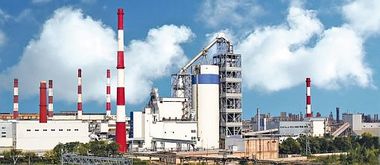
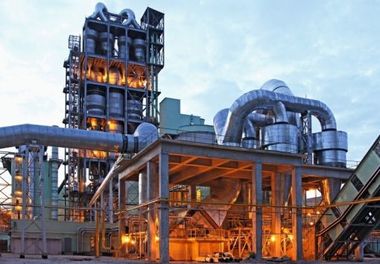
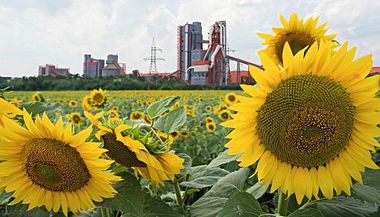
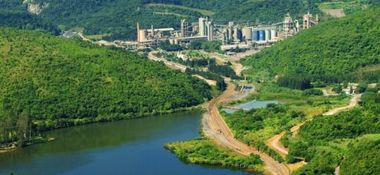
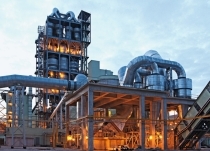
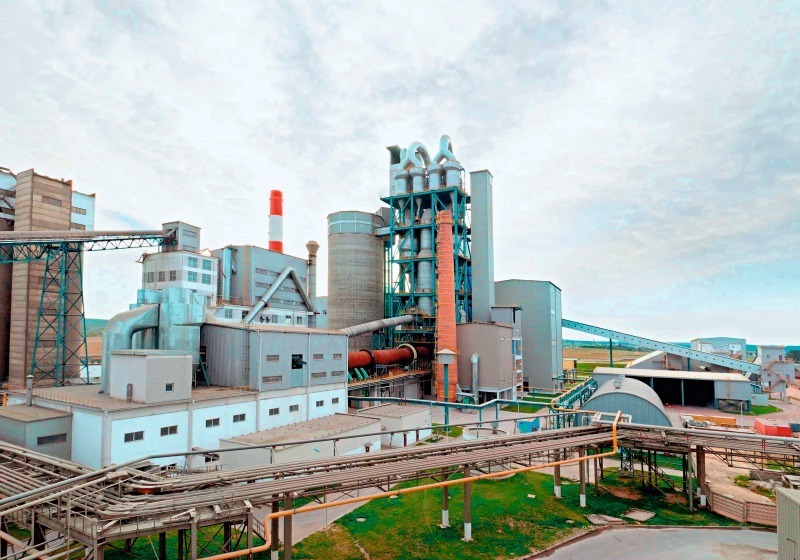
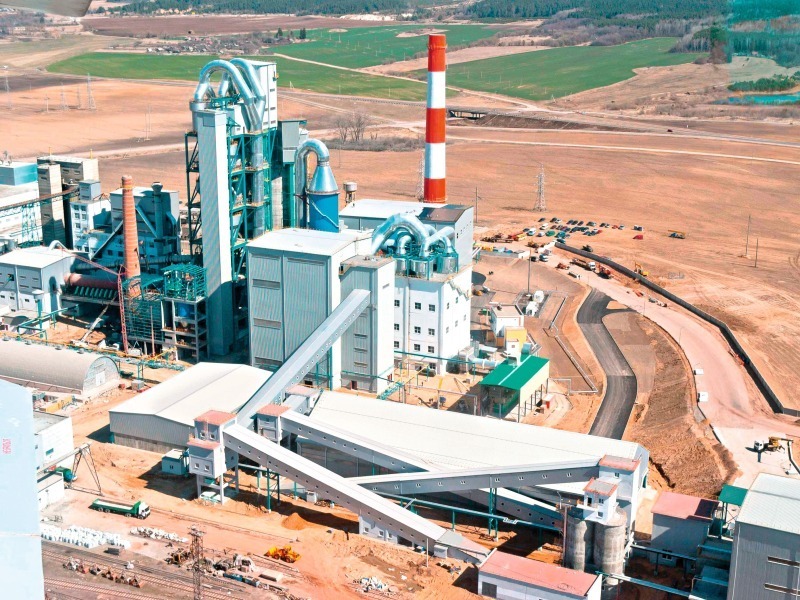
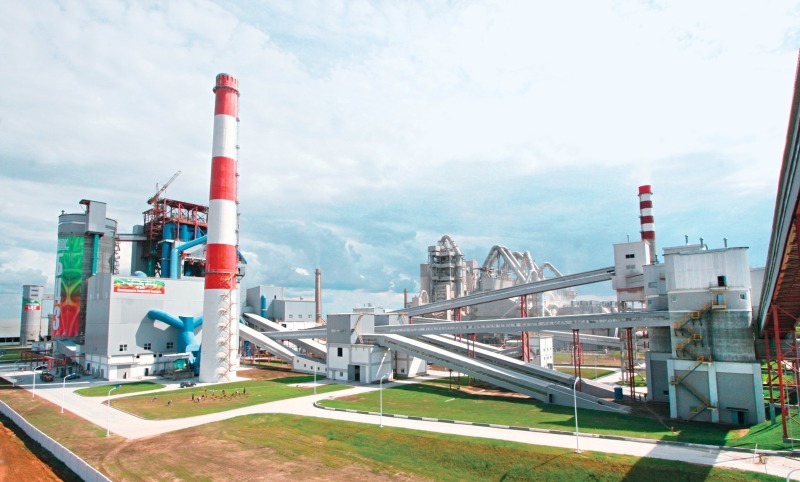
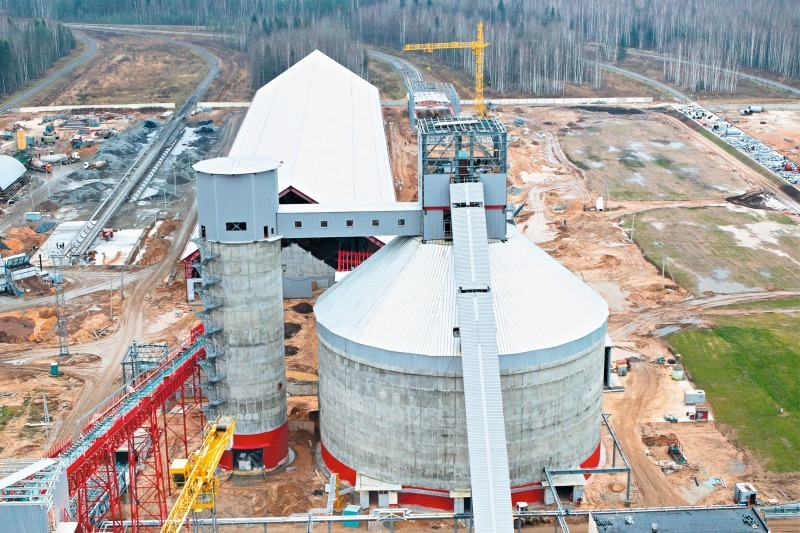
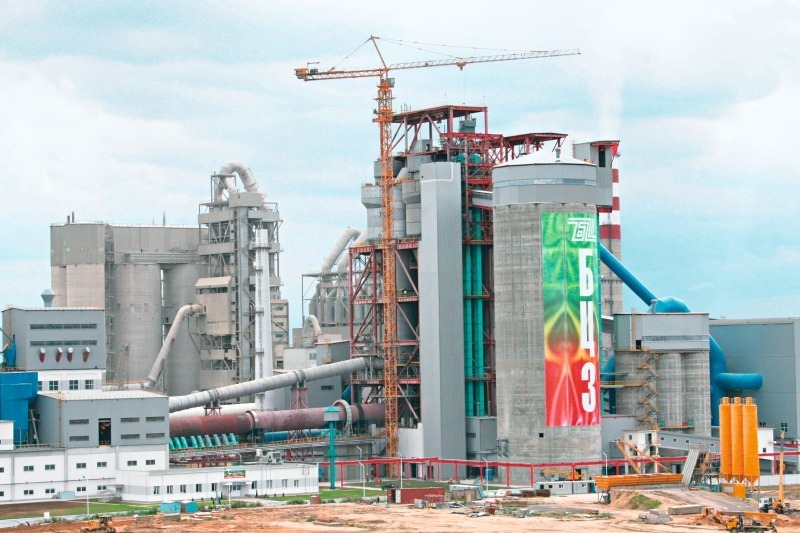
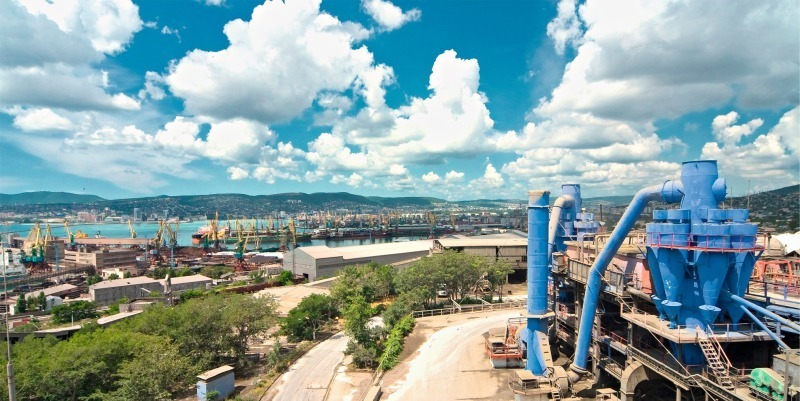
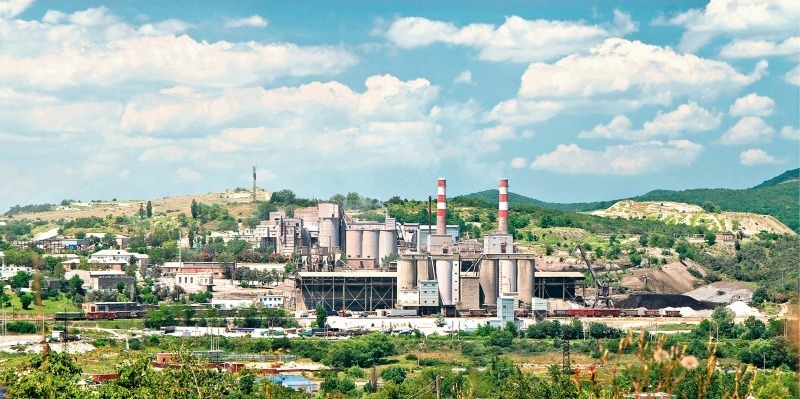
According to the press service of the President of the Republic of Belarus, domestic cement production comes from three companies: “Krasnoselskstroymaterialy” JSC (Figures 1, 2), which supplies 40 % of the total volume, “Belarusski cementni plant” JSC (Figure 3) with 25 % and “Krichevcementnoschifer” JSC (Figure 4) with 35 %.
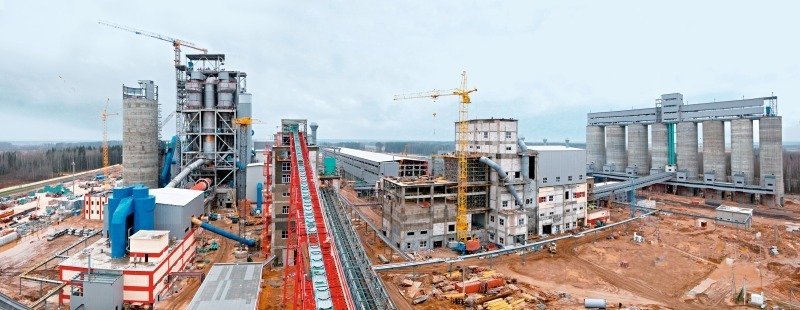
A conference with the President of Belarus, Alexander Lukaschenko, in July 2007 was a turning point in the development of the country’s cement industry. The government was ordered to implement measures for increasing the annual cement production rate of Belarusian companies to 10 million t. The Chinese state-owned corporation CITIC Construction was contracted to implement investment projects for the construction of modern cement production lines with a capacity of 5.4 million tpa (Figure 5). In 2012, two projects were put into operation, and a further one will follow in 2013. It is a noteworthy fact that the main source of financing is granted by the Eximbank of China.
The 2012 planning intended only three Belarusian cement companies which were responsible for a production of 6 million t of cement, whilst 2 million t should be exported. Continuing the announced course of President Lukashenko in 2013 10 million t of cement should be produced, whilst 4.8 million t would be absorbed by the domestic market and 5.2 million t will be exported. For comparison - the volume of cement exports in 2011 just reached the figure of 0.5 million t.
The experience with exportation from the Republic of Belarus could serve as an example for many countries. It is known that the country formerly had controlled around 40 % of the cement market in Lithuania and Latvia, and 20 % of the Polish market. However, when those countries became members of the EU, the Belarusian cement manufacturers faced serious problems with maintaining their position on the markets because the new EU members introduced European standards for cement production. In order to solve this problem, Belarusian specialists took on the enormous task of quickly translating, analyzing and implementing these standards. They managed a successful implementation of EU-Standards for cements and their production methods within a very short period. The cement which is now produced complies with the European standards and occupies markets in Russia and other CIS countries.
One marketing strategy of the Belarusian cement industry was the initiative introduced by the Ministry for Architecture and Building to consolidate cement producing companies into holdings, officially regarded as an additional incentive for foreign investors. The formation of holdings results in economic advantages, principally the capitalization of profits and assets and the reduction of the tax burden. Another benefit gained by formation of holdings is the ability to put property and money to work and to use the profits for investments and for opening up new sales markets.
In June 2012, the Belarusian Deputy Prime Ministers Anatolij Kalinin and Anatolij Tosik met with the managers of the Chinese CITIC Construction Corporation and discussed the possibility of the Chinese company joining one of the construction holdings founded in Belarus. Another option discussed was the founding of a CITIC Construction Bank in Belarus. In order to finance all these and other projects, the parties agreed to consider the establishment of a Belarusian-Chinese investment fund.

Überschrift Bezahlschranke (EN)
tab ZKG KOMBI EN
This is a trial offer for programming testing only. It does not entitle you to a valid subscription and is intended purely for testing purposes. Please do not follow this process.
This is a trial offer for programming testing only. It does not entitle you to a valid subscription and is intended purely for testing purposes. Please do not follow this process.
tab ZKG KOMBI Study test
This is a trial offer for programming testing only. It does not entitle you to a valid subscription and is intended purely for testing purposes. Please do not follow this process.
This is a trial offer for programming testing only. It does not entitle you to a valid subscription and is intended purely for testing purposes. Please do not follow this process.