From empty rules to a legal framework
It was not unusual to face long environmental permitting processes for new projects in Chile at the beginning of the last decade. Waste management related projects were not the exception, and that unknown technology, so called “co-processing” at that time, was even totally unknown or stigmatised.
The Chilean cement industry started to talk about alternative fuels and raw materials (AFR) by the end of the 90’s, but at that time, the concept of “co-processing” was something only understood by the cement industry. Nobody in the public sector could even understand and imagine how cement kilns could...
It was not unusual to face long environmental permitting processes for new projects in Chile at the beginning of the last decade. Waste management related projects were not the exception, and that unknown technology, so called “co-processing” at that time, was even totally unknown or stigmatised.
The Chilean cement industry started to talk about alternative fuels and raw materials (AFR) by the end of the 90’s, but at that time, the concept of “co-processing” was something only understood by the cement industry. Nobody in the public sector could even understand and imagine how cement kilns could burn waste as alternative fuels or raw material, and even more, nobody in the public sector could believe that this was possible in a sound and environmental-ly friendly manner.
So, the first challenge was to show that this was something real and well known in different latitudes, mainly in the developed world.
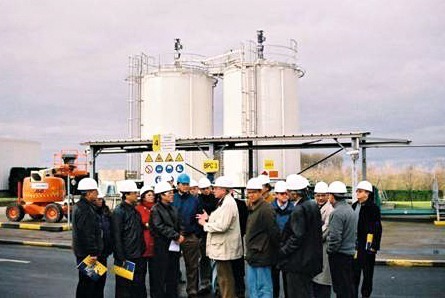
Public-Private efforts started at that time, first with the objective of getting to know the success stories around co-processing in Europe. The company with this objective was the pioneer on this technology, Scoribel/Obourg at Seneffe/Belgium. A multidisciplinary mission was organized from Chile, and a 15 people group had the opportunity to take a flight to Europe with the only target to find out how this was done and controlled.
“Yes, it is real” cement kilns can perfectly process pre-treated waste, using that material as alternative fuel and/or raw material - co-processing is real and is starting to be understood! That first mission was the first inflection point for the public-private co-processing efforts in Chile. After that, permitting processes started to be simplified, and a trustful cooperation started to be the main feeling between authorities and industry.
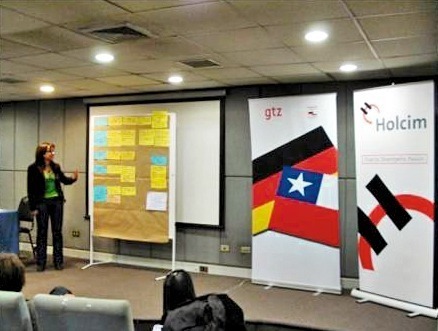
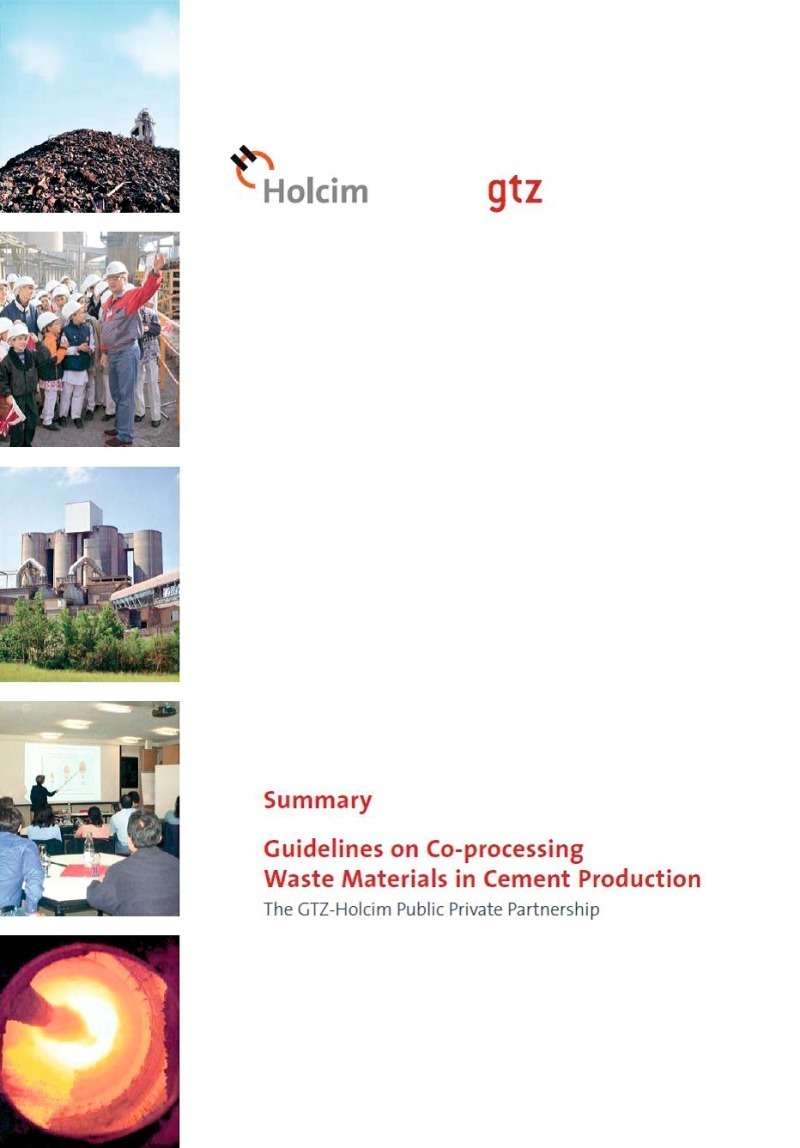
Finally, in 2003 co-processing in cement kilns was recognized as a good option for waste management at country level, but still a lot of questions remain unanswered. These open questions were the starting point for a Public-Private Partnership initiated internationally between the German international collaboration agency GIZ (formerly know as GTZ) and Holcim (also present in Chile), based on international co-processing guidelines elaboration and publication. Chile was one of the four pilot countries for that initiative, with an intensive and diverse stakeholder dialogue which took place as part of that process, finalizing with the publication of the “Guidelines on Co-processing of Waste Materials in Cement Production” (Fig. 1), which is not intended to be a template. However by respecting local country specific peculiarities in general a sound foundation for a trustful cooperation was built.
At the country wide level, this process was the starting point for a second phase at the local level, where again based on public-private collaboration agreements, local co-processing guidelines were elaborated and published.
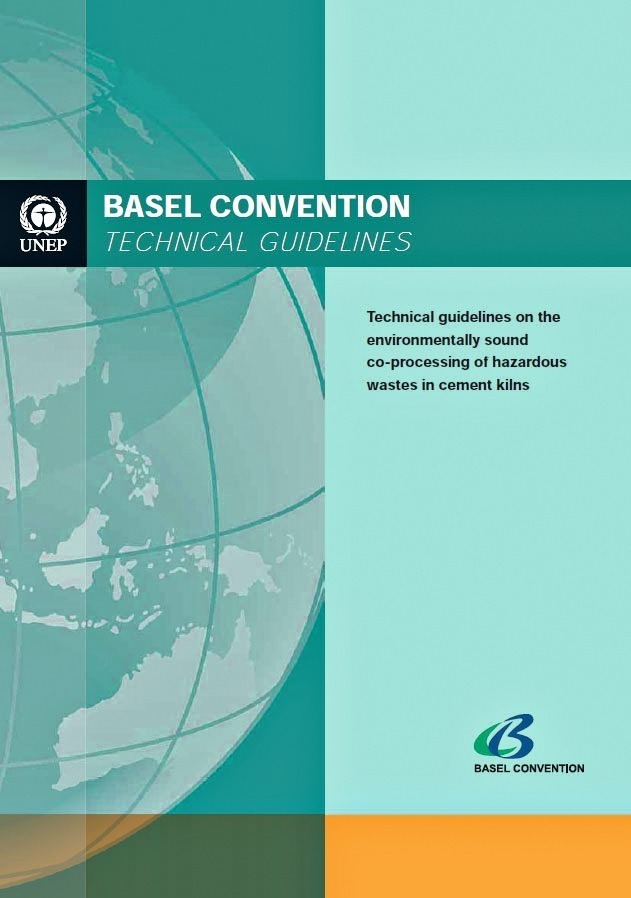
It was 2008, and co-processing was not only accepted and recognized, in Chile it became the preferred option for valorization of waste derived materials in industrial processes. After the decision, to elaborate the international technical guidelines for co-processing the Chilean representative at the IX UNEP Conference of the Basel Convention provided for the preparation of a draft of those guidelines. Chile’s proposal was accepted, and the commitment to draft “the” technical guidelines for co-processing was official. Again, a public-private work-force was conformed to accompany the process, and a senior consultant was contracted to write the guidelines.
After 3 years of intense work on the co-processing guidelines, Chile received international feedback from different countries, and after several drafts, the final version of the guidelines was ready to be discussed during the X Basel Convention Conference in Cartagena de Indias – Colombia.
The guidelines were approved and adopted by UNEP – Basel Convention, and came to be the official UN recommendation for co-processing regulation at a country level (see also //www.basel.int/Implementation" target="_blank" >www.basel.int/Implementation:http://www.basel.int/Implementation/
TechnicalMatters/DevelopmentofTechnicalGuidelines/AdoptedTechnicalGuidelines/tabid/2376/Default.aspx).
In the meantime Chile developed its own legal frame for co-processing, based on these experiences, and focused on emission standards and in comparison with other thermal processes such as incineration and co-incineration. This legal frame was published in August 2013, after a revision process of the previous one, where co-processing was still missing. It is interesting to observe that in Chile, co-processing is specifically mentioned for cement kilns and not for other technologies. The clinker production process replacing traditional fuels and/or raw materials by waste derived fuels and raw materials is the only technology recognized under this denomination. Consequently, the Chilean legal frame is the main reference for other Latin American countries planning to move in the same direction, today.
//www.coprocem.org" target="_blank" >www.coprocem.org:www.coprocem.org

Überschrift Bezahlschranke (EN)
tab ZKG KOMBI EN
This is a trial offer for programming testing only. It does not entitle you to a valid subscription and is intended purely for testing purposes. Please do not follow this process.
This is a trial offer for programming testing only. It does not entitle you to a valid subscription and is intended purely for testing purposes. Please do not follow this process.
tab ZKG KOMBI Study test
This is a trial offer for programming testing only. It does not entitle you to a valid subscription and is intended purely for testing purposes. Please do not follow this process.
This is a trial offer for programming testing only. It does not entitle you to a valid subscription and is intended purely for testing purposes. Please do not follow this process.