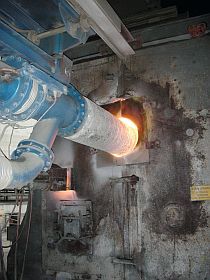
Co-processing in the cement sector

Using wastes as alternatives fuels for cement kilns started end of 70s - and it will never stop!
At the origin, and until the 80s, this business, initiated mainly to compensate the thermal energy prices increase, was not professionally managed driving to a lot of controversies and rejects by collectivities, NGO’s, authorities and competitors acting in the wastes management sectors.
Early 90s, when permitting for using “wastes” in cement kilns, the authorities at national, regional and EU levels were confused between “waste incinerators” and “cement kilns using wastes as fuels”. So, they...
Using wastes as alternatives fuels for cement kilns started end of 70s - and it will never stop!
At the origin, and until the 80s, this business, initiated mainly to compensate the thermal energy prices increase, was not professionally managed driving to a lot of controversies and rejects by collectivities, NGO’s, authorities and competitors acting in the wastes management sectors.
Early 90s, when permitting for using “wastes” in cement kilns, the authorities at national, regional and EU levels were confused between “waste incinerators” and “cement kilns using wastes as fuels”. So, they considered cement kilns as “co-incinerator”. Strong lobby’s (NGO’s and incinerators) were denigrating cement kilns to generate more pollution and environmental issues compared to “professional wastes treatment” and cement people were unprepared to face that business.
On the other hand and worldwide, the cement production will continue to grow requiring more resources, energy and minerals. We are speaking of a consumption of hundreds of millions tons of fuels and mineral, annually. How to achieve this without compromising for futures generations?
Early 90s, and against all existing ideas, I felt the need to be more proactive and clarify a specific legal frame when using so-called “AFR - Alternatives Fuels and Raw Materials”. So, I personally developed the “co-processing” concept…
What is this?
Co-Processing apply for the use of waste and/or low grade materials in RII’s (Resources Intensives Industrial processes) such as cement, lime, steel, glasses or power generation, instead of fossil fuels and natural resources.
Applied locally, co-processing has become its place in currents wastes management hierarchy, reduces wastes, health and environmental impacts, maintains and improves the industrial sector’s competitiveness and decreases the costs for wastes management.
From my single voice, early 90s preaching in the desert, I went through 20 years of struggle but over the time, the co-processing concept was clearly evaluated and consolidated.
Now, co-processing (mainly in the cement sector) is internationally accepted and recognized. As there are:
In October 2011, the United Nations (COP 10 Basel Convention) officially endorsed “Technical Guidelines for hazardous wastes co-processing in Cement kilns”
A large set of national legal frames exist specifically dedicated for co-processing (i.e. Mexico, Ecuador, Costa-Rica, Brazil, Chile, South Africa, India, China, Indonesia, Philippines, or Australia) and others are following.
All major international NGO’s are now involved and quite often promoting co-processing as a valuable solution for wasted mineral and energy recovery when professionally managed.
Under specific condition, after a large set of specific trial burns and under the umbrella of the Stockholm convention and UNIDO, the cement kiln is now officially recognized and requested for a final and safe elimination of POP-related waste.
National and international cement associations (as WBCSD, Cembureau, Ficem, CSI, VDZ etc.) are now largely promoting the concept.
A lot has been done driving to a good understanding of the concept and fostered by limiting trends of natural resources! No compromise are allowed on operational health & safety, environment, end-product and process quality. Intimous knowledge on clinker burning process was generated, as well as environmental awareness and monitoring and waste scrutinized to AFR pre-processing resulting in the collectivities acceptance, communication and integration in environmental strategies.
But huge development potentials still remain as for example dissemination of more specific legal frameworks and integrating concepts, to extend the portfolio on low grade energy and mineral sources, to increase process knowledge regrading pollutants balances, emission, environmental monitoring, or recycling of the concrete (cradle-to-cradle).
White areas still exists for R/D and new technologies either for pre-processing and co-processing specific facilities producing an “AFR” following the process requirements and cement plant specific acceptance criteria’s and permits. Business models have to be integrated within the cement sector, and on mineral waste or on low grade resources. Alternative cementitious binders are under development and technical solutions are going to enter the market.
Co-processing can reach approx. 100 % thermal substitution rate (TSR) for the clinker process. It can also be used to develop and extend the portfolio of pouzzolanic and/or hydraulic binders producing zero or very low CO2 emissions either to be added to the classical cement grinding plant or directly used as aggregate for the construction and building industry.
Co-processing starts to have a past - Co-processing is moving to a tremendous future.
I wish you all to be part of this challenge and an excellent lecture.

Überschrift Bezahlschranke (EN)
tab ZKG KOMBI EN
This is a trial offer for programming testing only. It does not entitle you to a valid subscription and is intended purely for testing purposes. Please do not follow this process.
This is a trial offer for programming testing only. It does not entitle you to a valid subscription and is intended purely for testing purposes. Please do not follow this process.
tab ZKG KOMBI Study test
This is a trial offer for programming testing only. It does not entitle you to a valid subscription and is intended purely for testing purposes. Please do not follow this process.
This is a trial offer for programming testing only. It does not entitle you to a valid subscription and is intended purely for testing purposes. Please do not follow this process.