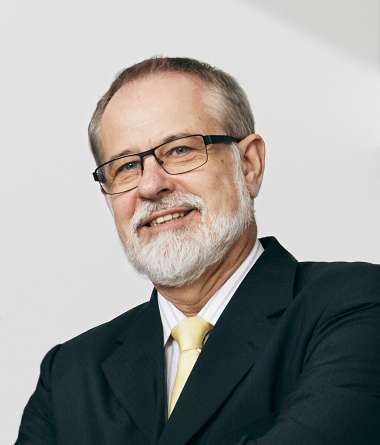
Dr.-Ing. Peter Bartha
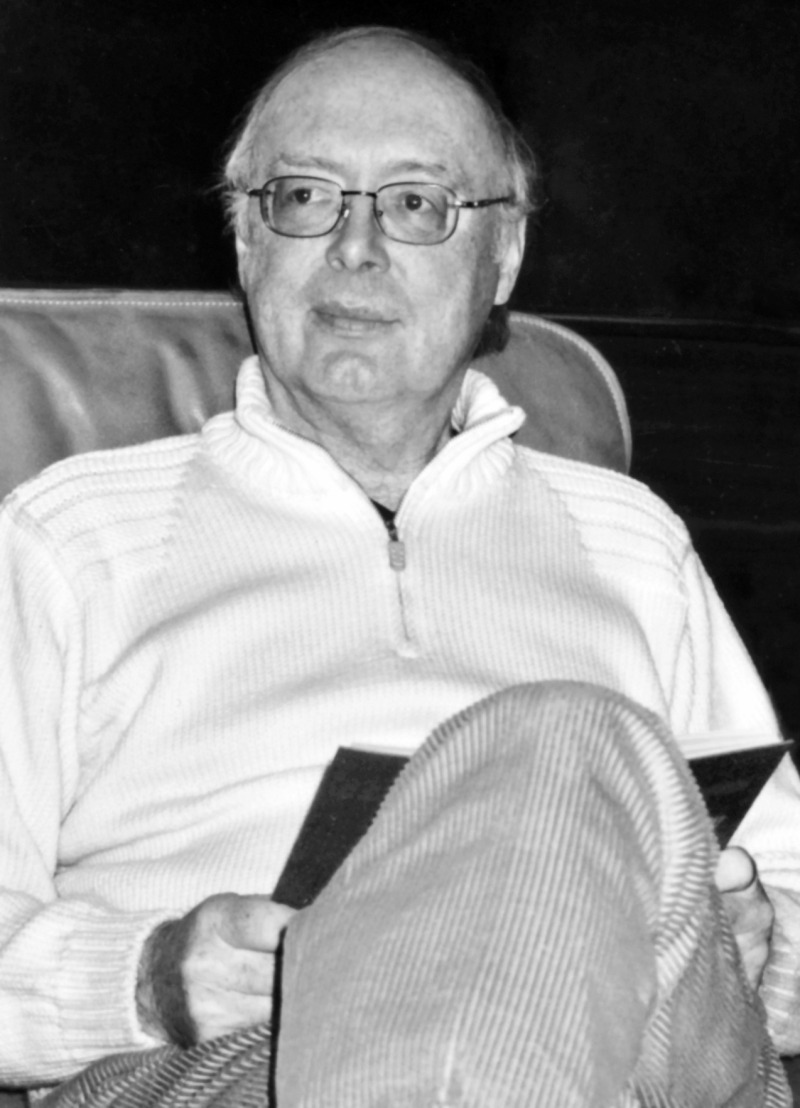
With Dr. Peter Bartha, Refratechnik loses an extraordinary person and an outstanding and internationally recognized expert in refractory technology.
Dr. Peter Bartha started his academic career with the study of mineralogy in Freiberg/Saxony. But then he decided to move westwards, where he continued his studies in the field of minerals at the TU Clausthal. 53 years ago, he graduated with a thesis on cement. This was followed by his doctorate with the classical and always topical subject “Investigation on binding refractory materials with phosphoric acid”. His degree dissertations and doctorate...
With Dr. Peter Bartha, Refratechnik loses an extraordinary person and an outstanding and internationally recognized expert in refractory technology.
Dr. Peter Bartha started his academic career with the study of mineralogy in Freiberg/Saxony. But then he decided to move westwards, where he continued his studies in the field of minerals at the TU Clausthal. 53 years ago, he graduated with a thesis on cement. This was followed by his doctorate with the classical and always topical subject “Investigation on binding refractory materials with phosphoric acid”. His degree dissertations and doctorate thesis determined his further life, whereby refractory and cement entered a congenial combination. Following a short period of employment with Norddeutsche Portlandcementfabriken AG, this was confirmed in 1963, when he joined the Steinwerke Feuerfest Karl Albert GmbH, which was later to become the Refratechnik Group under the leadership of Alexander Tutsek.
Here, Dr. Peter Bartha was able to fully employ his expertise: Already at that time, he developed products under the aspect of customer benefit and environmental compatibility, for example special phosphate-bonded alumina bricks. He was also particularly interested in highly basic and in highly acid refractory minerals. MgO became one of his life elixirs (during a memorable REFRA-Symposium initiated by him in 1993, he held a lecture on “Magnesium – An essential basic material in nature and technology”), which occupied him intensively. However, magnesium oxide can hardly be used on its own – although it has ideal refractory properties, it is relatively brittle. He studied and researched, whereby he discovered his second mineralogic passion: the spinels. In combination with MgO, chromium ore and spinel provide the required outstanding mechanical properties. At that time, PERILEX® and ALMAG® were the refractory bricks that set new standards, and are still seen as state-of-the-art for cement rotary kilns.
Secondly, there was the extremely “acid” rice husk ash, almost pure SiO2, lightweight and voluminous. Rice husk ash is an ideal material for covering the molten steel in a tundish. Consequently, the use of rice husk ash was recognized as a valuable resource long before today’s recycling movement.
Bauxite, andalusite, fireclay, and alumina fascinated him just as much. Corresponding refractory bricks were developed, still known today under the trade name KRONEX®. And of course, they proved their outstanding qualities in cement industry kilns as well as in refractory equipment for the steel industry. Also here, he developed new milestones. The results were the ecologically advantageous, resin-bonded MACARBON® bricks. Also these products have become firmly established worldwide, and are still indispensable for steel making.
Not only inorganic, mineralogic subjects occupied Dr. Peter Bartha’s mind. He also searched for innovative approaches off the beaten tracks. How can one install bricks into a kiln quickly and easily? Because the traditional methods were not satisfactory, a new method was developed that can be used in cement kilns: glueing. And also this leap into organics was successful: For many years, REFRABOND® glue greatly simplified the installation of wedge-shaped bricks in rotary kilns.
For the purpose of conducting joint investigations in refractory materials and promoting research, Dr. Peter Bartha established contacts with universities, colleges, and associations. Obviously, the TU Clausthal as his Alma Mater, and the Georg-August University in Göttingen were close to him, but he also had close ties and regular exchanges with the RWTH Aachen, the Johannes-Gutenberg University in Mainz, and later also with the Bergakademie Freiberg (to which he always felt a commitment). This was apparent both in the large number of Refratechnik employees whom he supported during their studies, dissertations, and doctorate theses, and also in more than 50 publications, reports, book contributions, and 27 patents.
During his career with the Refratechnik Group, Dr. Peter Bartha was responsible for many management functions. He was Head of the R&D Department, Managing Director of Refratechnik Cement GmbH in Göttingen, and from 2002 onwards, Managing Director of Refratechnik Holding GmbH in Munich. What’s more, for many years he was a board member of the Alexander Tutsek Foundation, whose fields of research he developed and shaped. Also after retiring from active service, he was always ready to supply ideas and assistance to the Refratechnik Group in an exemplary manner.
Everyone who had the privilege of working with him was deeply impressed by his open and warm nature, his commitment, and his universal knowledge. His suggestions and his inventiveness will be a continuing inspiration for refractory research in the future.

Überschrift Bezahlschranke (EN)
tab ZKG KOMBI EN
This is a trial offer for programming testing only. It does not entitle you to a valid subscription and is intended purely for testing purposes. Please do not follow this process.
This is a trial offer for programming testing only. It does not entitle you to a valid subscription and is intended purely for testing purposes. Please do not follow this process.
tab ZKG KOMBI Study test
This is a trial offer for programming testing only. It does not entitle you to a valid subscription and is intended purely for testing purposes. Please do not follow this process.
This is a trial offer for programming testing only. It does not entitle you to a valid subscription and is intended purely for testing purposes. Please do not follow this process.