Alliance for development and sustainability
 Christiane Dias Pereira
 Christiane Dias Pereira
 Christiane Dias Pereira
 Christiane Dias Pereira
 FICEM
FICEM
 FICEM
FICEM
 FICEM
FICEM
 FICEM
FICEM
 FICEM
FICEM
 FICEM
FICEM
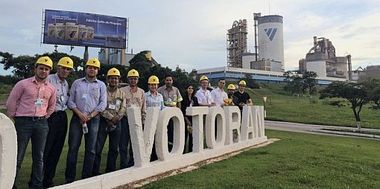
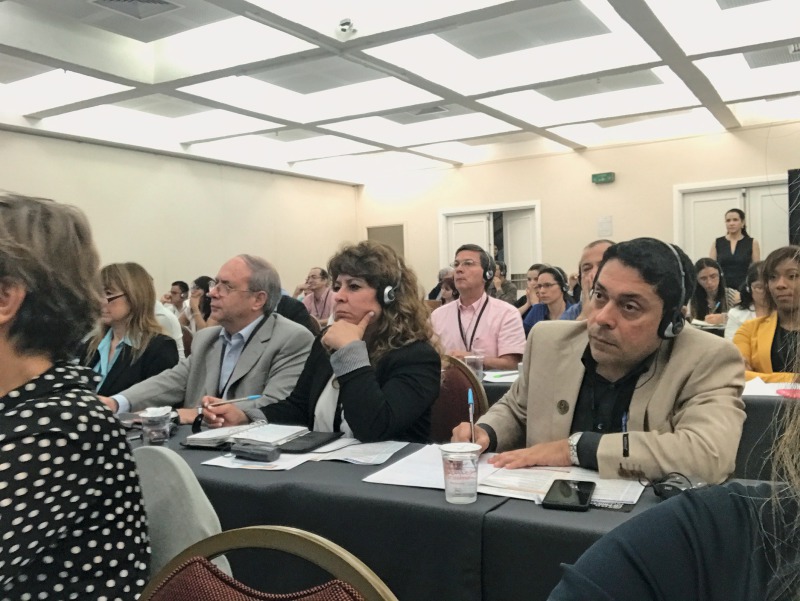
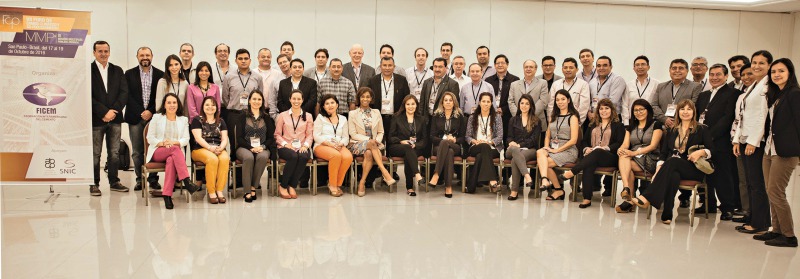
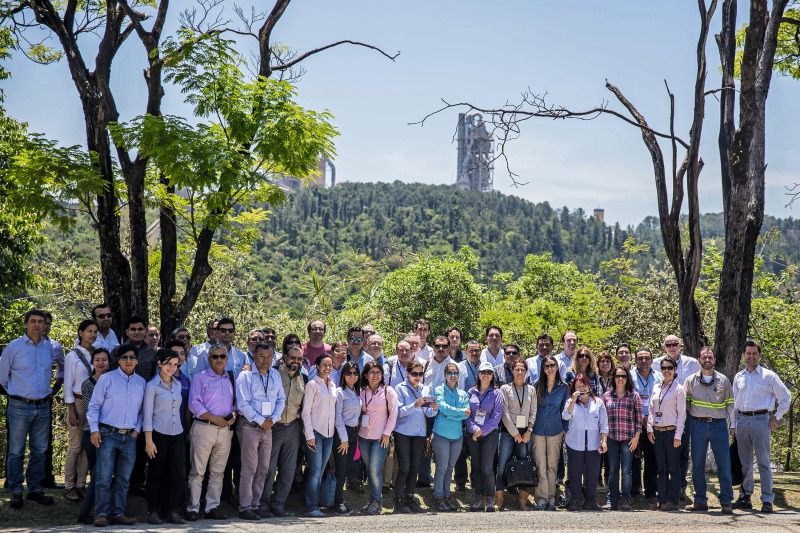
According to the motto alliance of industrial processes and environmental control, the VII Forum and III Multi-country Mission on Climate Change and Co-processing united 83 participants from 12 countries for networking, discussions and knowledge exchange on 17.10.-18.10.2016 in São Paulo/Brazil. Around 25 % of the participants were governmental representatives and 28 % from public or private institutions. On 19.10.2016, the participants had the opportunity for technical visits to two co-processing plants in the State of São Paulo, the Votorantim cement plant in Salto de Pirapora and the co-processing unit of Resicontrol, Estre Group in Sorocaba.
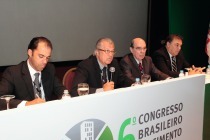
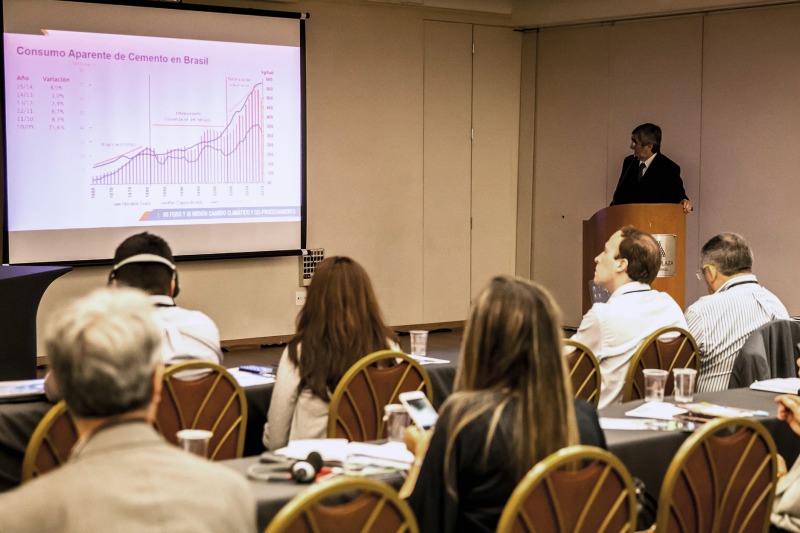
The event was organized by FICEM, the Inter-American Cement Foundation, with the support of the National Cement Industry Unit (SNIC) and the Brazilian Association of Portland Cement (ABCP), which was represented by the President Renato José Giusti with an introduction to the event and an overview of the Brazilian cement industry. The current development recorded a decrease of cement production of 10 % in 2015. In his introduction speech he emphasized the important topics of technical knowledge as an indispensable factor for a sustainable development, innovation and life quality for the...
The event was organized by FICEM, the Inter-American Cement Foundation, with the support of the National Cement Industry Unit (SNIC) and the Brazilian Association of Portland Cement (ABCP), which was represented by the President Renato José Giusti with an introduction to the event and an overview of the Brazilian cement industry. The current development recorded a decrease of cement production of 10 % in 2015. In his introduction speech he emphasized the important topics of technical knowledge as an indispensable factor for a sustainable development, innovation and life quality for the population. Moreover, Giusti outlined the importance of civil construction as a pillar for the growth of a nation, not only because of the necessary investments for a fast and modern development but also because of its significant potential. Currently, Latin America and especially Brazil are not confronted with great challenges in infrastructure and housing construction. Regarding sustainable development, he underlined that the Brazilian industry is considered as one of the most efficient, on the one hand because of low generation of emissions and on the other hand because of the energy efficiency due to modern industrial parks and technologies for co-processing, which was determined in a technological mapping conducted by the ABCP and SNIC, resulting in a roadmap for the cement industry.
Colombia, Bolivia and Panama
illustrate the highest rates
The Executive Director of the Inter-American Federation of Cement (FICEM), Maria José Garcia, demonstrated that in Brazil co-processing is regarded as a dangerous activity though it is practiced worldwide. In 2014, a share of 4.5 % of the global cement production of 4.181 billion t/a is produced in Latin America and the Caribbean (Source: International Cement Review). Since 2001, cement production quantity has increased up to three times especially in developing and emerging countries while the quantity in industrial countries has remained stable or even decreased (Source: Cembureau). Analyzing the variation of cement production in Latin America between 2010 and 2015, it becomes clear that Colombia, Bolivia and Panama illustrate the highest rates between 29 % and 38 % and despite the crisis in Brazil, an increasing rate of 10.4 % was recorded (Source: FICEM). In 2015, the worldwide emission of CO2 produced by the use of fuels reached a total amount 32.19 billion t, of which North America, Europe and China accept responsibility for 76 % (Source: IEA 2015). According to the latest report published by the Cement Sustainability Initiative (CSI), 5 % of the worldwide-emitted emissions are produced by the cement industry. Yet, the Latin American cement industry achieved a reduction of 19.8 % of CO2 emissions. The most efficient strategies reach from energy efficiency, co-processing to clinker reduction, life cycle innovation and adaptation. Currently, alternative fuels are substituting 9.06 % of the energy supply in Brazil. The highest substitution rate of 26.8 % is found in Europe (Source: CSI 2014). The highest medium ratio of clinker/cement is found in Peru with a substitution of clinker by 65 %.
65 million t of cement
were produced in 2015 in Brazil
Carlos Maia, Executive Secretary of SNIC, introduced the National Cement Industry Unit that re-presents the general and individual interests of the industry and associates to the administrative and judicial authorities. Today in Brazil, a per capita consumption of 354 kg/inhabit/a demonstrates consumption below the worldwide media of 573 kg per inhabit/a. In 2015, around 65 million t of cement were produced, although an installed capacity of 98 million t is available. Maia also gave an insight into the history of the energy efficiency of the cement industry. Due to the global energy crisis in the late 1980s, the Brazilian economy depended on oil and therefore established a protocol with the cement industry with the aim of higher energy efficiency and less dependency on the energy supply. At this time, 44 % of the cement kilns produced clinker via wet production and therefore were converted to dry production and a preheater as well as pre-calciner were installed. Furthermore, the introduction of alternative fuels such as biomass began, so that the energy consumption could be rationalized and reduced. After a period of five years, a complete transformation of the industrial parks was accomplished in order to achieve a sustainable production. Today, dry processes produce 99 % of the production capacity and modern technologies enabled significant reductions of emissions. On the basis of the National Politic on Climate Change, Brazilian States already formed their state policies. In this sense, Brazil pledged to cut 37 % by 2025 and 43 % by 2030. According to a report on the potential reduction of CO2 in main cement production published by the International Energy Agency, the cement industry demonstrated a low reduction potential of 0.1 t CO2 per ton of cement, because a high rate had already been achieved in the past years. Finally, the Cement Technology Roadmap Brazil presents technologies and alternatives for the industry in order to reduce CO2 emissions in the medium and long term.
The utilization of waste is one
of the most important solutions
Ricardo Pareja, Leader of the Roadmap FICEM, stated the positive fact that the emissions caused by the cement industry are identified precisely whereas other sectors are generic or do not present a significant contribution to the global GHG. All in all, cement occupies after water the second most important resource for society with great possibilities for growth and eradication of poverty. Furthermore, he pointed out that Latin America pledged to reduce 40 % of their emissions in regard to COP21, an ambitious goal only achievable with a collaboration and communication between the government and private companies. In this sense, he urges work and collaboration with countries and companies that already implemented modern technologies and solutions for the reduction of GHG emissions. Anyone who produces waste, has to pay for its proper disposal. A successfully implemented system in Europe, which means that the cement industry is not obligated to pay for the use of RDF. For example, anyone who buys the tire has to pay for the disposal and this value will be passed on to the cement industry. The utilization of waste is one of the most important solutions for the desired lower usage of clinker.
Strategic map for the industry
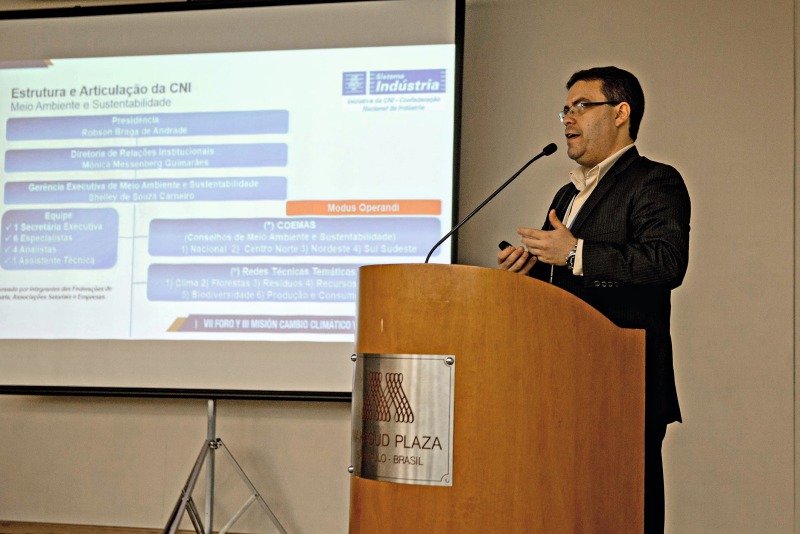
In his paper about the “Industrial view of the Brazilian sector about the Paris Agreement”, Marcos Vinícius Cantarino, Specialist in Politics and Industry of the Executive Direction of Environment and Sustainability CNI (National Industry Confederation) that has 1245 associated employer unions and represents 700 000 industrial establishments, presented the strategic map for the industry (2013-2022) which unites the basic pillars such as innovation and productivity, market development, financing, infrastructure and more. He stressed that all pillars are based on education, the most important factor for successful competitiveness with sustainability for the future. Cantarino also mentioned that although the Agreement on Climate Change of Paris came into force on 04.11.2016, the National Policy on Climate Change (Law No. 12.187) is still in revision. He concluded that despite the current complicated situation in Brazil, technologies and development must be supported in order to promote the efficiency of the industrial sector under competitive conditions at a national and international level and therefor guarantee investment flows.
FICEM Roadmap
Following this, Prof. Dr. José Goldemberg, President of the Foundation of Support for Research in the State of São Paulo (FAPESP), focused on the FICEM Roadmap and how the set goals could be achieved through the introduction of alternative fuels, electrical energetic efficiency and clinker substitution. In this sense, he presented the prevision of the Thermal Substitution Rate (TSR) of alternative fuels (AF) in the areas waste and bio-mass and thus, the potential for CO2 reduction up to 2035 and 2050 published by the CSI, ABCP and the Brazilian Cement Industry in 2015. Analyzing the obtained data and previsions, it becomes clear that the highest increase of substitution rate can be achieved with the introduction of Municipal Solid Waste (MSW) and non-hazardous industrial waste, possibly substituting fuels up to 17.4 %. The same fact can be applied with regard to electrical energetic efficiency, where waste heat recovery for power production could reduce 16.7 % of energy consumption, generating an annual CO2 reduction of 1 %. Of course, further reduction can be assured by improvement, modernization and optimization of technology in the production processes.
Tax for the disposal in landfills
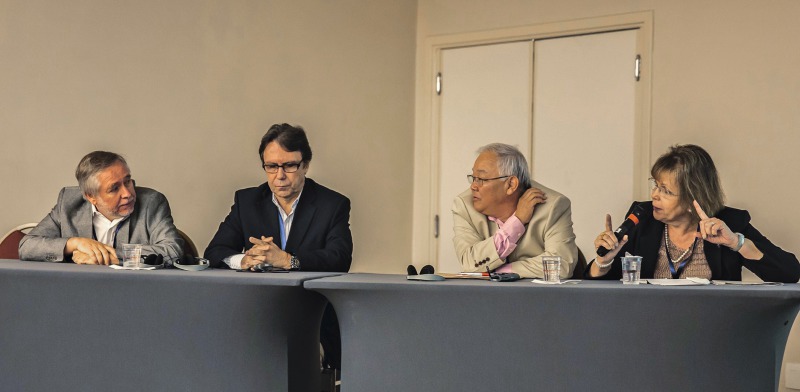
Co-processing as a great opportunity for treatment and proper disposal of the increasing amount of MSW was constituted by Mário William Esper (Figure 1) from the Brazilian Portland Cement Association (ABCP), also stressing the annual increase of approximately 3 % of MSW and the inappror-piate disposal of 42 %. Today, the industry still has to face many barriers concerning co-processing of MSW, because the public policies still promote landfills by not charging taxes and by prohibition of the energetic recovery of waste. But a comparison with industrial countries such as Germany, England, Japan, Mexico, Thailand and others shows that co-processing of MSW is certainly a sustainable alternative in waste management and also as a prospective source of energy. Further restrictions in Brazil are the logistics due to the great distances between fabrics and cities, therefore impeding financing. Eventually, Esper proposes a tax for the disposal in landfills, which for example generated an income of 1000 million € for European countries in 2009/2010. This income is used for improvement of waste and environmental management as well as remediation of contaminated sites.
Atmospheric emissions of pollutants
In her paper on “Atmospheric emissions of pollutants from the Brazilian Industry”, Leticia Reis de Carvalho, Director of the Environmental Quality Department in Industry at the Environmental Ministry of Brazil, explained the current regulation tools and control in fixed sources for the following pollutants: Inhalable particles (PM), Total Suspended Particles (PTS), Sulfur Dioxide (SO2), Carbon Monoxide (CO), nitrogen dioxide (NO2), Ozone (O3). As Brazil has no history of measurements of dioxins and furans, in 2009/2010 the Ministry for Environment realized a National Inventory for Sources and Estimates of Dioxin and Furan emissions based on the second version of Standardized Toolkit for Identification and Quantification of Dioxin and Furan Releases by UNEP Chemicals. The study concluded that in 2013 fires and outdoor waste burning activities caused 11.1 % and activities such as outdoor biomass burning an amount of 25.7 % of dioxin and furan emissions. Cement kilns contribute a share of 0.8 % and occupy the 15th place on that list.
The Minamata Convention
Concerning mercury emissions, Leticia Reis de Carvalho presented the Minamata Convention, a legal instrument for the control of mercury use in order to protect human health and the environment, elaborated by 92 countries. At the moment, 32 countries confirmed the agreement that is expected to come into force in 2017 and includes emissions produced by clinker cement fabrics in Article 8 and Appendix D. Although there is no present legislation for the control of mercury in stationary sources, the Resolution CONAMA 264/1999 specifies a limit of 0.05 mg Hg/Nm³ 7 % O2 in co-processing. PNUMA Bazil is responsible for the implementation and the Ministry for Environment for the execution of the principles required by the Minamata Convention up to September 2017. Therefore, a Mercury Toolkit was elaborated in Portuguese for the purpose of emission estimation of quantity and offer possibilities for control and reduction.
Reduction of mercury
in the cement production process
An introduction to the “Guide for reduction and control of compound emissions of mercury in the cement industry” was presented by Patricia Monteiro Montenegro from Votorantim Cement. The guide includes Best Available Technologies (BAT) and Best Environmental Practices (BEP) as well as explanations of mercury emissions in cement manufacturing processes and programs for sampling and analysis methods in kiln chimneys. Currently, three possibilities exist for the reduction of mercury in the cement production process. The first and most effective possibility is the control and selection of raw materials and fuels with low concentrations of mercury for the production of clinker. Then, technologies for dust shuttling can be applied that enable emission reduction through the addition of mercury binding filter powder and thereupon its collection. Finally, the third alternative is the use of activated charcoal adsorbents in the phase of exhaustion so that the contained mercury is loaded into the main filter. Brazil produces 4.4 % of the nationally produced mercury, quite minor compared to the global rate of 9 % (adopted emission factor for this study: 0.0249 g Hg/t). In conclusion, Montenegro pointed out the importance of an international data bank for mercury and an organization of practices for the implementation of mass balances in all production processes.
National Register System for Emissions
Subsequent to the Paris Agreement for Climate Change confirmed in September 2016, the Brazilian Government edited the National Policy for Climate Change that includes annual estimations for GHG emissions based on a new national methodology. Danielly Godiva Santana Moletta, Secretary of Policies and Programs for Research and Development from the Ministry of Science, Technology, Innovation and Communication of Brazil, demonstrated the already performed and more important the still missing actions, methodologies and databanks regarding climate change in the sectors of energy, agriculture, land use change and forestry, waste and water treatment as well as industrial processes in Brazil. With decreasing shares of emissions caused by land use change and forestry, the sectors agriculture and industrial processes increased significantly between 2005 and 2014. At the same time, the percentage of anthropogenic waste increased by 38 %. All results and further information are provided on Sirene, a National Register System for Emissions.
Programs for sustainability
The second day of the event started with Antonio Carlos Barros de Oliveira from the Brazilian Association for Technical Norms (ABNT), the single Brazilian forum for accredited conformity assessment for certification of products, services and systems. Oliveira presented programs for sustainability that includes Norms about GHG emissions and CO2 footprint. One of these programs is the voluntary project Eco-Label (based on ABNT NBR ISO 14024) started in 2006, which developed significantly in the past five years with over 630 eco-labeled products. The standardization bases on multiple criteria according to the product type and considers the product life cycle from the resource extraction, production and distribution and finally the use and final disposal. All of these steps are considered and the possible environmental impacts are analyzed and evaluated in order to gain information on the product conformity.
Management and collection of fabricated tires
The Director for Urban Environment at the Ministry of Environment of Brazil, Zilda Maria Faria Veloso, addressed the National Policy on Solid Waste (PNRS Law Nr. 12.305/2010) and its main tool for shared responsibility for the product life cycle and therefore adequate collection and disposal of materials such as used tires: Reverse Logistic. In this context, she presented RECICLANIP, a non-profit-organization financed by main pneumatic manufacturers, such as Dunlop, Good Year, Pirelli, Michelin, and many more, aiming to improve the management and collection of fabricated tires, promoting shared responsibilities between producers, importers and consumer as well as government and distributers. According to RECICLANIP, 1.571 collection points exist in Brazil, which received an amount of 544 695 t of used tires in 2014. Actually, main technologies for environmentally appropriate treatment are Co-processing (54.4 %), Rolling (8.9 %), Granulation and Rubber Regeneration (33.7 %).
A key to facing sustainable challenges
in the cement industry
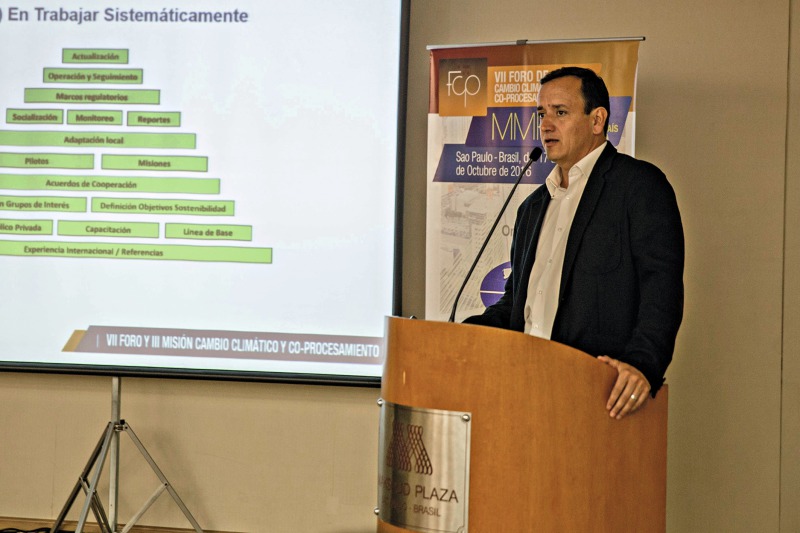
The International Consulter for Climate Change and Alternative Resources, Andrés Jensen (Figure 6), emphasized Public-Private Cooperation as a key to facing sustainable challenges in the cement industry due to the many mutual interests in various important themes like climate change, emission control, waste management and limits for contaminants such as mercury. Therefore, Jensen proposed two important key factors for success. On the one hand, confidence between the interested parties must be created, so that on the other hand, systematic work can be assured regarding regulatory marks and partnerships.
The cement industry – an important partner
for the solution of the Brazilian waste problem
CETESB, the Environmental Company of the State of São Paulo, was represented by Milton Norio Sogabe. He gave a brief introduction of the contamination of soil and water in Brazil, especially in the case of São Paulo, and compared the waste management systems and their evolution in Brazil. Until the year 2010, the only solution for the disposal of industrial and urban waste was landfills or completely illegal and inappropriate disposal. Although the deadlines ended for the introduction of various systems required by the PNRS 2010 in 2014, around 42 % of the waste is still deposited inappropriately. That is why the cement industry is seen as an important partner for the solution of the Brazilian waste problem. But as the Normalization System in Brazil is handled in the form of state responsibility (ex. CETESB for São Paulo, FEAM/Mato Grosso, FEPAM/Rio Grande do Sul), there are controversial issues for licensing and normalization, such as calorific value, limits, emission monitoring and control of feedstock. Moreover, the elaborated restriction groups for co-processing still include domestic waste in a classification next to radioactive waste, pesticides, explosives and more. Unfortunately, the positive impacts of co-processing in the industry such as reduction and better control of emissions, substitution of conventional fuels already by 30 % and decrease of energy consumption are still not sufficiently involved in the normalization process. For this reason he stated that “this greater investment in environmental issues also helps to achieve better competitiveness and improves the industrial image in the community, so is basically a win-win-situation”.
Management of used tires in Chile
José Browne López, Chamber of the Industry for Tires of Chile, gave an insight into the management of the approximate amount of 137 500 t/a of used tires in Chile. The new framework Law Nr. 20.920 for waste management and extended responsibility for producers and promotion of recycling came into effect on 01.06.2016. A system management was included for priority products, such as electronics, batteries and tires, so that the producer must take responsibility for the appropriate disposal and recycling. But regarding the costs, the systems must urgently be improved, because the costs for reverse logistics of tires extend up to 250–300 US$/t, of which 80 % are for logistics. In comparison, France has costs of reverse logistics for consumers of around 2–3 € for car tires and 11 € for truck tires.
Recycling and energetic recovery of MSW
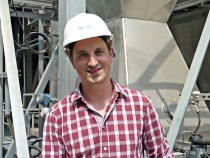
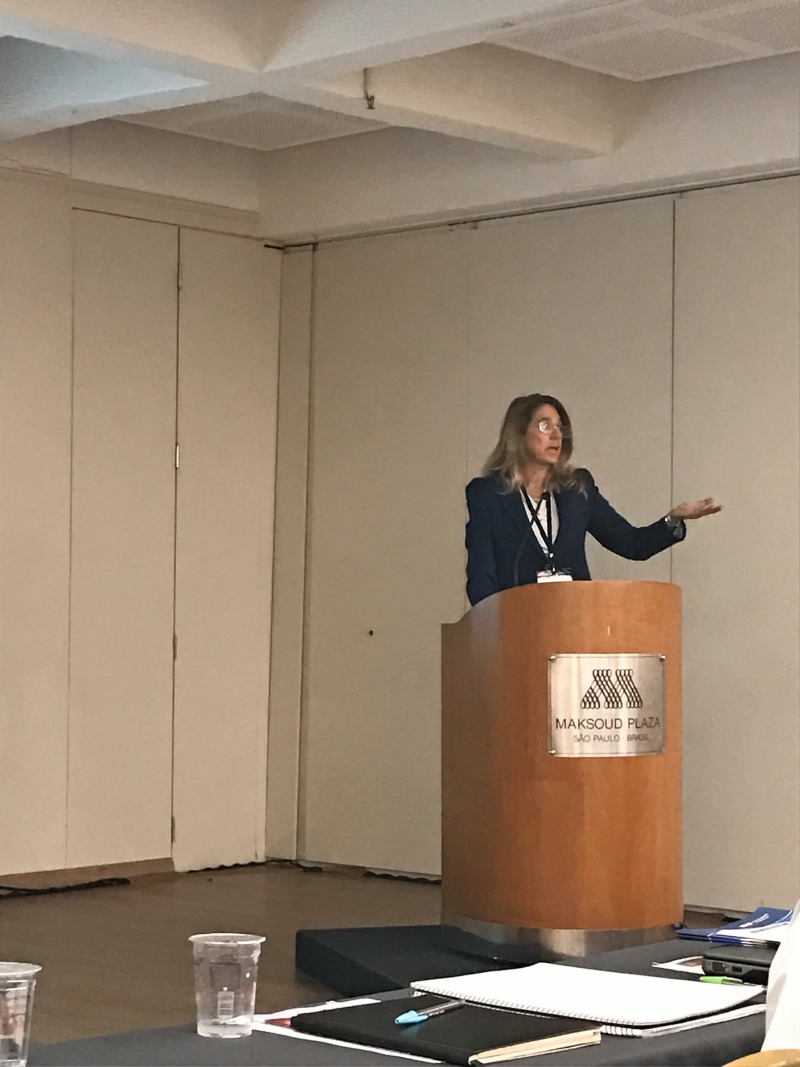
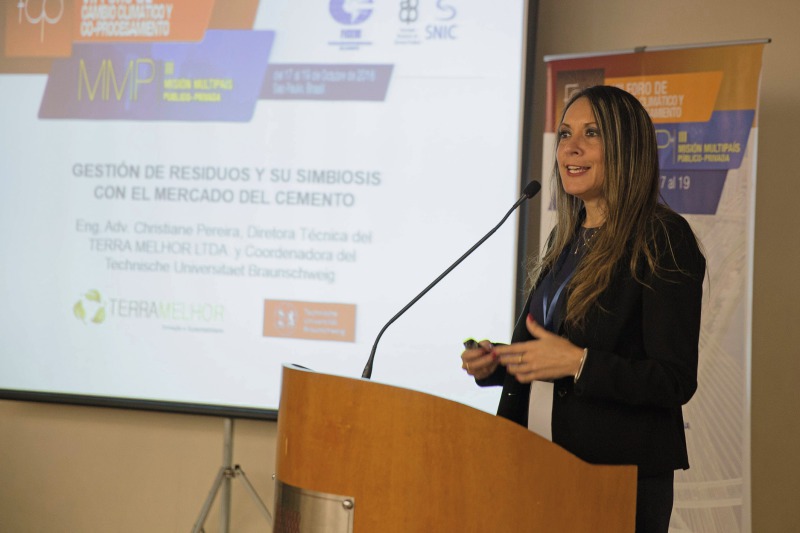
Representing Terra Melhor and the Technical University of Braunschweig/Germany, Christiane Dias Pereira (Figure 4) addressed the current discussion between recycling and energetic recovery of MSW, even though various factors have to be evaluated with regard to raw and secondary materials, energy and water savings, emissions and also in the context of efficiency. For this reason, Pereira asked “Why not combine the technologies instead of competition?”. This means, subsequent to the separation of recyclables, there is still potential for energetic recovery of the material, therefore co-processing combined with recycling. Although there still does not exist a common database on mitigation potentials concerning the treatment of MSW in Brazil, a significant mitigation potential of approx. 80 million t CO2eq by recycling and 76.4 million t CO2eq through energetic recovery of MSW can be assumed with certainty. All in all, the goals for MSW reduction required by the PNRS 2010 are only reachable with energetic recovery. With regard to RDF production, a potential of approximately 49 % of material with high calorific value was determined during several studies conducted by Terra Melhor and TU Braunschweig. The results of grain size analyses also have shown that in particular fractions bigger than 80 mm contain materials with high calorific values, which are interesting for the cement industry. This difference between material bigger and smaller than 80 mm is also reflected in the results of water content and the presence of chlorine and heavy metals. Today, we have still a lot of fragilities in the contract for waste management: technologies routes are defined partially, faulty mass balances, insufficient economic analyses, insecurities regarding licensing and financing. She concluded her presentation by saying that all of these issues are based on the most important problem: the insufficient technical capacity in Brazil and the missing cooperation between the public and private entities.
Conclusion
In view of the discussions that took place during the event, it became clear that energy efficiency along with the commitment to climate protection are the principal actions focused on by the cement sector globally. Markets in which cement demand has been reduced, have successfully defined tools to cope with the crisis, optimizing energy consumption, substitution of clinker and promoting new energy sources, all enabled by modern facilities and the development of technical capacity, thus establishing a new position for this sector anchored in environmental and social responsibility.
//www.ficem.org" target="_blank" >www.ficem.org:www.ficem.org

Überschrift Bezahlschranke (EN)
tab ZKG KOMBI EN
This is a trial offer for programming testing only. It does not entitle you to a valid subscription and is intended purely for testing purposes. Please do not follow this process.
This is a trial offer for programming testing only. It does not entitle you to a valid subscription and is intended purely for testing purposes. Please do not follow this process.
tab ZKG KOMBI Study test
This is a trial offer for programming testing only. It does not entitle you to a valid subscription and is intended purely for testing purposes. Please do not follow this process.
This is a trial offer for programming testing only. It does not entitle you to a valid subscription and is intended purely for testing purposes. Please do not follow this process.