Keywords: Alternative Fuels
and Sustainable Development
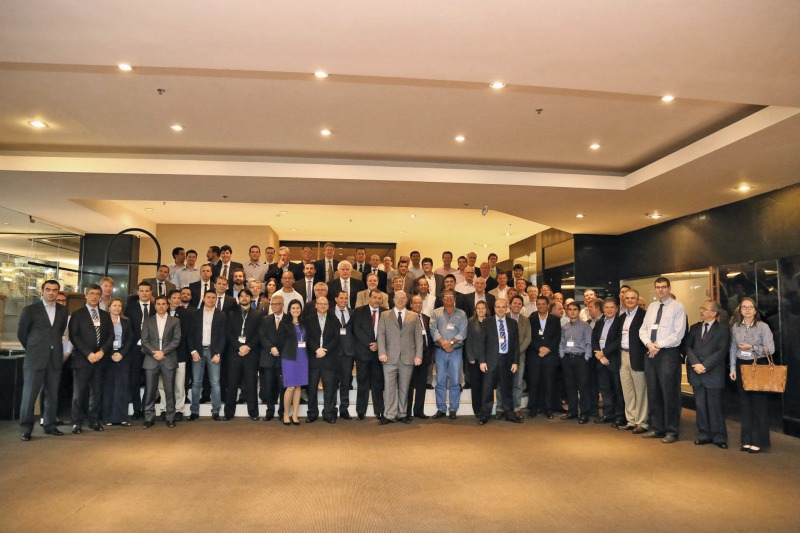
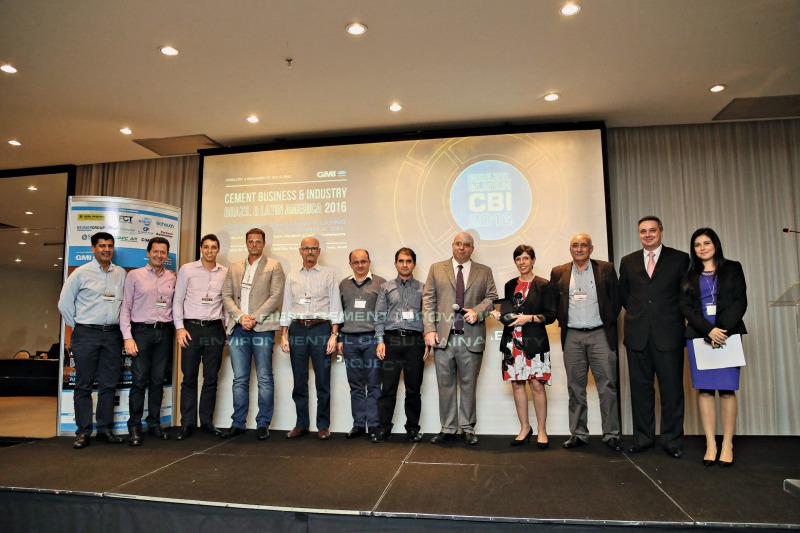
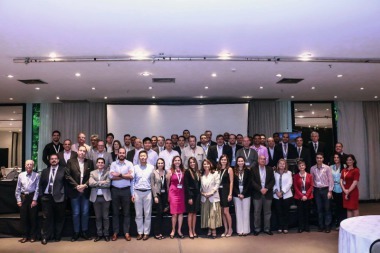
In dedication to sustainability, climate protection and technologies in cement production, the 11th Conference and Exhibition of CBI – Cement Business & Industry 2016, organized by GMI Global LLC, took place in São Paulo/Brazil on 24.02.-25.02.2016.
Around 200 experts from international and national cement businesses, suppliers and research facilities accepted the invitation for an exchange of knowledge and experience, technical discussions and networking. International manufacturers such as the Beumer Group, Scheuch Technology and Rockwell Automation presented their newest technologies during...
In dedication to sustainability, climate protection and technologies in cement production, the 11th Conference and Exhibition of CBI – Cement Business & Industry 2016, organized by GMI Global LLC, took place in São Paulo/Brazil on 24.02.-25.02.2016.
Around 200 experts from international and national cement businesses, suppliers and research facilities accepted the invitation for an exchange of knowledge and experience, technical discussions and networking. International manufacturers such as the Beumer Group, Scheuch Technology and Rockwell Automation presented their newest technologies during the exhibitions and presentations, whereby international market leaders such as Votorantim Cimentos, LafargeHolcim and representatives of the FCT Group of companies seized the opportunity to discuss new routes and trends in cement production processes.
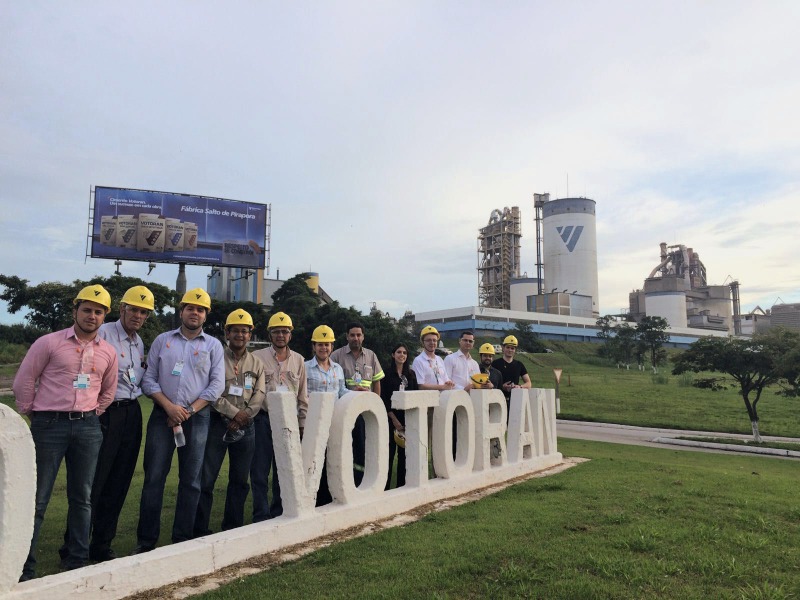
Aside from interdisciplinary presentations and exhibitions, the conference also hosted two award ceremonies. On the first day, the best project of cement and lime was awarded with the 3rd annual Dr. Clemento Greco Award 2016. By sharing their business cards with GMI Global, each of the conference participants were given the opportunity to enter a draw to win an original Athens relay torch, sponsored by FCT Flames of the FCT Group, which was presented on the second day. The event ended with an optional visit to the Votorantim Cimentos Plant in Salto-Sorocaba in the State of São Paulo.
The introduction speech was given by Robson Gonçalves, Project Coordinator from the Foundation Getlio Vargas (FGV), who discussed perspectives and challenges for Brazil and Latin America, pointing out a significant decrease in formal employment in the construction industry since January 2014, due to the political and financial crisis in Brazil. A statistical forecast by FGV showed a further decrease in employment (-8 %) and in cement production (-12 %) until December 2016. Despite these figures, Gonçalves emphasized that Brazil has a significant potential for growth and many resources, especially in infrastructure and therefore in the construction industry, which provides an important potential for a fast recuperation after the crisis. After all, according to Mr. Márcio Lario, General Manager of Imerys do Brazil, the Brazilian Lime production reached 310 million tons in 2014, which classifies Brazil as the fifth largest global producer.
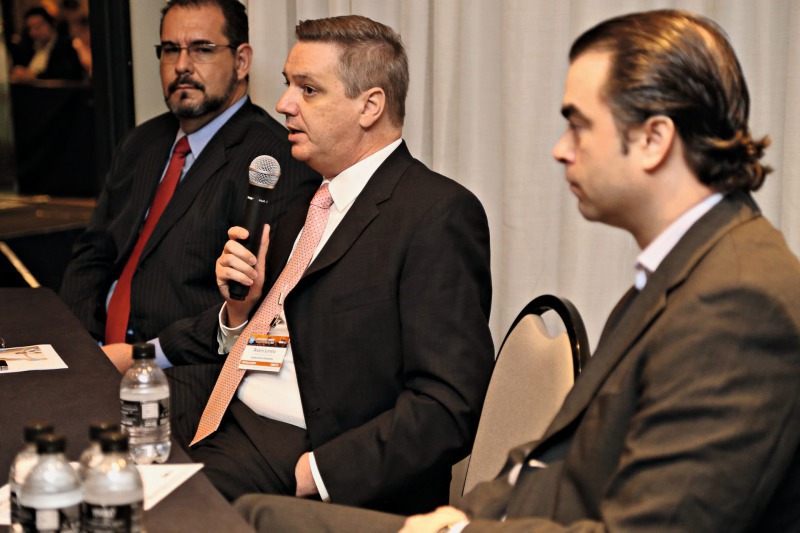
Following this, Álvaro Lorenz, Global Technical Director of Votorantim Cimentos, one of the leading cement companies in Brazil, outlined the efforts of “reducing CO2 emissions in the cement production process and resource protection as a key to economic and sustainable global development”. It became clear that Votorantim currently focuses on sustainability challenges, so that best solutions can be found by identifying the significant impacts of the products and processes in all areas of Climate Change, Security and Public Health, Water Management and Biodiversity. In this context, Lorenz introduced the Cement Sustainable Initiative (CSI), a CEO-led voluntary initiative of leading companies in the global cement business, and the Low Carbon Technology Partnership Initiative (LCTPi), a movement as the voice of business on sustainability issues, both enhanced and coordinated by the World Business Council for Sustainable Development (WBCSD). The two initiatives mutually reinforce the reduction of CO2 emissions in the range of 20 to 25 % in 2030.
Hence, Lorenz names the following aspects as the main CO2 reduction drivers: “Clinker/Cement Ratio in the sense of clinker substitution, Energy Efficiency by the use of technologies and above all, the increased utilization of Alternative Fuels & Raw Materials”. Finally, Lorenz stated the environmental and economic benefits of the utilization of pozzolan from calcined clay or industrial waste and the increased promotion of projects for AFR and biomass, so that a total reduction of 50 to 65 % of CO2 emissions is possible. There are currently three pozzolan producing plants in Brazil with a capacity of 3400 t/day and a cement capacity of more than 2.3 million t/day. Further plants in Brazil, e.g. Vidal Ramos plant in Santa Catarina BR, were already optimized in the fields of cement power and kiln heat consumption as well as the increased utilization of AFR up to 10 % TSR per year. Based on successful use of biomass at the plant Nobres in the state Mato Grosso, a reduction of 0.9 million tons of CO2 emissions was achieved between 2007 and 2014.
Robert Madeira, of the CW Group, constituted the global cement market in view of political and financial developments and trends, with particular focus on the BRIC states and a comparison of Brazil and India. In 2015, a worldwide drop of consumption of oil and gas was detected due to low oil and gas prices and the oversupply, which particularly affected markets in Central and South America. These macro-economic challenges put the cement market under pressure, which is reflected in the demand and supply of Brazil, China, India and Russia. Madeira pointed out that: “Currently, regional groups, in particular in India, are working on new solutions, which will bring new market dynamics. Since fortunes are made in bad markets, now is the right moment to be innovative and to find new solutions on the market.” Madeira finished with an advice for Brazil: “Actually, the best solutions can be found in a supply chain optimization. Therefore, China should be considered as an important but temporary market player, because of the low shipping prices, but not as a significant market influence after all.”
Stephan Oehme, Sales & Technology Director at Claudius Peters, emphasized new technologies in order to reduce negative environmental impacts and disadvantages of cement plants. For example, he demonstrated new vertical spindle roller mills with a significantly minor energy consumption and stated the importance of improving the quality of mixed raw meal for the energy efficiency during the burning process.
The Research and Development Manager at Votorantim Cimentos, Silvia R.S.S. Vieira, underlined that the big challenge for cement production is “to produce cements with lower clinker factor and a performance well accepted by the customers”. In fact, 63 % of cements produced by Votorantim Cimentos in Brazil contain slags generated by the metal industry, and/or pozzolan as supplementary cementitious materials. Furthermore, Vieira explained not only the advantages and techniques for the substitution of clinker by different types of slags and fly ash, but also the importance for the compliance of the sustainability practices and requirements of Votorantim Cimentos.
Under the topic “Concrete Yesterday: Cement Tomorrow” Thiago Ricardo Santos Nobre from Fluminense Federal University showed his research results for the possible introduction of construction and demolition waste (RCD) the form of raw meal as an ecological binder in Portland clinker production. In conclusion, it was possible to substitute a portion up to 38 % of RCD in raw meal with a consequently distinctive minor amount of CO2 emissions during the production of Portland cement, which again proved the argument that “waste” must be classified as a valuable alternative resource for a sustainable cement industry. At the same time, Markus Peitzmeier, Senior Sales Manager of the Beumer Group, presented the successful implementation of its AFR-System for solid alternative fuels in the Aalborg Portland Cement plant in Denmark in 2014.
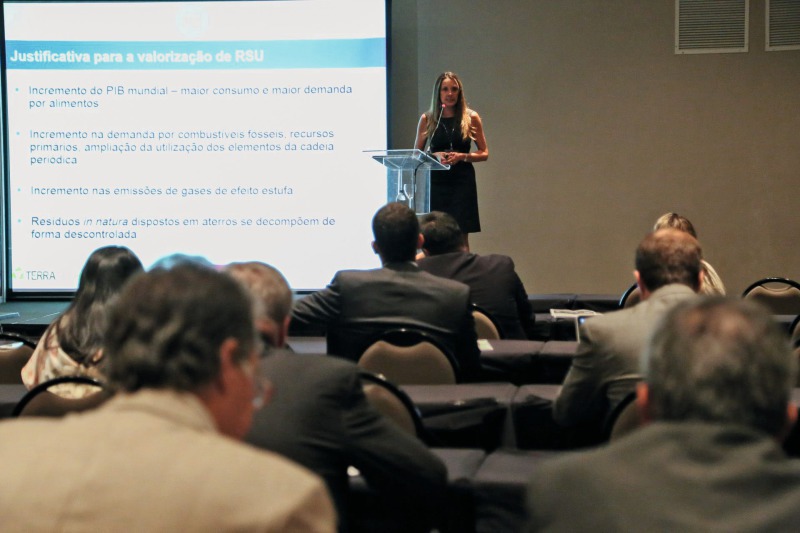
In her paper “Alternative fuels as a source of energy: challenges and opportunities” Christiane Dias Pereira, the Director at Terra Melhor Ltda. and Coordinator of Technical University of Braunschweig in Brazil, addressed the efforts of reducing the impacts of climate change through the reduction of CO2 emissions produced by the waste and cement sectors. Due to the continuous fluctuations of energy prices and the aim of a sustainable resource preservation, the cement industry globally succeeded in diminishing the power consumption throughout continuous technical optimization and substitution of alternative energy sources. Pereira outlined that, currently, the Brazilian waste market is in transition and it is therefore the right moment to identify and intensify the cooperation between these two sectors in order to build a foundation for sustainable development. For this, operational, economic and environmental viability studies must be carried out and an adaptation of technologies for the respective market, such as Brazil, is essential.
Tomé Sinzato, Sales Manager at Scheuch Technology, demonstrated three unique cleaning and filter systems technologies for NOx, VOC and Mercury reduction and their worldwide successful introduction in various cement plants, whereby Nelson Chimentão Junior, PMP – Consultant Rockwell Automation, took the opportunity to point out the relevance of integrated control and information systems for an intelligent und efficient production in small and large industries. He accented that a business network connects technology with people and processes, so if necessary, solutions can be found immediately and a smooth operation can be ensured.
In a sustainable and advanced society, research and development play a key role in success. Seiiti Suzuki, R & D Manager InterCement, combined the distinctive environmental impact of cement production and research activities in order to find a sustainable solution. He analyzed the potential of CO2 biofixation of cultivated microalgae in cement plants. In this sense, he showed the Climatic Agenda of InterCement: “Reduction of specific emissions of liquid CO2 up to 40 % in cement and 50 % in concrete until 2023 (referred to 1990)”, in order to support the State of São Paulo and Brazil in reaching their set climate protection goals. Overall, Suzuki presented the successful results of possible biofixation of up to 40 % of CO2 with no financial impact on the process and also mentioned the importance of this study in relation to the international discussions of biomass vs. biofuels vs. animal feed.
The Instituto Aço Brasil (Brazil Steel Institute) was also represented by Lucila Caselato, Sustainability Manager, addressing the present development and promotion of by-products in the steel industry. Currently, recycling is executed for 88 % of the generated by-products, such as powders, muds and slags and only 6 % are landfilled. This way, 99 % of slags originated in blast furnace are sold to cement production (97 %) and construction (3 %). Because of evolving problems and complications with environmental and social restrictions based on new laws and norms, in 2010 the Institute founded CCA Brasil (Centro de Coprodutos Aço Brasil) as a sustainable solution with a focus on strategic development of a market for by-products. The CCA Brasil is comparable with other international models like Global Slag, Euro Slag or the Nippon Slag Association and permits investments in slag handling and ensuring a quality control, classification of waste as a secondary resource and an enhancement of the market for commercialization of by-products or rather alternative resource.
In 2015, the companies Lafarge and Holcim merged into LafargeHolcim and are represented at the event by Eduardo Barroso Ferreira, Plant Manager, with a speech about co-processing and sustainability in a cement plant. Beginning with tires in 1982, the company has already implemented co-processing of industrial and municipal waste in 82 % of their plants in Brazil. Ferreira stressed that “co-processing plays an important role and a cooperation of all impacted sectors is the key for success”.
In his address on “Experience with a greenfield cement plant in Guatemala”, Adolfo Gramajo, Cemento Progresso, reported his longstanding project San Gabriel in Guatemala of a cement plant, which was started in April 2008 and is still under construction as a result of the financial crisis and social conflicts.
Conclusion
After two days of interesting exchanges and innovative technology presentations, the 11th Conference and Exhibition of CBI found its conclusion at the perfectly organized visit of the Votorantim Plant in Salto-Sorocaba (SP). In summary, it became clear that the development of the cement market is heading towards the use of alternative fuels and the substitution of primary resources. Environmental and climate protection therefore emphasize the goals of both industries and researchers.
http://gmiforum.com/
bemvindo-a-cbi-brazil-a-latam-2016

Überschrift Bezahlschranke (EN)
tab ZKG KOMBI EN
This is a trial offer for programming testing only. It does not entitle you to a valid subscription and is intended purely for testing purposes. Please do not follow this process.
This is a trial offer for programming testing only. It does not entitle you to a valid subscription and is intended purely for testing purposes. Please do not follow this process.
tab ZKG KOMBI Study test
This is a trial offer for programming testing only. It does not entitle you to a valid subscription and is intended purely for testing purposes. Please do not follow this process.
This is a trial offer for programming testing only. It does not entitle you to a valid subscription and is intended purely for testing purposes. Please do not follow this process.