Lower electricity costs thanks to efficient
energy management
In Germany plant operators receive remuneration for the eco-power they produce and grid operators and utilities are obligated to purchase that power on a preferential basis. The higher costs are passed on to consumers in the form of a reallocation charge. That system hits power-intensive businesses like cement producers especially hard.
In the cement industry, electricity consumption is the second most important cost factor and has a direct impact on the price of cement. The special adjustment regulations for electricity-intensive industrial companies allow for a reduction of the reallocation...
In Germany plant operators receive remuneration for the eco-power they produce and grid operators and utilities are obligated to purchase that power on a preferential basis. The higher costs are passed on to consumers in the form of a reallocation charge. That system hits power-intensive businesses like cement producers especially hard.
In the cement industry, electricity consumption is the second most important cost factor and has a direct impact on the price of cement. The special adjustment regulations for electricity-intensive industrial companies allow for a reduction of the reallocation charge. But to take advantage of that relief, such companies need to present proof of a certified energy management system. Siemens helps companies implement such a system. In particular, Siemens offers a software program, Sicement IT MIS V7.1, which companies can use to record and analyze all their energy sources.
1 An energy management system lowers energy costs
In February 2000, the German parliament, the Bundestag, passed the Act on Preference for Renewable Energies, also known as the Renewable Energies Act, for the purpose of improving climate protection. The law aims to increase the proportion of Germany’s total energy mix that is contributed by renewable energy sources and to lessen the country’s dependence on finite and fossil fuels like oil, natural gas and coal. The principle is simple: plant operators that feed electricity generated from renewable energy sources into the public power grid receive a rate of remuneration that is fixed by law for several years. The difference between the remuneration rate and the market price of electricity is equally divided among the utilities, which add the higher cost to the electricity rate charged to consumers. That system can easily impose a substantial burden on energy-intensive businesses. The reallocation charge is currently 3.530 ct/kWh.
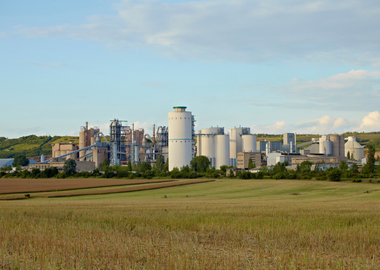
To reduce these added costs, the German Federal Office of Economics and Export Control (BAFA) will cap the proportion of electricity sold by power utilities to manufacturing companies, upon the filing of an application. The purpose of the special adjustment regulations set out in Sections 40 ff. EEG is to lower the electricity costs of power-intensive businesses so as to preserve their international competitiveness. The beneficiaries of these regulations are mainly energy-intensive companies like cement producers (Fig. 1). Under certain conditions, they can have their reallocation charge lowered to 0.05 ct/kWh. To qualify for the adjustment regulations, companies need to prove that their electricity consumption is more than 10 GWh per year and provide detailed information on their electricity cost components – which must account for at least 15 % of their gross operating performance; they also need to have a certified energy management system, which necessitates a software system for entering and collecting the necessary data.
2 Energy management made easy
Siemens offers exactly the right application software for this purpose, Sicement IT MIS V7.1. This data entry and analysis system, which is based on industrial standards, can be used for process information, analysis, production monitoring or quality assurance, among other applications (Fig. 2+3). The program can also consolidate the operational, process and quality data of a production facility and make it available for centralized processing. The electricity data is archived in an SQL database on a separate computer, in such a way that keeps it safe from manipulation. Thanks to the client/server architecture, all archived data is available throughout the company for display, analysis and optimization. For example, real-time trend curves can be displayed on office PCs. The program also features a number of options for display (viewer), reports (logs), trends, analysis and optimization (tables, graphs). This allows reports on energy consumption, production and quality, or even emissions, to be generated automatically. As a result, the management of a cement plant will always have all relevant information for making important decisions at their disposal.
A number of interfaces are available for connecting different process control systems and applications, including interfaces for Simatic PCS 7, Simatic S7, databases, OPC servers and custom solutions for third-party systems.
3 Ways to achieve efficient energy management
Siemens can also help companies with their applications for capping the reallocation charge under the Renewable Energies Act. Siemens supports them throughout the process, from filling out the application, which must be re-submitted to the BAFA by June 30 of every year, or in preparing to file the application.
Such companies must also undergo a certification process that collects and evaluates their energy consumption and the potential to reduce that consumption. Siemens can also help companies prepare the documents for the certification institutions, including GUTcert and TÜV (Fig. 4). Proof of certification or review audits must also be submitted to the BAFA.
The Siemens software program Sicement IT MIS V7.1 (Fig. 5) serves as the basis for recording and analyzing all energy sources and all energy-consuming systems and devices, and for evaluating potential energy savings. It can also be used to generate energy reports of the kind required by the certifying institution and the Federal Office for Economics and Export Control.
But Sicement IT MIS V7.1 can also help companies identify running equipment that is not being used at a given moment. To take an example, a cement plant was able to save about €70,000 per year by shutting down the conveyor screw while the mill was not being used. And because the management information system can also be used to analyze production stops or down times and generate a production report, companies using this software program can permanently improve their production operations. Thanks to the user-friendly GUI and automatically integrated reports, users always have access to all relevant information. In short, Sicement IT MIS V7.1 can help plant operators continually optimize their production processes, operate their plants with greater cost-efficiency and improve product quality further. Especially in conjunction with Siemens’ consulting and service programs, it is the cornerstone of an efficient energy management system.

Überschrift Bezahlschranke (EN)
tab ZKG KOMBI EN
This is a trial offer for programming testing only. It does not entitle you to a valid subscription and is intended purely for testing purposes. Please do not follow this process.
This is a trial offer for programming testing only. It does not entitle you to a valid subscription and is intended purely for testing purposes. Please do not follow this process.
tab ZKG KOMBI Study test
This is a trial offer for programming testing only. It does not entitle you to a valid subscription and is intended purely for testing purposes. Please do not follow this process.
This is a trial offer for programming testing only. It does not entitle you to a valid subscription and is intended purely for testing purposes. Please do not follow this process.