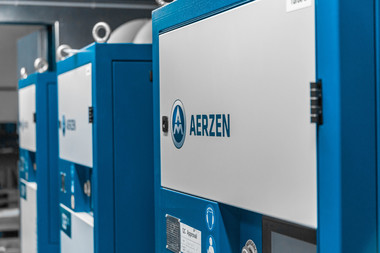
Energy consumption cut by more than half
 Source/Quelle: Atlas Copco Kompressoren und Drucklufttechnik
 Source/Quelle: Atlas Copco Kompressoren und Drucklufttechnik
 Source/Quelle: Atlas Copco Kompressoren und Drucklufttechnik
 Source/Quelle: Atlas Copco Kompressoren und Drucklufttechnik
 Source/Quelle: Atlas Copco Kompressoren und Drucklufttechnik
 Source/Quelle: Atlas Copco Kompressoren und Drucklufttechnik
Summary: Those who consider all components of compressed-air supply and coordinate them well will be able to generate compressed air in a very energy-efficient way even with strongly varying requirements. Walhalla-Kalk has set up a new central station, which requires less than half the energy previously required for the same amount of compressed air and, consequently, which will pay off quickly. This is due to the modern compressor technology including speed control and superimposed control as well as to the change between refrigeration drying and adsorption drying depending on the season.
Walter Fuchs has scored a hit with his concept of a completely new compressed-air station. The technician for mechanical engineering, who is responsible for project planning and maintenance at the Regensburg-based Walhalla Kalk GmbH & Co. KG, succeeded in reducing the energy consumption and, consequently, the costs as well, for compressed-air generation for the lime manufacturing plant by more than 50%. The plant manager Wolfgang Scheurer is more than satisfied with the result. Previously four stations, spread out over the works area, supplied the compressed...
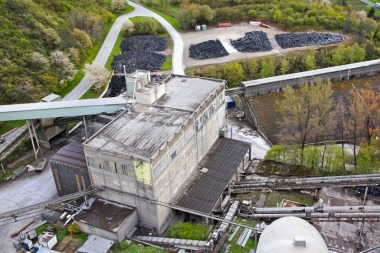
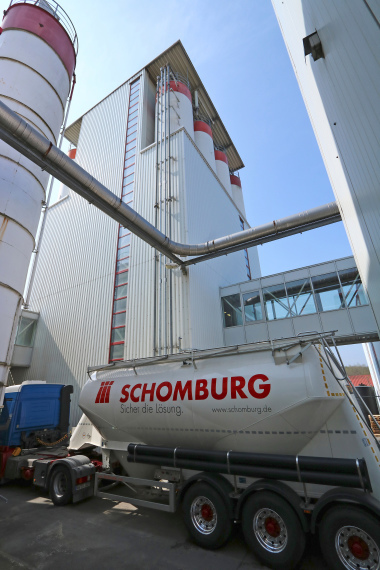
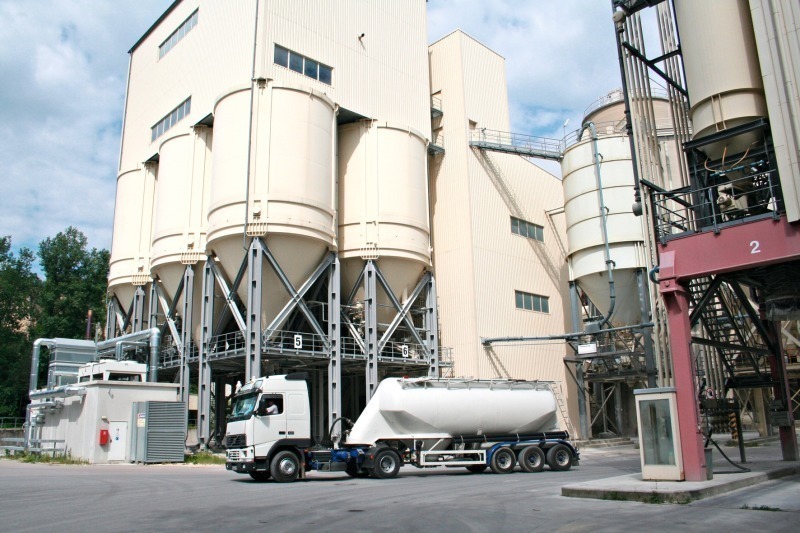
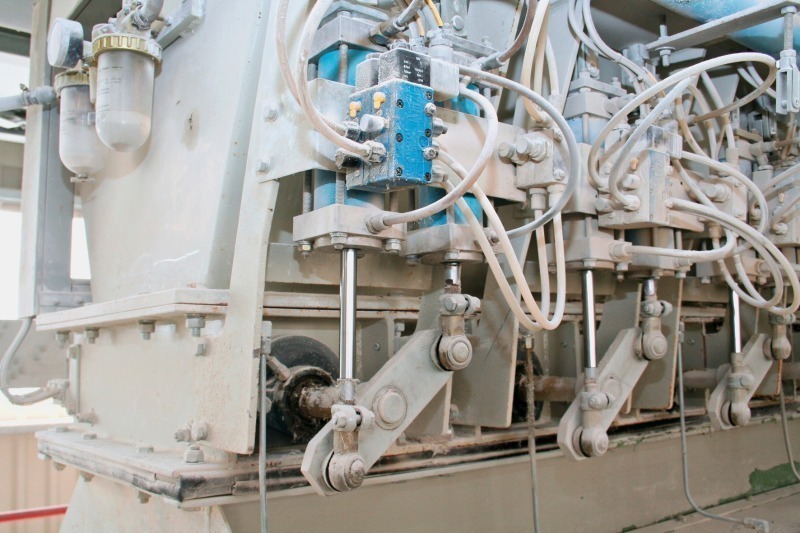
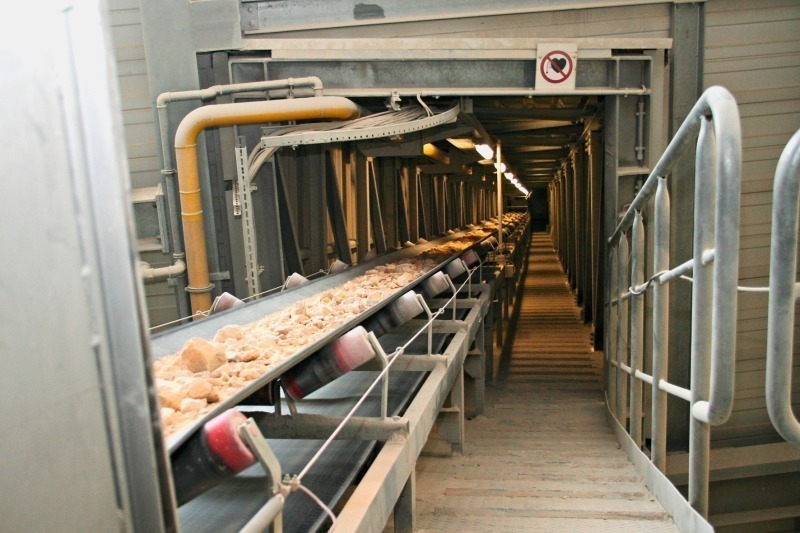
Walter Fuchs has scored a hit with his concept of a completely new compressed-air station. The technician for mechanical engineering, who is responsible for project planning and maintenance at the Regensburg-based Walhalla Kalk GmbH & Co. KG, succeeded in reducing the energy consumption and, consequently, the costs as well, for compressed-air generation for the lime manufacturing plant by more than 50%. The plant manager Wolfgang Scheurer is more than satisfied with the result. Previously four stations, spread out over the works area, supplied the compressed air to the various consumers, above all, the numerous cyclically operating dust collectors (Fig. 1) and pneumatic equipment controlling the material flow around the four lime kilns (Fig. 2) at Regensburg. “Our new central plant is operated, amongst other things, with a speed-controlled compressor and a superimposed control system for the now altogether three compressors”, reported Walter Fuchs. Thus, the volume flow varying between 10 and 25 m³/min can be provided in a very energy-efficient way.
“Without endangering our supply safety, the pressure level could be lowered by one bar”, said the project planner. In the middle of the year 2009, the Regensburg people contacted three manufacturers of compressed-air equipment with the concept developed by Walter Fuchs. They preached to the converted at Atlas Copco Kompressoren und Drucklufttechnik GmbH since the compressed-air specialists from Essen are also convinced that the efficiency potential could only be used completely if all elements of compressed-air supply are involved. The erection of the new central station at Walhalla created the prerequisites for this. However, the decision in favour of Atlas Copco was also made because of the good experience gained with one of the four older compressors. “This machine was the easiest to maintain”, explained Erich Winter, workshop master at Walhalla. All elements to be replaced have an easy access, and the expenditure is minimal. Walter Fuchs heard this with pleasure because the Regensburg people want to maintain their new compressors themselves after the expiry of the guarantee.
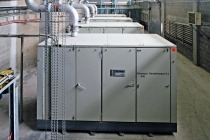
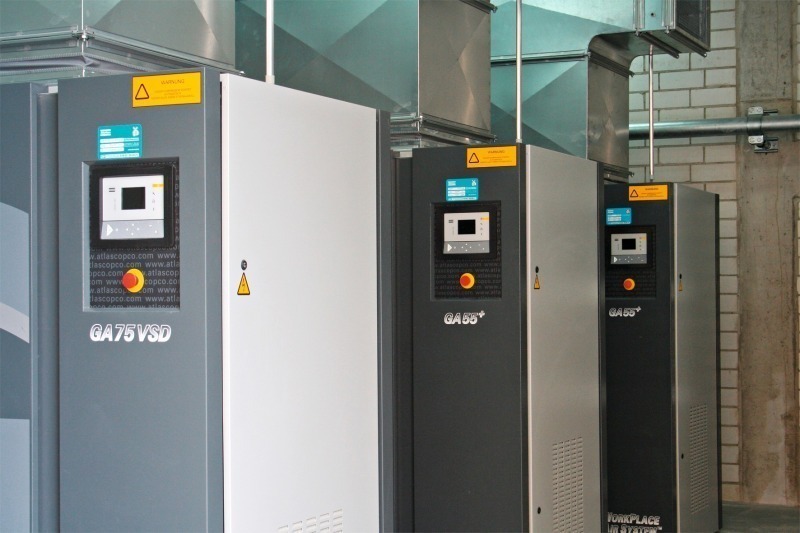
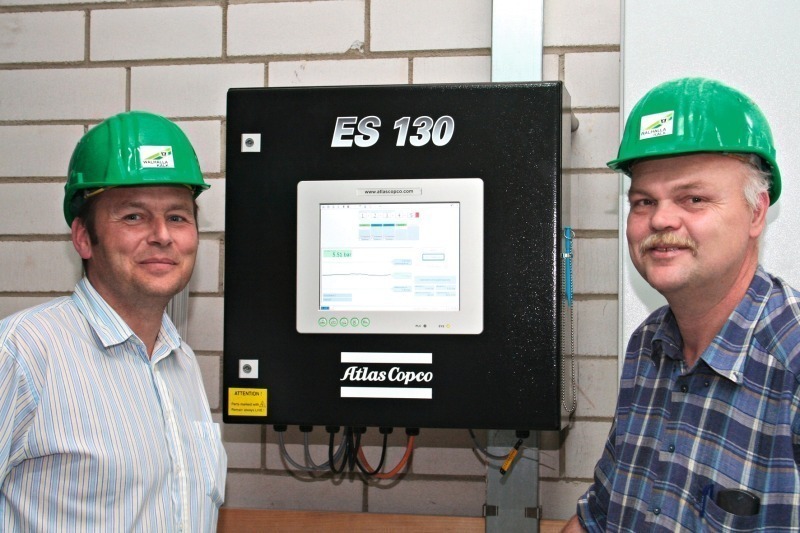
The new station was already completed at the end of 2009 barely half a year after the decision was made by the management of Walhalla. The building application and permit were also handled during this period. A speed-controlled compressor with oil injection, type GA 75 VSD (Variable Speed Drive – Fig. 3), runs in the station to achieve the required volume flow. The rated capacity amounts to 75 kW. A compressor of 90 kW, as proposed by other bidders, would already be overdimensioned. Furthermore, two screw compressors, type GA 55, with a rated capacity of 55 kW and fixed speed have been integrated. Thus, even a compressed-air consumption, higher by one third than today, could easily be covered. The “plus” in the designation of machines is an indication of the currently most modern alternative in the Atlas Copco program, which again underlines the energy efficiency. This is achieved, amongst other things, by means of an asymmetric screw profile to reduce volumetric losses. It is an essential feature that all three compressors are controlled by the energy saving system ES 130 V (Fig. 4). This ensures, amongst other things, that also the speed-controlled compressor will run as close as possible to its optimum operating point.
The quality of a superimposed control was demonstrated by the ES 130 V shortly after the commissioning of the station early in February 2010. “In the past we had to generate a pressure of 6.5 bar so as not to fall below the critical minimum pressure of 4.5 bar at some consumers in our intricate compressed-air supply system stretching for miles”, said Walter Fuchs. This was the only way to compensate for the pressure fluctuations caused by switching on and disconnecting the previously used fixed-speed compressors. The volume flow control by means of suction throttle control on one of the four compressors was either not able to avoid this (let alone to reduce the energy consumption because the input thus generated was hardly changed). All the same they had to disconnect the equipment now and then since the 4.5 bar nevertheless fell short. “This has not happened with the new station so far though we can operate with a system pressure of 5.5 bar only”, continued Fuchs. The speed-controlled compressor quickly compensates for fluctuations so that the pressure deviation is within a range of some hundredths of a bar. The positive result for Walhalla is that a pressure of 1 bar less leads to a reduction of the energy consumption of about 7%.
“All in all we were able to reduce out energy consumption by more than the half – with the same volume flow”, the technician for mechanical engineering is pleased with the result (Fig. 5). “This by far exceeded our expectations”. The ingenious drying concept contributed to this result. Walhalla requires dry (and of course oil-free) compressed air in particular to clean the dust collectors, since otherwise the moisture together with the lime dust would clog the filter fabric. On top of this is the fact that certainly the ring main is arranged underground but the branch junctions to the consumers are in part in the open air. To be sure to avoid the condensation of water vapour in the pipelines even in winter, the dew point of the pressure has to be adjusted correspondingly low, i.e. up to –40 °C. “This can only be ensured by an adsorption dryer”, explained Fuchs. “However, in summer, when even +3 °C are sufficient, energy is wasted here”.
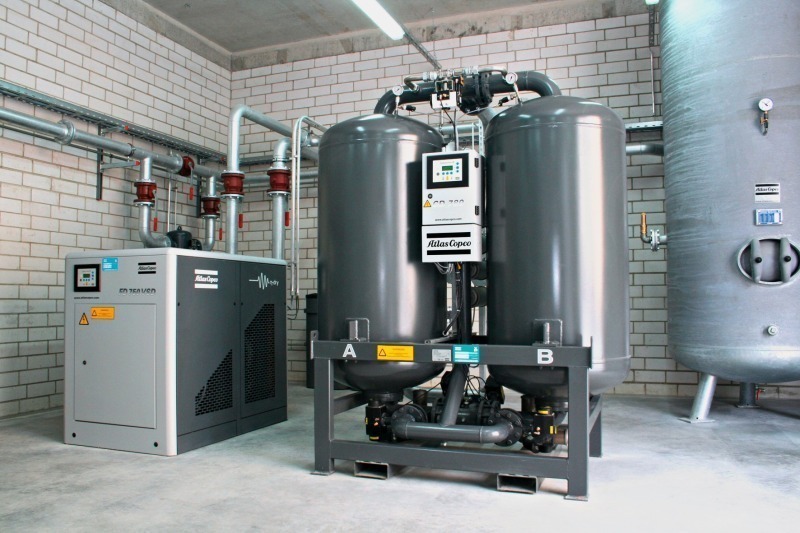
The problem could be solved simply by changing over between summer and winter operation (Fig. 6). Now a very efficiently operating refrigeration dryer, type FD 750 VSD (i.e. also with speed control) is used in summer. As soon as it gets colder, the Regensburg people use an adsorption dryer, type CD 780, with dew point control, which ensures a dew point of the pressure of up to -40 °C. “Thus we always dry our compressed air sufficiently but we consume only so much energy as is required”, underlined Walter Fuchs. Here also the principle of the central compressed-air station pays off. Previously one adsorption dryer each had to be available at each of the four compressors. It is also very easy to filter out residual oil centrally.
The maintenance staff also benefit from the new station. “Since we do not have to go to four stations any longer, now one day per month is sufficient for the entire compressed-air supply system – previously we needed two to three days”, Erich Winter looks back. To increase the pressure at short notice has also become easier. “Recently we needed one bar more of pressure for a short time. This was carried out with the ES 130 V within minutes!” In the past this would not have been possible at all because all four stations had to be changed over for this. “To summarize the question is why we did not implement such a compressed-air concept much earlier”, added Walter Fuchs.
Incidently, the Regensburg people can also visualize the complete state in the central control room of the lime manufacturing plant via the ES 130 V without any problem. Thus, not only the consumption can be accurately recorded, which is important for the determination of the operating costs. The dew point can also be monitored centrally in this way so that clogged filter fabric on the dust collectors is no longer an insue. It goes without saying that leakages can be detected as well at a glance - in this case a lot of energy is frequently lost without this being recognized. “Considering the overall package was decisive for the success of this plant”, Walter Fuchs concluded. “All components of a compressed-air supply system must be as well designed as possible - from the dimensioning of the pipeline to the corresponding pressure vessels and finally to the compressors with superimposed control which must be efficient as possible.” This can only be achieved with a plant of higher quality, but it pays off. “Though the time was limited, we could always rely on Atlas Copco. We are very satisfied with this decision.”

Überschrift Bezahlschranke (EN)
tab ZKG KOMBI EN
This is a trial offer for programming testing only. It does not entitle you to a valid subscription and is intended purely for testing purposes. Please do not follow this process.
This is a trial offer for programming testing only. It does not entitle you to a valid subscription and is intended purely for testing purposes. Please do not follow this process.
tab ZKG KOMBI Study test
This is a trial offer for programming testing only. It does not entitle you to a valid subscription and is intended purely for testing purposes. Please do not follow this process.
This is a trial offer for programming testing only. It does not entitle you to a valid subscription and is intended purely for testing purposes. Please do not follow this process.