HeidelbergCement making savings with new compressed air supply
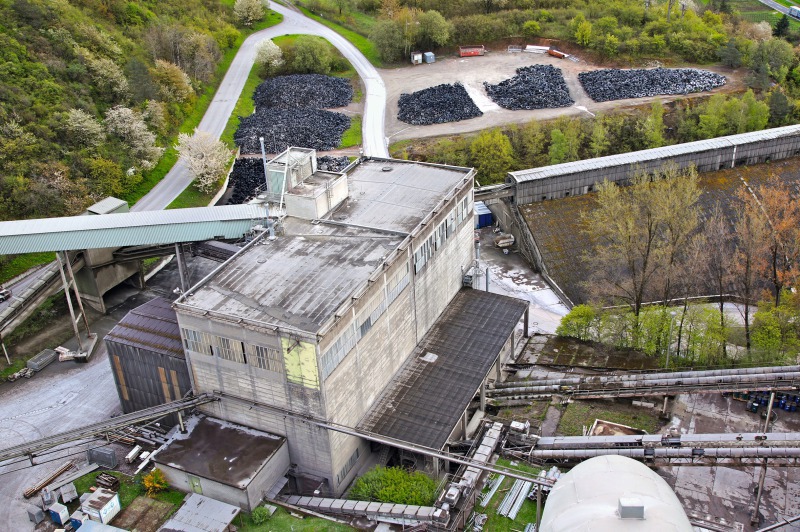
At HeidelbergCement AG’s plant in Triefenstein-Lengfurt, around 400 t fuels are used daily in the rotary kiln. It is therefore important to exploit all saving potential, not only in the process engineering. A new efficiency level has now been achieved with the modernization of the compressed air supply with four new GA-screw compressors from Atlas Copco. As a result, HeidelbergCement is saving 150 000 kWh in electricity per annum.
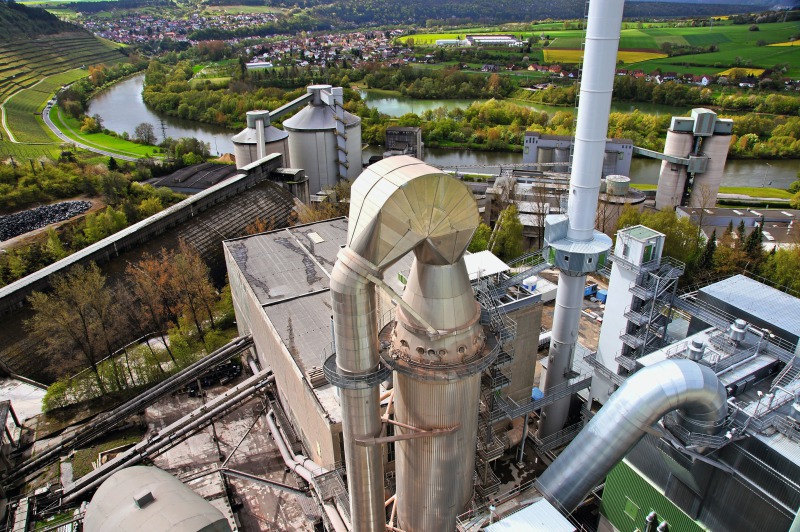
For its daily production of 3000 t clinker, the rotary kiln measuring 78 m in length and 5.2 m in diameter needs around 400 t fuel per day.
In view of such a huge amount of energy, isn’t the efficiency of the compressed air station negligible? “No way,” explains Dominik Azadi, Head of Maintenance and responsible for the energy management system at Lengfurt cement plant owned by HeidelbergCement AG. “Naturally, the fuels as energy sources account for the largest part of our energy consumption. This, however, is necessitated by the process. For this reason, we, naturally, look at other areas for...
For its daily production of 3000 t clinker, the rotary kiln measuring 78 m in length and 5.2 m in diameter needs around 400 t fuel per day.
In view of such a huge amount of energy, isn’t the efficiency of the compressed air station negligible? “No way,” explains Dominik Azadi, Head of Maintenance and responsible for the energy management system at Lengfurt cement plant owned by HeidelbergCement AG. “Naturally, the fuels as energy sources account for the largest part of our energy consumption. This, however, is necessitated by the process. For this reason, we, naturally, look at other areas for potential savings.” And since we are already operating at a very high level with regard to efficiency, we have to tighten even the smallest screws and identify the last potential to steadily improve energy efficiency.
1 Continuous efficiency improvement
A big contribution to the energy efficiency of the cement plant is made by the proprietary Organic-Rankine-Cycle system with 1 MW output, which converts part of the waste heat from the production process into electricity. “We have also documented the compressed air station commissioned in March 2015 with four new high-efficiency screw compressors from Atlas Copco as a relatively large project in our ISO 50001-compliant energy management system”, Azadi reports. “We are obliged to operate a corresponding energy management system that is regularly audited and recertified. So, it’s part of the day-to-day business and the standard processes for us to identify and realize energy-saving potential.”
Between the company’s own quarry at the beginning and the cement silos at the end of the process chain, numerous mechanical and thermal processes relevant with regard to their efficiency are lined up and overlap. Cement production begins with the extraction of shell limestone as raw material. This is crushed in crushers on site at the quarry and then conveyed to a pulverizing and drying unit. Here the raw material is dried, ground to raw meal and filled into silos for interim storage. The raw meal is then fired in a rotary kiln, which can work with up to 100 % waste-derived fuel, at 1450 °C to produce cement clinker. The cooled cement clinker is then ground in the cement mill with other constituents and additives depending on the product type.
2 Dedusting requires
around 50 % of the compressed air
“I’ve worked out that we use roughly around one half of our compressed air for dedusting,” reckons Dominik Azadi. “In cement production, bulk solids always have to be transported from A to B, and these conveying lines must be dedusted, especially at the transfer points.” The fine dust fractions have to be extracted where they are produced; they are collected in the filter of the dedusting system. This is systematically cleaned with compressed air. The material falls back onto the belt conveyor in a controlled process and is rerouted back into production.
Another 30 % of the compressed air goes on the operation of the pneumatic pumps, which are needed primarily for transport processes. The remaining 20 % move pneumatic sliders and atomize, for example, cooling water. “We have a base load of 35 to 40 m³/min by consumers that are always running,” explains Azadi. Some special units, like the pneumatic pumps had a high compressed air requirement, but were not permanently in operation. “These peaks of 65 to 70 m³/min, however, have to be covered to avoid production faults and interruptions.”
3 Modernization of production
required new compressed air concept
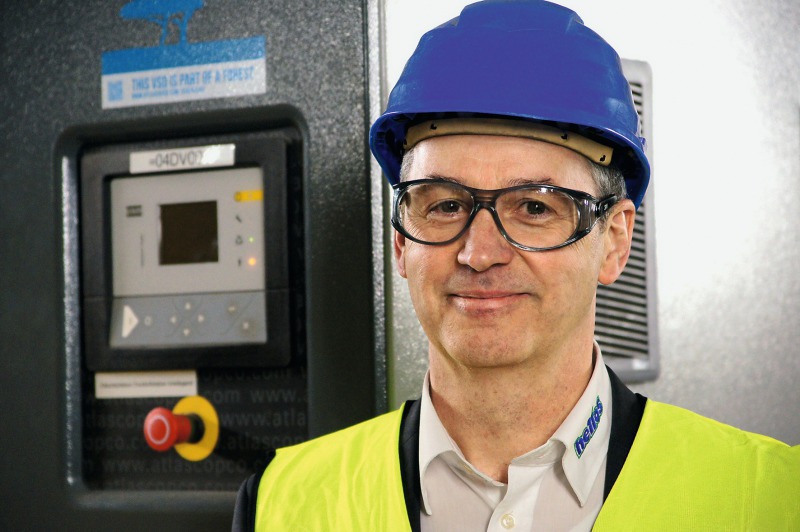
The main reason for the complete revamp of the compressed air supply at Lengfurt cement plant was the modernization of the production plants. “As part of this modernization, consumers were added and we had to cover this additional requirement,” explains Azadi. “On top of that came the fact that prior to the modernization, we were working with two large 110-kWt compressors without speed control, which were operated in full load-no load operation. This mode of operation is very energy-intensive and inefficient. We wanted to integrate a larger speed-controlled compressor into our new compressed air supply, to work more efficiently.” The company discussed the realization with various suppliers. In the end, the company was convinced by the concept of Heilos GmbH, Aschaffenburg, an authorized dealer of Atlas Copco.
“We weren’t able to plan everything in detail, because parallel to the compressed air system, the production plants were extended,” says Heilos Managing Director Rainer Bachmann, recalling the special challenge of the project. “We repeatedly measured the compressed air requirement during planning, but when the consumption is going to increase by 10 to 20 %, it’s difficult to make provision for this because the range of fluctuation isn’t yet known.” The plant was built symmetrically and certain stages planned to approach the estimated optimum. “Obviously, we succeeded in this quite well,” concludes Rainer Bachmann. “However, this is also because Mr Azadi’s department worked on this project for a very long time and in great detail to find the optimum solution with us.”
“From our perspective, everything went perfectly,” adds Jörn-Olaf Schröder, Technical Consultant at Atlas Copco Kompressoren und Drucklufttechnik GmbH in Essen. “Often it’s the case that we are only called into the planning when it’s already too late. Or we are asked to plan things that the user himself doesn’t know yet. Here, everything was very specific, and for this reason the result of the joint development has turned out very well.”
4 Speed control instead of load-no load operation
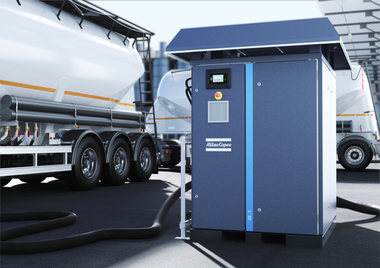
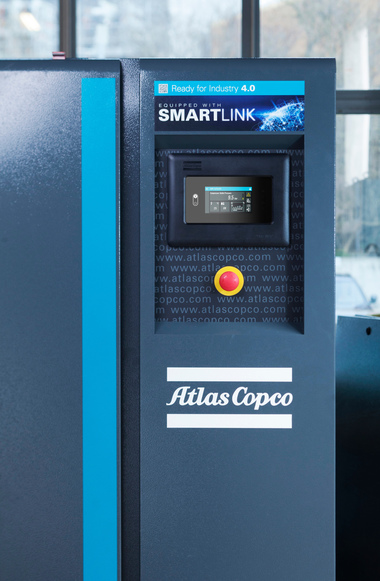
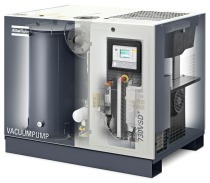
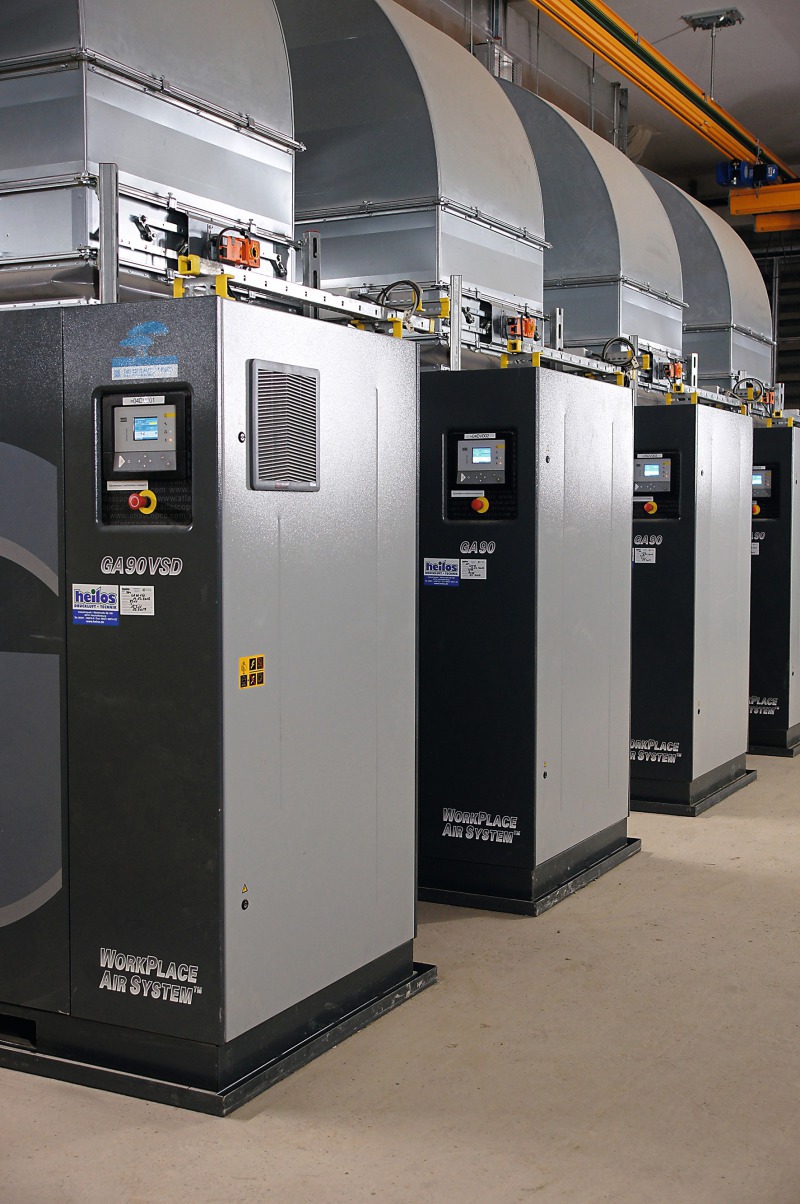
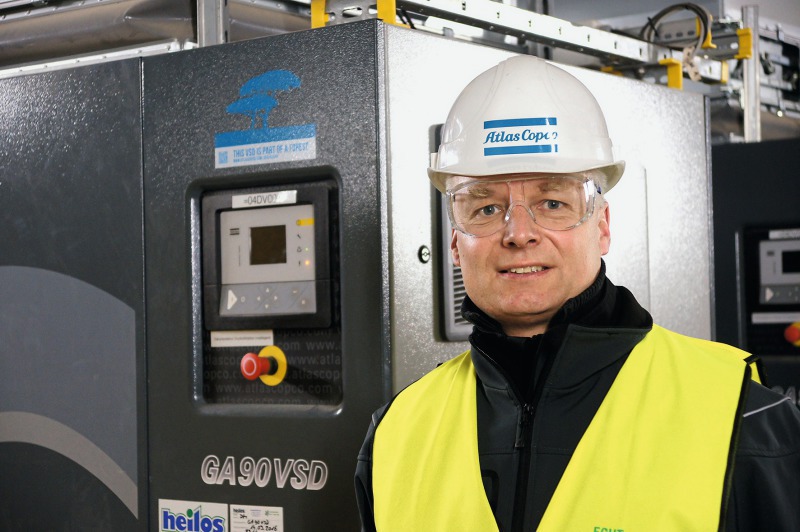
In March 2015, the new compressed air station was commissioned. Today, it is located in a central room of the new plant building. A speed-controlled screw compressor GA 90 VSD (VSD = Variable Speed Drive) from Atlas Copco feeds the compressed air together with three other GA-90 compressors into the 6.5-bar plant network. In a small second station there is another speed-controlled compressor that is connected to the same network. “That is because of the three levels in the plant,” explains Azadi. “We have a connecting pipeline between the central station and the cement mill area on a lower level. To maintain production when there is a fault to this pipeline, we have kept the existing compressor at the mills.” The optimum interplay of all compressors is regulated by a higher-level control system.
The installed power without the installed separate compressor is sufficient today for 65 m3/min. Generally, to cover the basic load, two of the GA-90 compressors and the GA 90 VSD are operated. If other consumers come on stream, the third GA90 is switched on too. It then runs at full load and the speed-controlled machine offsets any peaks in demand. “Economically, we now have the big advantage that we have been able to reduce the no-load share substantially with the new installation,” says Azadi in praise of the system. “We used to have a load-no load ratio of 60:40, now we’re at 90:10, at a conservative estimate. This way, we save around 150 000 kWh electricity per year.”
The second cost pressure comes from the network pressure. It is currently at 6.5 bar, that is just as high as before the modernization, but this is to be optimized downwards in future. “Only recently we commissioned a host of new installations. So, we’re starting by running the safe option so as not to risk any additional faults,” explains Azadi. “When all the equipment is up and running smoothly, we can lower the pressure bit by bit in 0.1-bar steps. In any case, there is still potential there.”
5 Season-dependent compressed air preparation
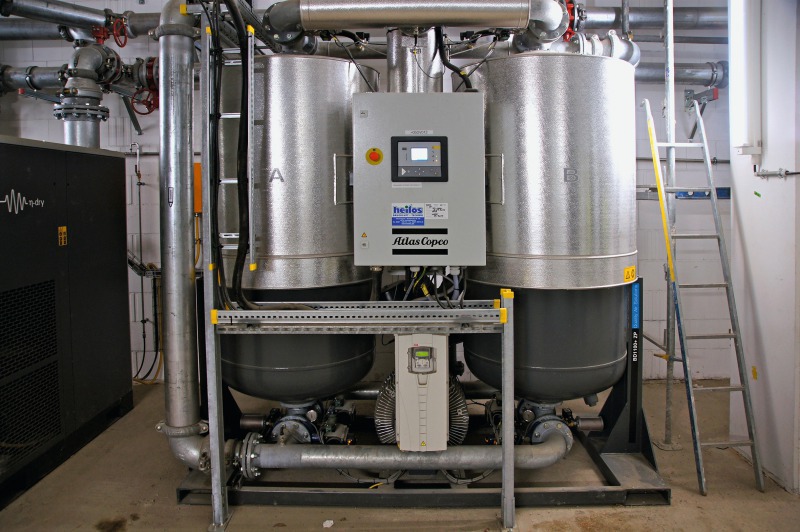
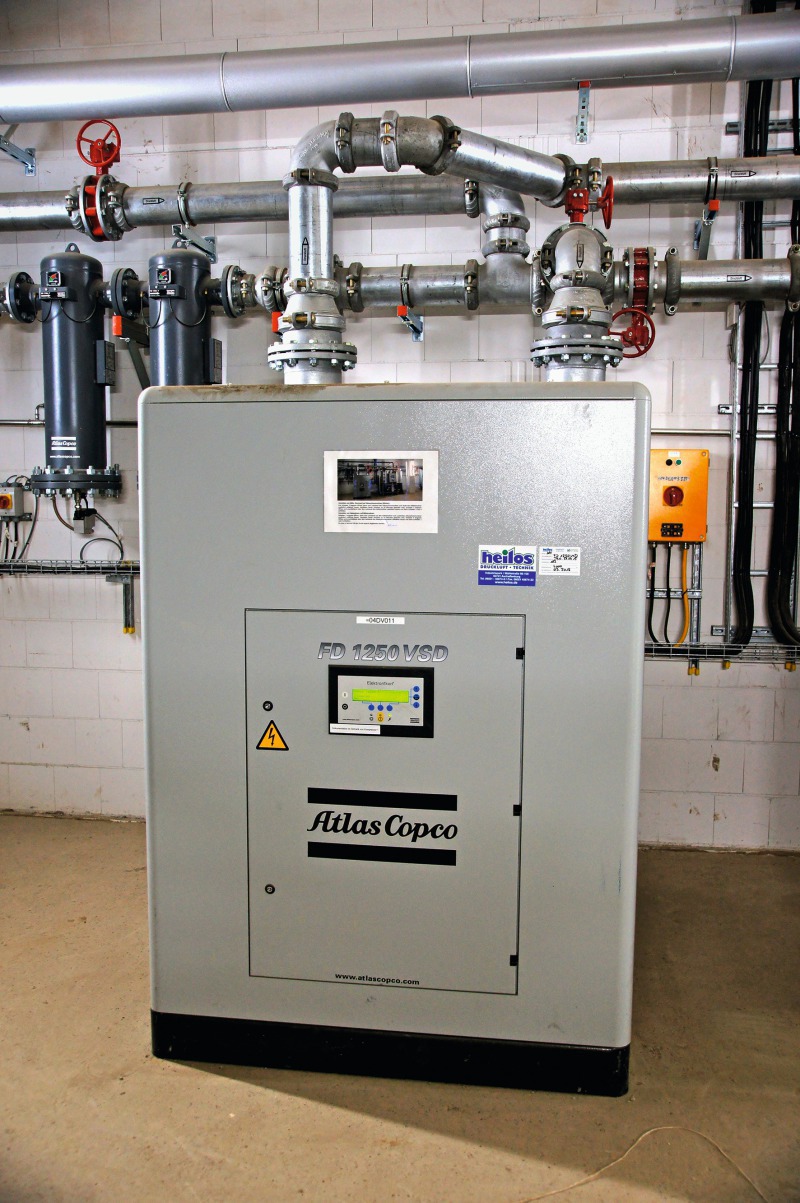
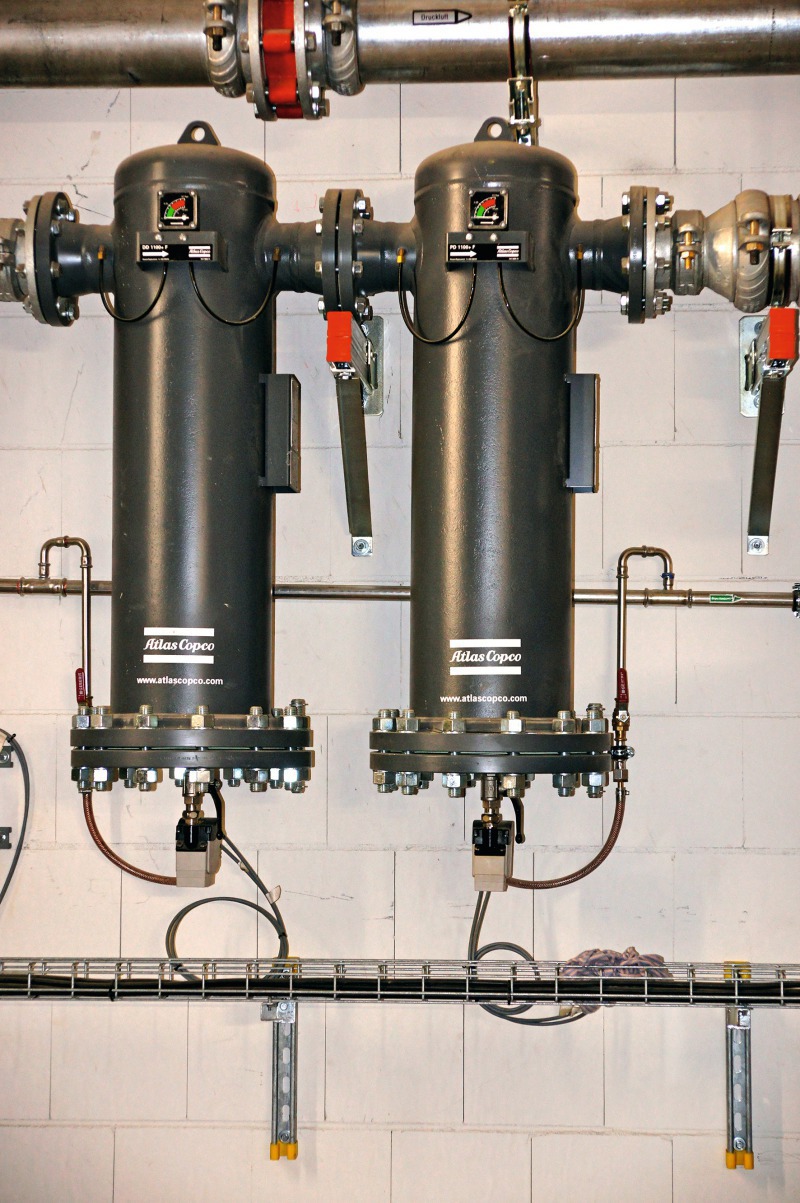
Already today, the plant is profiting from the savings thanks to an intelligent, season-dependent strategy for compressed air preparation. In the summer months, the compressed air passes through an active carbon and a fine dust filter as well as a refrigerant dryer before reaching the network with the required quality and necessary dew point. In the cold months of the year, the refrigerant dryer is replaced with a more energy-intensive adsorption dryer with downstream particle filter. This can ensure a lower dew point than the refrigerant dryer and prevents condensation getting into the compressed air lines when the temperature falls below zero.
“The season-dependent preparation concept is absolutely worth it considering the scale of the compressed air requirement,” explains Jörn-Olaf Schröder. “With the refrigerant dryer, the plant can really save energy in the warm months of the year. The adsorption dryer means that we need pre- and after-filters. As a result, automatically technically oil-free compressed air is generated. In respect of the classification, there are, however, no requirements in this plant.”
6 Heat recovery to further improve efficiency
Another element in the company’s efficiency concept in future is to be the utilization of the compression heat from the compressors, which has already been planned, but not yet realized. “All our compressors have integrated heat recovery,” explains Dominik Azadi. “With the waste heat, from this autumn on, we shall support the heating in the laboratory and control room building and save around 50 000 litres of heating oil per year. We didn’t realize this immediately because a lot of rebuilding work was being done at the same time and we didn’t want to call in yet another trade to the construction site to lay the necessary pipelines.”
Besides the economic improvements with the new compressed air system, which have all been documented in the energy management system, another priority for Dominik Azadi is the supply reliability. “We are designed for redundant operation so that we can do maintenance work on one compressor without having to put up with any production outage,” sums up the maintenance manager. “And even if we had a fault, the other compressors could make up for it. So, we can guarantee a reliable supply at all times.
//www.atlascopco.de" target="_blank" >www.atlascopco.de:www.atlascopco.de

Überschrift Bezahlschranke (EN)
tab ZKG KOMBI EN
This is a trial offer for programming testing only. It does not entitle you to a valid subscription and is intended purely for testing purposes. Please do not follow this process.
This is a trial offer for programming testing only. It does not entitle you to a valid subscription and is intended purely for testing purposes. Please do not follow this process.
tab ZKG KOMBI Study test
This is a trial offer for programming testing only. It does not entitle you to a valid subscription and is intended purely for testing purposes. Please do not follow this process.
This is a trial offer for programming testing only. It does not entitle you to a valid subscription and is intended purely for testing purposes. Please do not follow this process.