Successful 4th Alternative Fuels Symposium
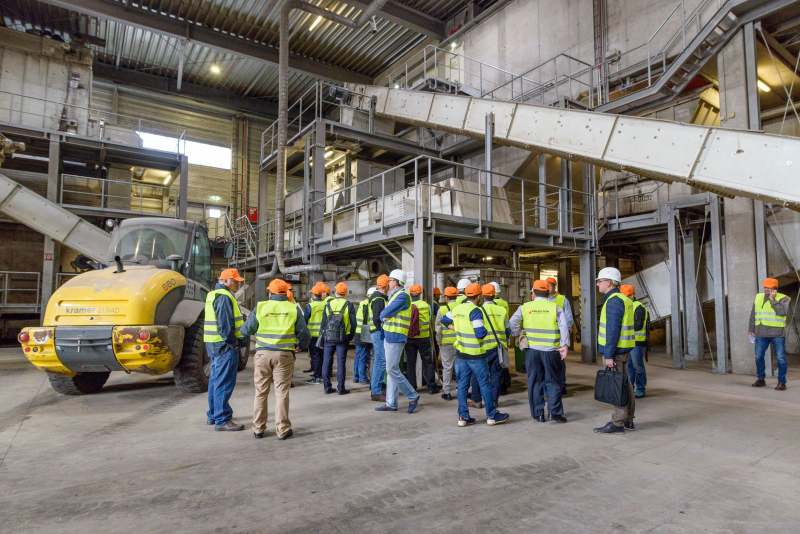


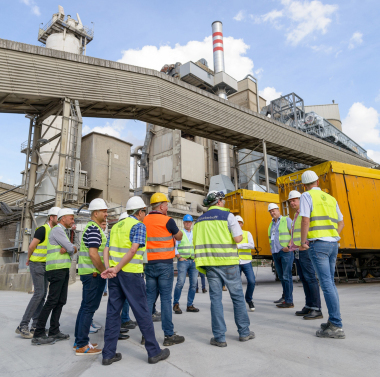
On 27.09.–28.09.2017, around 140 experts met for the 4th Alternative Fuels Symposium in Duisburg to discuss the worldwide utilization of alternative fuels. The event organized by MVW Lechtenberg & Partner started already on the Tuesday with an excursion to the Herhof Stabilat plant in Osnabrück.
1 Importance of alternative fuels growing in the
cement industry worldwide
Dirk Lechtenberg, MVW Lechtenberg & Partner, greeted the attendees from around 25 countries with a short review.
Around 15 years ago, he had held his first talk on the topic of alternative fuels at the AUCBM in Algeria. For him, it had been the starting point for the utilization of alternative fuels in the Arab world. In the meantime, this topic was becoming increasingly important worldwide. With the use of solid fuels, there were, he explained, big differences as there was often no functioning waste separation like...
1 Importance of alternative fuels growing in the
cement industry worldwide
Dirk Lechtenberg, MVW Lechtenberg & Partner, greeted the attendees from around 25 countries with a short review.
Around 15 years ago, he had held his first talk on the topic of alternative fuels at the AUCBM in Algeria. For him, it had been the starting point for the utilization of alternative fuels in the Arab world. In the meantime, this topic was becoming increasingly important worldwide. With the use of solid fuels, there were, he explained, big differences as there was often no functioning waste separation like that, for example, in place in Germany. Special focus was therefore on creating possibilities to optimally process these sometimes varying material mixes and utillize these selectively.
The series of talks was opened by Dr Martin Oerter, Research Institute of the Cement Industry, Germany, with an overview on “Alternative fuels in the German cement industry”. He informed attendees about the different types of alternative fuels and their optimum addition in the cement process to achieve ideal, residue-free combustion and ensure high cement quality. In Germany, 59.1 million GJ/a is generated from alternative fuels and with this more than 2 million t coal equivalent saved. The share of SRF rose sharply in Germany between 2002 and 2016, from less than 10 million GJ/a to around 40 million GJ/a. Significant was in his view that with the use of alternative fuels not only CO2 is saved. With the ashes formed, a significant content of raw materials can be saved. The use of alternative fuels in the cement industry in Europe was, however, very strongly dependent on whether landfilling had priority in the individual countries, like, for instance, in Greece and Bulgaria, or waste-to-heat conversion, as in Germany. Pre-treatment plants for optimum preparation of alternative fuels and improving their quality were becoming increasingly important.
2 Equipment for the production of alternative
fuels
The first day of talks was devoted to the equipment for the utilization of alternative fuels in the cement industry.
Dr Thomas Weiss, IKN GmbH, Germany, reported on “The fire bed combuster – compact design for AF firing”. He presented this new development from IKN, which is currently being installed in a plant. In the development of the combuster, the focus had been on requirements such as calorific value, humidity, bulk density, feed rate, thickness of the particles and composition. A report on the first results will be given in 2018.
“The Prepol step combuster to utilize low-quality AF in cements plants” was the topic addressed by Samuel Zühlsdorf, ThyssenKrupp Industrial Solutions, Germany. He presented a case study from the LafargeHolcim cement plant in Lägerdorf. There had been high motivation to use alternative fuels in the kiln, which had gone into operation in 1995. Various measures had been implemented, including installation of a chlorine bypass, extension of the existing calciner loop, installation of a Prepol step combuster. As a result of these measures, now more waste could be used as fuel and less energy consumed as a result. The plant in operation since November 2013 was simple, safe and effective. A big advantage was that there were no moving parts in the pre-combustion chamber and maintenance only had to be done from the outside.
The next three talks addressed the subject of shredders. Representatives of the companies Vecoplan, Germany; Metso A/S, Denmark; and SID SA, Switzerland, presented their plants for effective comminution of alternative fuels with reference to some case studies and also explained their solutions for, for example, very wet starting materials.
In the afternoon the focus was then on the process steps reception, dosing, feeding and storage. Speakers from the companies Walter Materials Handling, France; Di Matteo Förderanlagen GmbH, Germany; and Schenck Process Group, Germany, outlined their solutions.
Closing the first day, Oliver Kurtnacker, Axians IAS, Germany, spoke on “Economic software solutions for the logistics of refuse-derived fuels”. Clients like Cemex, Lhoist, Dyckerhoff, HeidelbergCement, Saudi Cement and LafargeHolcim trusted the IT & security solutions from Axians.
Jan Gressmann, Eggersmann Anlagenbau GmbH, Germany, explained then in the last talk of the day “Integrated processes to suit different budgets for MSW to RDF”. He gave a detailed overview and presented three focuses for process realization, including a mobile plant. Each market, he stressed, needed its own solution.
During the evening programme, the attendees had ample opportunity to discuss their experiences with alternative fuels in splendid weather, first on a boat trip and then in the Museum of German Inland Waterway Transport.
3 RDF from the cement producer site
On the second day of talks, field reports on the use of alternative fuels, given by representatives of various international cement plants, were on the agenda.
The introductory talk was held by Dirk Lechtenberg, MVW Lechtenberg & Partner, Germany, on “Developments in the alternative fuels market”. He began with an overview of the use of alternative fuels in various, globally operating cement groups. In 2016, CRH, for example, used around 1.9 million t compared to 1.6 million t in 2015. Lechtenberg: “The substitution rate remains at 23 % for all plants and increased from 33.9 % to 45 % in their European plants.” HeidelbergCement would like to be using around 30 % alternative fuels by 2020 and LafargeHolcim around 80 million t alternative fuels and raw materials by 2030. At Cemex, regarded as the leader in the utilization of alternative fuels, 92 % of its plants used alternative fuels, that was a substitution rate of around 23.3 % currently, Votorantim had increased its substitution rate from 9.7 % to 11.8 %. Within three years “Votorantim wants to become a major player in the industrial waste treatment market”. Intercement, the Titan Cement Group and Buzzi Unicem had also further increased their substitution rates in 2016. In Egypt, on the other hand, the use of biomass played a greater role. Lechtenberg also stressed the role of China, now the biggest cement producer worldwide. Anhui Conch had now completed 15 waste treatment projects itself. In China the use of alternative fuels was gaining momentum. The Chinese were investing massively in waste processing and RDF production and use, and buying in the know-how for this. The Chinese market for RDF was, in contrast to other parts of the world, gigantic. In future the use of new technologies, like biodrying, separate combustion chambers and V-mills for drying and fine milling, would bring a further improvement in RDF quality. Lechtenberg appealed to the industry that cement plants should use this opportunity and go on the offensive by offering sustainable solutions for waste management. New business models for the use of alternative fuels were also becoming more popular.
Thomas Bals, Wittekind Zement, Hugo Miebach & Söhne, Erwitte/Germany, then reported on “Experience in using municipal solid waste as alternative fuel at Wittekind Zement”. The cement plant had been one of the first in Germany to fire RDF. He explained that the municipal waste arriving daily was processed in the steps precomminution, screening, classifying and recomminution (20 000 t). In times when the cement plant was not running, bails were formed and these then stacked and stored. Furthermore around 50 000 t commercial waste was processed, which was stored in bins, shredded and finely ground. He explained that an IR device was used to measure the PVC content in order to ascertain the chlorine content entrained with the AF. Two mills were used, one always in reserve to be used when the other was undergoing maintenance. At present a V-mill was being installed to dry and grind the material. One advantage of the V-mill will be that the secondary fuel will already be preheated and so, used with an increased temperature, will burn faster.
“Mechanical biological treatment of municipal solid waste as fuel” was the topic addressed by Konstantinos Papadimas, Herhof, Germany. The company offers its clients know-how and investment. Which waste management is the optimum choice always depended on the specific region and the local practices.
Dr Amit Marmur, Nesher Cement, Israel, reported on “Processing MSW into RDF and the use at Nesher Cement”. Nesher Cement, founded in 1925, is regarded as one of the leading cement companies in Israel and at its Ramla plant produces around 5 million t cement annually as well as around 1 million t cement annually at its Haifa plant. In the last few years it has invested in equipment for the utilization of AF, 2014 in a new RDF feeding system and 2015 in a storage hall. As the costs for landfilling have climbed from 2.5 €/t in 2007 to 25 €/t at present, a big RDF plant was built in Hiriya Recycling Park, which went into operation in March 2017 and produces around 150 000 t RDF annually, also supplying Nesher Cement. While Nesher cement used less than 5 % alternative fuels in 2014, it was already using around 17 % from January to August 2017.
The possibilities to finance international projects with the help of the KfW bank were the subject of a report by Dr.-Ing. Wolfgang Pfaff-Simoneit, KfW Development Bank, and Ralf Riedel, DEG – Deutsche Investitions- und Entwicklungsgesellschaft, Germany. They showed the various possibilities and the preconditions for this. At present, work on large-scale solid waste management projects was in progress in Egypt and Tunisia. It was, however, necessary for private activities to take public interest into account, too.
RBM Tripathi and Umashankar Choudhary, JK Cement Works, India, presented the “Status of alternative fuels in the Indian cement industry”. In India, as the second largest cement producer worldwide, there was great potential for the use of waste. More than 45 cement plants had started coprocessing of AFR. While the AF substitution rate in 2010 was only 1 %, by 2016 it had reached more than 4 %. They explained that the goal was that it should reach 25 % by 2025.
Adam Bojarczuk, Chelm Cement Plant, Poland, spoke on the “Drying of RDF at Cemex Chelm”. In the years from 2002 to 2013, around € 15 million had been invested in AF installations and AF rate increased from 3.5 % (2002) to 85.3 % (2016). He presented the SRF dryer used, which is operated with the waste heat from the clinker cooler, has a capacity of 40 t/h, and dries from 35 % moisture to 20 %, at an energy consumption of 15 kWh/t SRF.
In the afternoon, two field reports from Egypt and one from Bulgaria were on the programme. Omar El Hassanein, Arabian Cement, Egypt, presented in his talk “Processing MSW into RDF – experience at Arabian Cement Company, Egypt” the activities of his company. Because of the energy crisis in Egypt in the years 2011/2012, the cement producers had been forced to look for alternatives and invest in equipment for the utilization of AF. In 2017, a recycling plant for the Arabian Cement Company was on the programme. El Hassanein’s tip for his colleagues: Produce a high-grade RDF, secure waste sources and secure supply for AF.
“Waste management in Egypt – AF Challenges and Opportunities” was the topic of Karim Elsabee, Reliance Investments, Egypt. He defined a great potential in waste management in Egypt. At present, the main focus of the 21 cement plants using AF was on biomass (70 %) with around 655 000 t annually. Around 30 % RDF were used, with 280 000 t/a. The average substitution rate amounted to 7 %. The production of MSW totalled around 7.5 million t/a in the three biggest cities Cairo, Giza and Alexandria alone.
The concluding talk was held by Vladimir Dimitrov, Titan Cement, Zlatna Panega Plant, Bulgaria, who gave a comprehensive talk on the use of AF in the cement plant and the search for and the use of various alternative fuels.
Over the two days of talks, the attendees were offered a comprehensive and interesting programme referencing many case studies. The symposium offered not only a very good opportunity to get a basic overview of the use of AF worldwide, but also the chance to take new ideas for their own work home with them.
//www.lechtenberg-partner.de" target="_blank" >www.lechtenberg-partner.de:www.lechtenberg-partner.de

Überschrift Bezahlschranke (EN)
tab ZKG KOMBI EN
This is a trial offer for programming testing only. It does not entitle you to a valid subscription and is intended purely for testing purposes. Please do not follow this process.
This is a trial offer for programming testing only. It does not entitle you to a valid subscription and is intended purely for testing purposes. Please do not follow this process.
tab ZKG KOMBI Study test
This is a trial offer for programming testing only. It does not entitle you to a valid subscription and is intended purely for testing purposes. Please do not follow this process.
This is a trial offer for programming testing only. It does not entitle you to a valid subscription and is intended purely for testing purposes. Please do not follow this process.