Digital delivery note with pen and paper
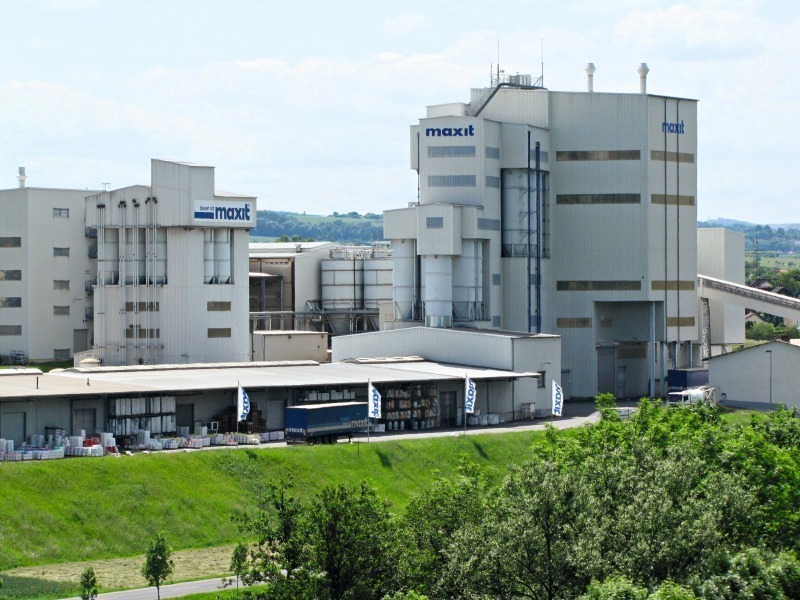
Customers benefit greatly from a new digital delivery note system and internal operating and administration costs have decreased enormously.

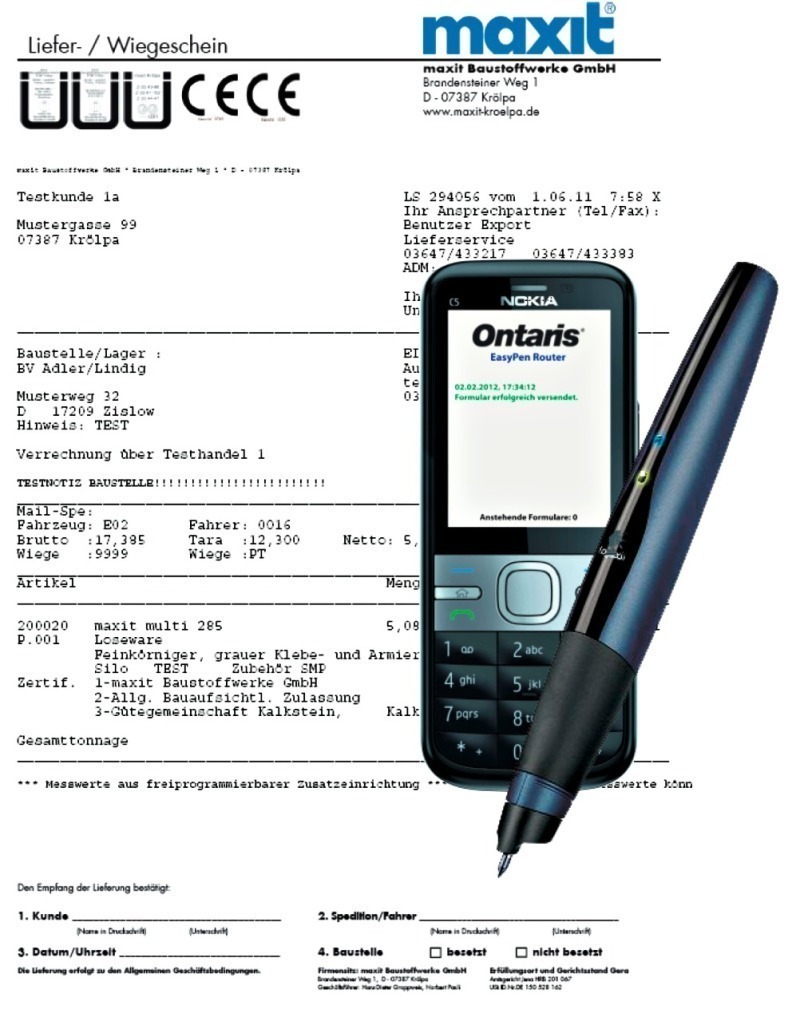
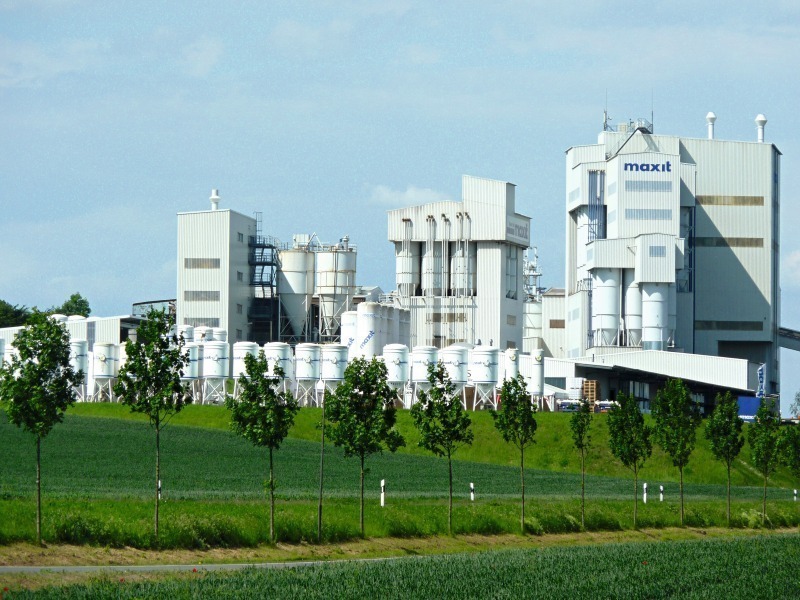
In 2011, maxit Baustoffwerke GmbH (Fig. 1), which is based in Krölpa, Thuringia, was seeking a solution that would enable the company to manage its increasing quantity of delivery notes and provide its customers with better support at the same time. It also had to be a centralised and standardised solution that could be employed by all five plants affected by the aforementioned challenges, and it was found when a pen which writes on normal paper and simultaneously digitalises (Fig. 2) whatever is written was developed. When a delivery note is filled out on site, the data is sent to the head...
In 2011, maxit Baustoffwerke GmbH (Fig. 1), which is based in Krölpa, Thuringia, was seeking a solution that would enable the company to manage its increasing quantity of delivery notes and provide its customers with better support at the same time. It also had to be a centralised and standardised solution that could be employed by all five plants affected by the aforementioned challenges, and it was found when a pen which writes on normal paper and simultaneously digitalises (Fig. 2) whatever is written was developed. When a delivery note is filled out on site, the data is sent to the head office via a mobile phone so that it can be processed immediately.


Over 200 000 delivery notes per year

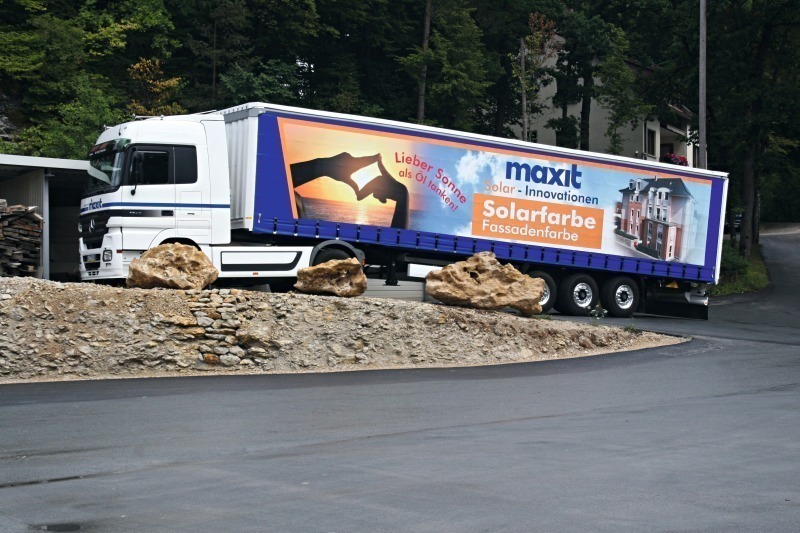
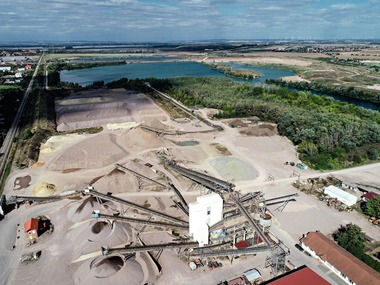
maxit Baustoffwerke GmbH trades all over the world and has over 500 employees based across eight different sites. In addition to its dry mortars, maxit has put together an extensive product range that covers building shells, extensions, and façades. Between the four plants in Krölpa, Dresden, Thörey, and ­Leupahn and the warehouse in Reinsdorf, approximately 200 000 delivery notes are filled out every year; while maxit also uses 45 vehicles and drivers of its own and about 25 subcontractors for delivery purposes. Orders can also be collected from each of the sites which supply building materials in sacks on pallets, and as loose goods in silos (Fig. 3).

Anke Adler, the IT manager at maxit Baustoffwerke GmbH, said “Up until now, whenever customers have rung up to enquire about their delivery, we’ve not been able to give them any information. We’ve had to try and contact the driver by phone and ask him to fax the delivery note. That was terribly expensive and customers were dissatisfied.” Each day, maxit was faced with needing to get back about 700 delivery notes with customer signatures from drivers promptly so that they could be archived, and recorded centrally on its computer system at its Krölpa plant so that the orders could be passed on to its billing department. The following major problems demanded an innovative solution:

The period between a delivery note arriving at a customer’s premises and reaching Krölpa for the final processing stage could last as long as three weeks.

Maxit was often unable to provide customers with any information if they had a query about a delivery, because the relevant delivery document had not yet been returned and was still in the delivery lorry.

Delivery notes sometimes got lost.

The hard copy archive was huge and took up an unbelievable amount of room (because of the ten-year legal retention period). It had become unmanageable and older delivery notes could no longer be found again.

The dot matrix printers used as part of the old system were expensive to run and maintain.

Writing and digitalising at the same time

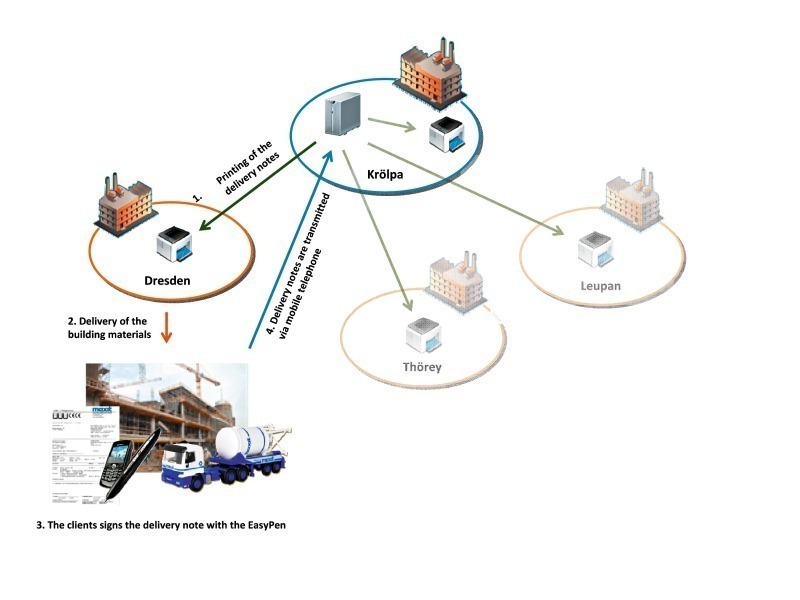
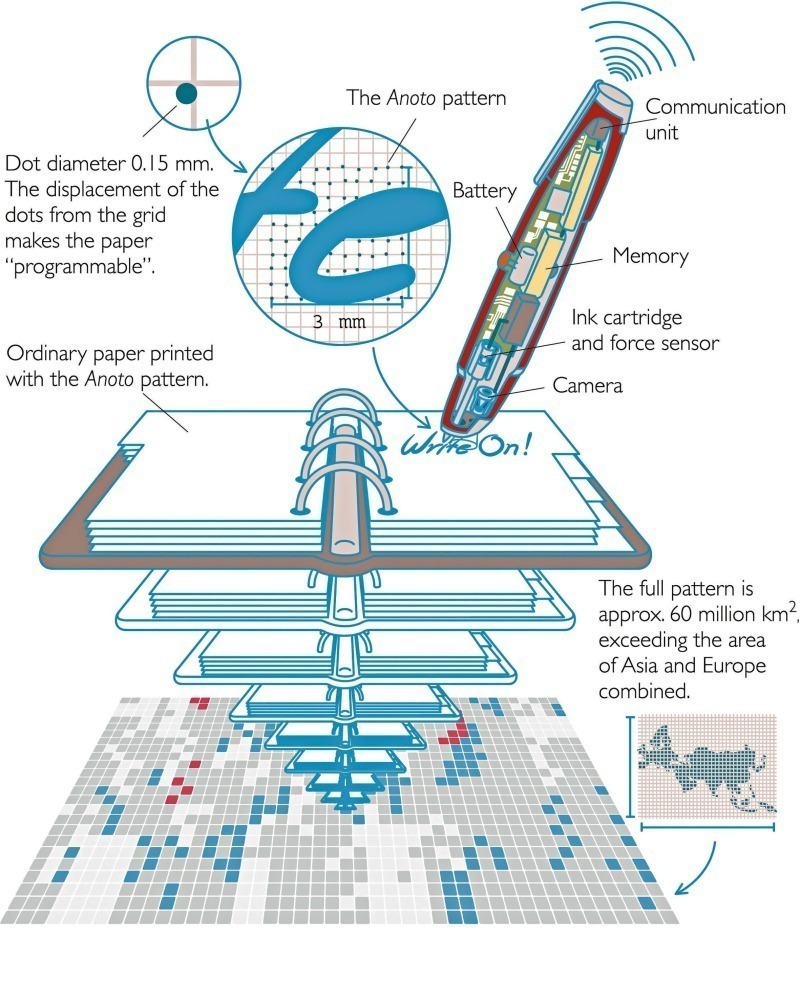
In cooperation with Ontaris GmbH & Co. KG in ­Wuppertal, maxit devised a solution, which on one hand retained the advantages of the previous paper process (delivery notes are signed by customers, hard copies don’t get ruined or dirty, and drivers don’t have to have any special technical knowledge) and on the other hand eliminated the disadvantages of the old system. “The entire solution (Fig. 4) is based on the “EasyPen System”, which was developed by us,” said Martin Schüßler, one of the managing directors at ­Ontaris. It is a standardised solution, which allows forms to be filled out by hand and made available in electronic form at the same time. The core of the solution is a ballpoint with an integrated camera (EasyPen), which digitalises and stores information as it is being written (Fig. 5). A special background pattern, which is automatically printed on the form, enables the pen to read and classify the data (Fig. 6).
Explaining the system, Mr Schüßler continued, “Our solution hardly changes anything for users. Just as before, they write on paper forms with a pen. The only difference is that the data is then transmitted directly to the head office via a mobile phone.” The information is digitally recorded automatically without users having to do anything special. Expensive training sessions and the laborious, error-prone period of getting used to a complicated system don’t come into the equation for users either.
Data is transmitted by Bluetooth from the pen to a mobile phone, which then automatically transfers it to a central server via an encrypted Internet connection. The server uses a handwriting recognition system to automatically convert the data into a digital format that can be handled by any computer system. It is now ready for further processing.

Putting the solution into practice

Ms Adler said, “We had spent a long time searching for a suitable solution without any success. It was only through the company which looks after our Vodafone system, V + S Kommunikationssysteme Leipzig GmbH, that we became aware of the digital pen solution. The solution we were looking for had to satisfy a number of high demands. We wanted as little as possible change for our drivers, and the cost of integrating it with our existing data processing infrastructure also had to be kept to a minimum. In addition, it needed to be a centralised solution that could be adopted by all five sites.”

Mr Schüßler added, “In our first meeting, I quickly realised that implementing the right solution in a way that would allow business to continue as smoothly as possible without being disrupted or interrupted would almost be more important to maxit than finding the solution itself.” Communication between the merchandise management system (IBM System I5) and the Ontaris EasyPen server, which are both at the Krölpa plant, form the spine of the solution. As before, the delivery notes are produced by the IBM System I5. Instead of printing them out straight away, how­ever, the IBM system forwards the information to the EasyPen server. Here, delivery notes are either given an individual background pattern, which is compatible with the EasyPen, or have a unique barcode allocated and added to them. Delivery notes are printed using standard four-colour laser printers. All five sites are connected, and each delivery note is automatically dispensed by the printer assigned to the site supplying the respective goods.

It is necessary to add barcodes to some of the delivery notes, because not all of maxit’s subcontractors use the EasyPen. A way of uploading signed delivery notes to the document management system automatically had to be found in spite of this, and so barcodes were introduced. These contain the delivery note number and the customer number, which allow the delivery note to be digitalised automatically by a scanner and uploaded to the document management system.

In the morning, drivers now take the delivery notes required for their day’s schedule as usual, but when goods arrive at a building site, the customer confirms the delivery by signing the delivery note with the EasyPen. Customer comments can be recorded as well. These are then transmitted to the head office with the invoice via the driver’s mobile phone. The delivery note remains at the building site as proof for the customer, but by the time the driver leaves, maxit already has a digital PDF copy of the information. In addition, the advisor responsible for the order receives an email with the completed delivery note, which can then be processed further and used to issue an invoice.


Improved service and lower costs

A customer rings up and wants the person in charge of their order to tell them whether or not their delivery has arrived at their building site yet and, if yes, who accepted it. With a few mouse clicks, the advisor opens the relevant delivery note in the document management system and is able to inform the customer that the goods were accepted by the site manager approximately 20 minutes ago. This sort of service is now the norm at maxit. “I am happy with the solution!” said Ms Adler, clearly delighted. “The team at Ontaris understood what we wanted straight away, and the solution was implemented quickly and easily, without the disruptions and other problems that IT projects often bring. The on-site support from V+S was fantastic, our customers benefit greatly from the system, and of course our internal operating and administration costs have decreased enormously.”

Überschrift Bezahlschranke (EN)

tab ZKG KOMBI EN

4,99 € / Woche* (Test EN)

This is a trial offer for programming testing only. It does not entitle you to a valid subscription and is intended purely for testing purposes. Please do not follow this process.

This is a trial offer for programming testing only. It does not entitle you to a valid subscription and is intended purely for testing purposes. Please do not follow this process.

Bestellbutton in Angebotsbox (EN)

tab ZKG KOMBI Study test

2,49 € / Woche* (Test EN)

This is a trial offer for programming testing only. It does not entitle you to a valid subscription and is intended purely for testing purposes. Please do not follow this process.

This is a trial offer for programming testing only. It does not entitle you to a valid subscription and is intended purely for testing purposes. Please do not follow this process.

Bestellbutton in Angebotsbox (EN)

Related articles:

Issue 7/2021 PRAXIS EDV-BETRIEBSWIRTSCHAFT- UND SOFTWARE-ENTWICKLUNG AG

The digital delivery note

“But there is another way – much more convenient, faster and above all more ecological,” says Beate Volkmann, board member of Praxis EDV-Betriebswirtschaft- und Software-Entwicklung AG, one of the...

more
Issue 6/2017 MAXIT GROUP

Maxit Group – higher investments in 2017

In the year 2017, the maxit Group (Azendorf) is making further investments running into millions of euros. The well-known mortar and paint manufacturer will channel around €?10 million into the...

more
Issue 1-2/2016 Ontaris GmbH & Co. KG

Track & Trace for explosives – a case study, half a year after its introduction

It’s 7.00 a.m. on what promises to be a beautiful autumn day. A truck with a fresh load of explosives is parked in the yard. A forklift is transferring the explosives from the truck to the bucket of...

more
Issue 06/2012

Everything in a flow

Whether being used as building material for houses and staircases, for streets, tunnels and bridges or impressive dam walls – concrete is omnipresent in the modern construction industry and thus in...

more
Issue 6/2015 FRITZ & MACZIOL

eANVterminal: Self service accelerates procedures

Fritz & Macziol of Ulm/Germany now offer a new solution called eANVterminal, which enables consignment notes to be directly signed within the framework of the electronic waste documentation procedure...

more