ESP retrofit for Bagalkot cement

When a conversion of an ESP to a bag filter is necessary, 10 m fabric filter bags offer maximum air pollution prevention at lowest space requirements.

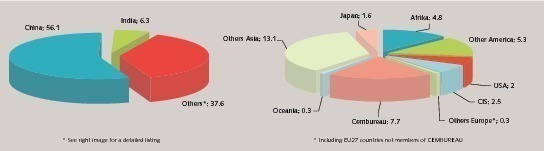
Air pollution is a transnational phenomenon and makes no hold on the land borders. Today in the industrial countries the most evident charges are removed. Now the necessary measures concern the industries of the developing countries and newly industrializing countries. This is also valid for India. The subcontinent produces about 6 % of the worldwide cement production (Fig. 1) and consumes after China the worlds second largest amount in cement (consumption in 2010: 212 million t). One of the affected regions is the South-Indian state of Karnataka. There lies 22.56 % of the national limestone...
Air pollution is a transnational phenomenon and makes no hold on the land borders. Today in the industrial countries the most evident charges are removed. Now the necessary measures concern the industries of the developing countries and newly industrializing countries. This is also valid for India. The subcontinent produces about 6 % of the worldwide cement production (Fig. 1) and consumes after China the worlds second largest amount in cement (consumption in 2010: 212 million t). One of the affected regions is the South-Indian state of Karnataka. There lies 22.56 % of the national limestone resources and the cement production amounts to 11 million t/a. This corresponds to a portion of 6.5 % of the Indian cement production. Hence, the Indian cement industry undertakes a lot for the modernisation of the technologies. In doing so, the obtained experiences of industrial countries are taken into account, e.g. the application of secondary fuels in the cement production, effectiveness increases by the energy application and the application of bag filters for the dust removal.


Retrofit of electrostatic precipitators into fabric filter

Mostly electrostatic precipitators are used in countries where less extensive environmental conditions exist. With regard to the raised environmental specifications in ­India, electrostatic precipitators that have been in use for many years get a closer look now (Tab. 1). This is with regard to the application of secondary fuels that leads to changing operating conditions. Electrostatic precipitators often cannot keep up with the demands for the environment-friendly utilisation of secondary fuels though. This requires undoubtedly the unavoidable retrofit of electrostatic precipitators into fabric filter. They permit compared to electric filters lower residual dust contents and are practical independent of operating conditions of the plant.

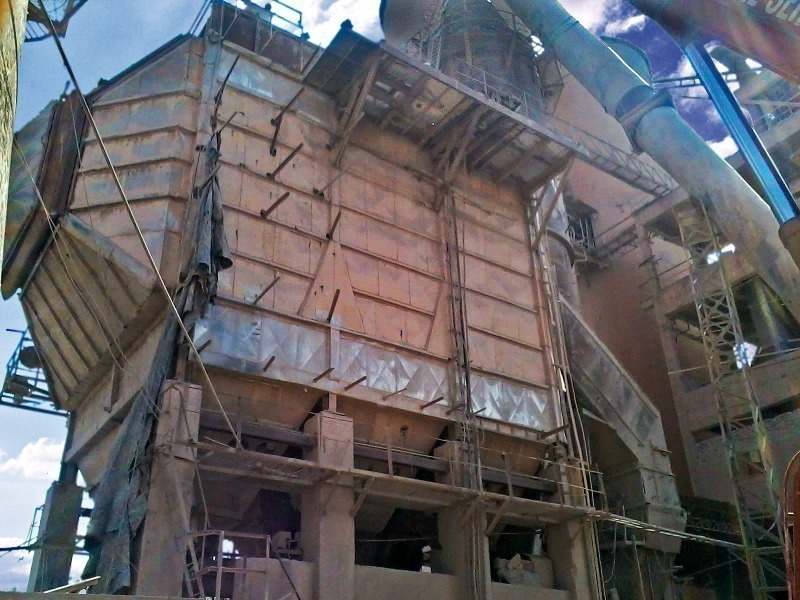
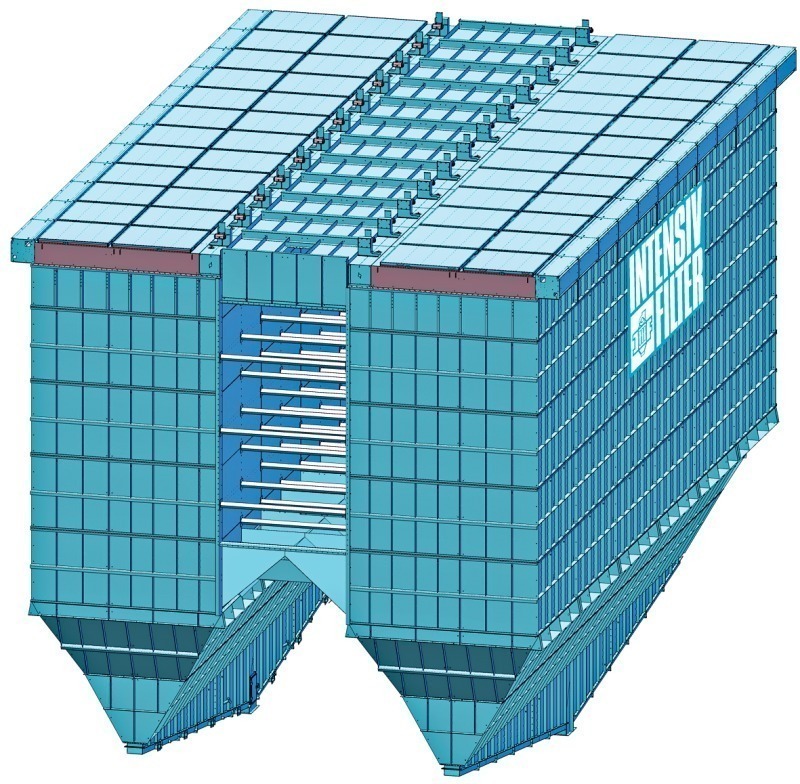
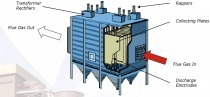
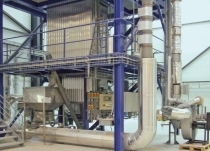
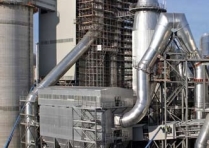
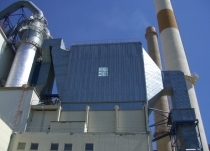
One of the cement manufacturers based in the federal state of Karnataka is Bagalkot Cement. They have produced cement already since 1948. Investments in a modern filter technology are evaluated by the cement manufacturer as a right measure for an environment-friendly cement production. In the cement plant the dust removal of the rotary kiln has been carried out for decades by an electrostatic precipitator. It is not able though to keep the low emission standards of 10 mg/m3 n.c. under all conditions (Tab. 2). That‘s why and because of too high dust loads during necessary start-up pro­cesses and rundowns, Bagalkot Cement decided to retrofit the electrostatic precipitator (Fig. 2) into a bag filter (Fig. 3). On top of this comes the striking distance of the cement plant to the city limit. The negative environmental influences on the welfare of the neighbourhood are put down by Bagalkot Cement with the retrofit into a bag filter.

Every filter retrofit is to be adapted very thoroughly to the dust removal standards and economic frame data. With the search for an adequate dust removal specialist the choice of Bagalkot Cement fell on Intensiv-Filter India. The following advantages of Intensiv-Filter bag filters were decisive:

Constant and less raw gas dust content, especially when using secondary fuels to comply with requirements of authorities.

The efficiency is not dependent on changing operating parameters.

The dust separation is not determined by water content or gas properties.

No CO trips for kiln de-dusting applications.

Online maintenance capabilities.

Simple access to the clean-gas-side.


Besides the above benefits, converting ESP’s into bag filters bring even further advantages for cement manufacturers:

Outlay for a conversion is considerably less than the cost of a new installation.

Upgrade time is reduced considerably by filter heads with variable filter head sizes and can be carried out during scheduled downtime.

filter bags of 8 m length and longer enable existing electrostatic filter housings to be used without increase of the floor space.

Conversion facilitated by experience

The concept for converting an ESP into a baghouse is not new for Intensiv-Filter India. Several conversions have been accomplished around India. The unique in converting an ESP into a baghouse filter is its sim­plicity. Just as Albert Einstein’s quote “make things as simple as possible, but not simpler”.

As in most cases of ESP conversions, the steps of this order are as following:

1. The new bag filter with new casing with compartments, hopper, intermediate ductwork and necessary dampers and inlet and outlet of each compartment will be installed.

2. The compartments will then be insulated on the clean-gas-side and equipped with pneumatic shut-off valves which are activated automatically as well as being externally accessible for maintenance purposes.

3. The clean gas side of the new bag filter will be connected at each side to the existing clean gas duct work and filter fan.

4. The bag filter will be supplied with a penthouse.

5. Installation of access doors, walkways and ladders as well as filter bags.

6. The dust discharge system will remain the same.


Reducing pressure drop

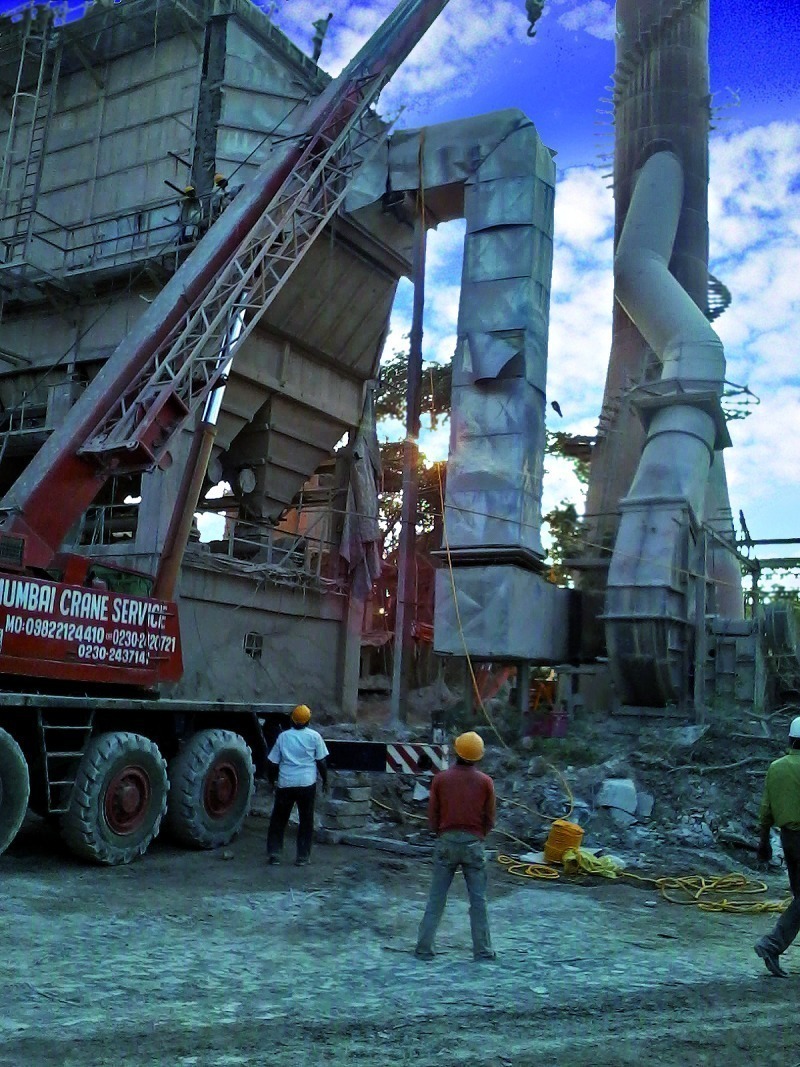
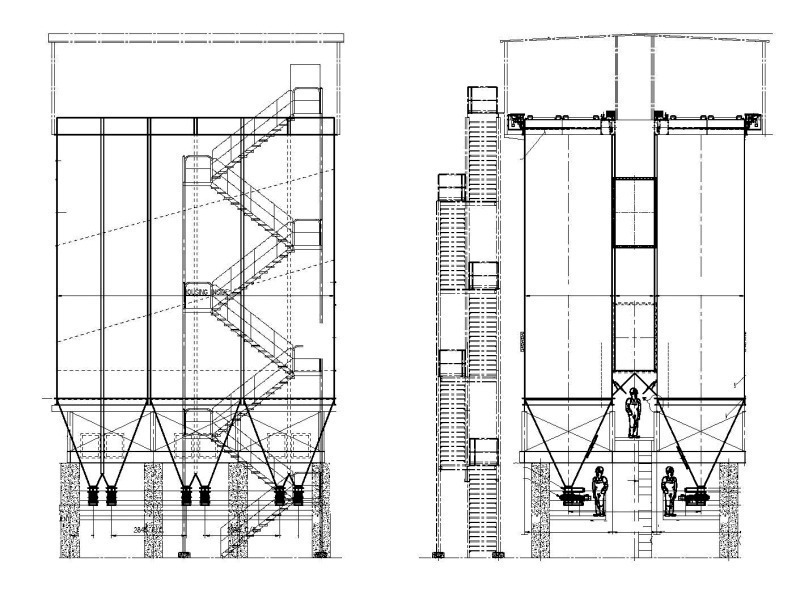
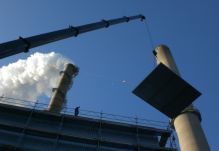
One of the priority objectives within this project is the extensive use of the existing supporting concrete columns (Fig. 4). This causes special restrictions to some degree. Owing to these, the bag filter will be equipped with filter bags of 10 m lengths to keep with the small foot print and the demand in an increased capacity (Fig. 5). The emergence of the long bag technology results not only in a high filter surface area, but also generates lower operating costs. This is based on the fact that long filter bags need to be regenerated with a very capable cleaning efficiency. Carrying out the cleaning in an offline mode, it puts the filter modules of the filtering installation into a flow-free state during cleaning. This condition is the essential requirement of a successful cleaning of long filter bags. At the same time, offline mode effectively prevents any repeat depositing of dust layers and the gentle cleaning pressure results in less pressure consumption. The time and effort for maintenance is hereby reduced and consequently the operating costs.

Continuous adjustment of tank pressure

A decisive role in the choice of the 10 m bags also plays the cleaning control system. This controls the diaphragm valves as well as the pneumatically or electrically actuated raw and clean gas flaps and processes the signals from field sensors. When cycling the pressure impulses, it differentiates between operating with fixed cycles and the differential pressure operating with variable cycle times. The cleaning control system is based on PLC (programmable logic controller). By continually adjusting the tank pressure, the compressed air consumption can be adapted to suit the current operating conditions. The standard measurement for this is the filter differential pressure. The cleaning will be carried out at pressures of 0.1 to 0.3 MPa.


Higher gas flow possible

With regard to the process data, the bag filter is presently handling gas flow of 180 000 m3/h but can be used for gas volume flow of 300 000 m3/h and a gas temperature of 240 °C. This can be achieved by adding filter bags, dampers and dust handling valves in future. A filter bag material of glass fibre with PTFE membrane will be applied for the 672 filter bags. They will be loaded with a dust maximum of 150 g/m3. To ensure an optimal installation and commission process, Intensiv-Filter India is responsible for supervising the assembly and commissioning, which is planned for by March 2012.

www.intensiv-filter.com

Überschrift Bezahlschranke (EN)

tab ZKG KOMBI EN

4,99 € / Woche* (Test EN)

This is a trial offer for programming testing only. It does not entitle you to a valid subscription and is intended purely for testing purposes. Please do not follow this process.

This is a trial offer for programming testing only. It does not entitle you to a valid subscription and is intended purely for testing purposes. Please do not follow this process.

Bestellbutton in Angebotsbox (EN)

tab ZKG KOMBI Study test

2,49 € / Woche* (Test EN)

This is a trial offer for programming testing only. It does not entitle you to a valid subscription and is intended purely for testing purposes. Please do not follow this process.

This is a trial offer for programming testing only. It does not entitle you to a valid subscription and is intended purely for testing purposes. Please do not follow this process.

Bestellbutton in Angebotsbox (EN)

Related articles:

Issue 09/2009

Retrofitting of electrostatic precipitators

1 Electrostatic precipitators (ESP) For decades the electrostatic precipitators (ESPs) have been identified as the traditional solution for particle filtration of substantial gas volumes, especially...

more
Issue 09/2011

10m-long filter bag technology cuts emissions and reduces operating costs

A pioneer in long filter bag technology, FLSmidth Airtech – Air Pollution Control installed its first 6m-long filter bag in a FabriCleanTM Pulse-Jet fabric filter at Norcem in Brevik/Norway in 1998....

more
Issue 01/2010

Filtration plants: In search of the right concept

1 Introduction When it comes to determining the most suitable modernisation concept for dust removal processes in the cement manufacturing industry, it is necessary to take into account all the...

more
Issue 09/2009

Process filter trends in the cement industry

1 Introduction In 1950 the dust emission level of cement factories in the ­leading western countries was still around 3.5 kg/t of cement. In other words, cement production lines with an output of...

more
Issue 09/2010

Reducing the LCC of dedusting filters – the new ProJet smart® and ProJet mega® filter series

1 Introduction In 2009 and 2010, Intensiv-Filter converted the established bag filter product lines into improved, standardized and modular filter series. These offer lower specific investment costs...

more