High-efficient cement manufacturing with POLYCOM® and SEPOL® PC – Machine and System Concept –
For cement grinding, the high-pressure grinding roll (HPGR) POLYCOM® and the static-dynamic separator SEPOL® PC can be installed as a finish-grinding circuit or, in combination with a ball mill, as a combi-grinding system.

1 Introduction:

The HPGR POLYCOM® from ThyssenKrupp Polysius has been successfully in operation for more than 25 years. More than 65 of the mills are producing high-grade cements in energy-efficient combi-grinding systems all around the world. The main characteristic of such a combi-grinding system is the pre-grinding of cement clinker in the POLYCOM®, which works in closed circuit with the static-dynamic separator SEPOL® PC, and after­wards finish grinding in a subsequent ball mill. One significant advantage of this system is the considerably lower specific power consumption compared to cement...

1 Introduction:

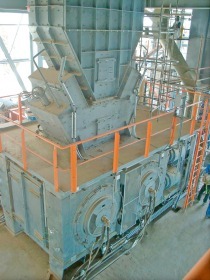
The HPGR POLYCOM® from ThyssenKrupp Polysius has been successfully in operation for more than 25 years. More than 65 of the mills are producing high-grade cements in energy-efficient combi-grinding systems all around the world. The main characteristic of such a combi-grinding system is the pre-grinding of cement clinker in the POLYCOM®, which works in closed circuit with the static-dynamic separator SEPOL® PC, and after­wards finish grinding in a subsequent ball mill. One significant advantage of this system is the considerably lower specific power consumption compared to cement grinding in a conventional closed circuit ball mill. This significant reduction in power consumption is paired with a 30 % to 40 % increase in output. If the POLYCOM® is used as a stand-alone grinding fascility, this is called a finish grinding circuit and the achievable reduction in power consumption is around 50 %. Compared to the frictional and impact stressing of the material being ground in a ball mill, the high compression stressing applied inside the material bed in an HPGR is distinguished by its significantly higher degree of energy utilization.

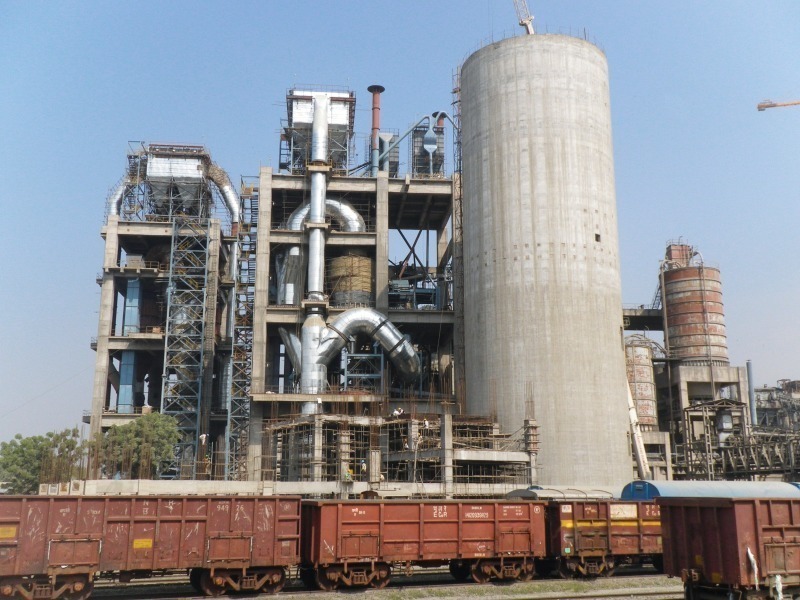
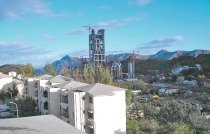
As a result of the continuous optimization of the overall machine concept, HPGRs POLYCOM® can be integrated into both new and existing grinding plants without any problem from either the process technological or plant engineering points of view. Since 2009, ThyssenKrupp Polysius has received 17 orders alone from India for combi-grinding systems involving a POLYCOM® and SEPOL® PC combination. These orders concerned both new plants and retrofits designed to increase the capacity of existing ball mills. In the fourth quarter of 2011, the first of these systems was successfully  commissioned. This involved an extension of an existing ball mill with a warranted grinding capacity increase from 100 tph to approx. 300 tph. The title picture shows this grinding system extension at a plant in Chanderia, Rajasthan/India.

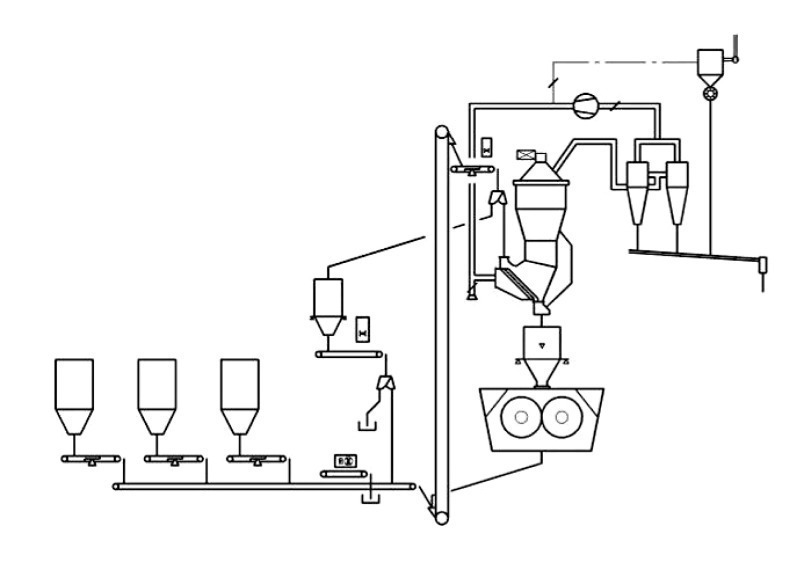
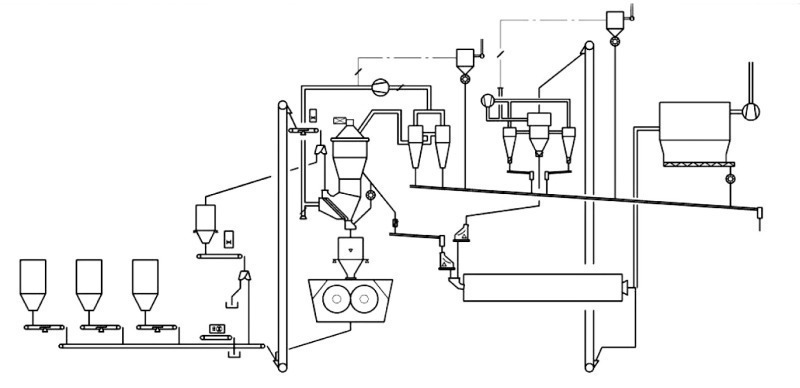
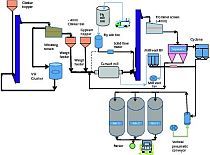
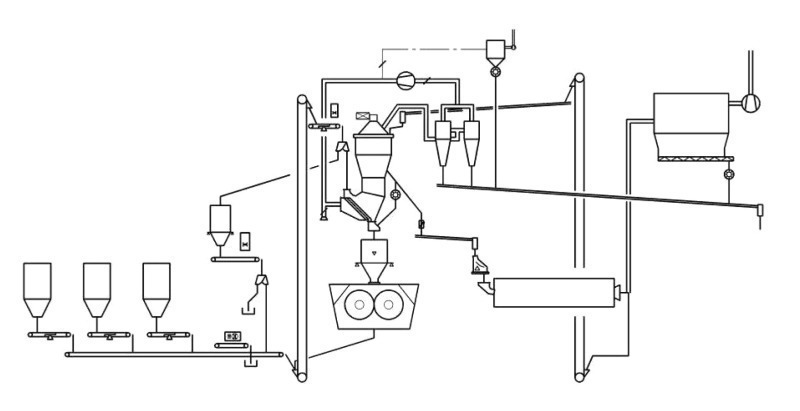
Modern POLYCOM® grinding systems consist of the high-pressure grinding roll and the static-dynamic separator SEPOL® PC. This newly developed SEPOL® PC is the combination of a very compact static cross-flow separator with the high-efficiency separator SEPOL® LM and can be used as a combined separator for the POLYCOM® and the ball mill. This separator concept was specially developed for use in a grinding circuit equipped with an HPGR. The circulating material from the ball mill can still be fed from above onto the distributing plate of the SEPOL® LM, which uniformly disperses the material through the separating zone. Fig. 1 shows a typical process flow sheet of a combi-grinding system.

2 High-pressure grinding roll POLYCOM®

2.1 Design features
One of the principal reasons for the outstanding success of the HPGR in the cement industry is its low power requirement. Today, this mill is employed all around the world for the grinding of cement raw material, cement clinker and granulated blast furnace slag.

To meet the demands placed on high-pressure interparticle comminution in a bed of material, such as:

long service lives of the roll surfaces,

energy-efficient production of fine material,

optimum draw-in of feed material, assuring maximum throughput,

very smooth running, in order to protect the ­machine and

easy replacement of worn roll bodies

The POLYCOM® grinding rolls have a length-to-diameter-ratio of between 0.3 and 1.0. This has the following advantages:

large shaft diameter for absorbing the bending and torsional stresses,

bearings designed for safe and reliable operation,

optimum distance between bearings minimizing the bending moments,

thick roll tyres assuring safe shrink fits,

thick wear layers on the roll surface to assure long operating times and minimum wear costs.

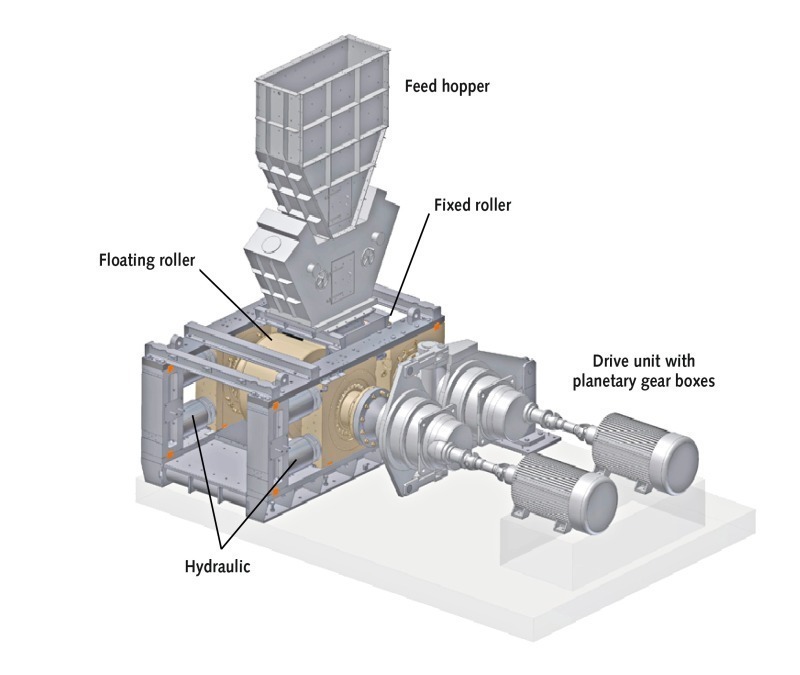
The POLYCOM® HPGR is characterized by the interaction between (a) the characteristic curve of the grinding force application hydraulics, (b) controlled material feeding for optimum feed material draw-in behaviour and (c) provision of the required torque (Fig. 2).

The fixed roll and the floating roll are mounted in bearing blocks, with that of the floating roll movably guided in the longitudinal direction. Skewing of the floating roll is compensated by the respective bearings. Depending on the size of machine, the grinding forces are transmitted to the floating roll by 2 or 4 hydraulic cylinders. A hydropneumatic spring system allows the setting of different pressure characteristics and material-specific control methods to enable optimum application of the grinding pressure in the roll gap and to protect the machine against possible overloading. The floating roll automatically accommodates changes in feed material characteristics by moving outwards or inwards.

In order to ensure uniform distribution of the drive power to the two drive motors, the vertical feed shaft can be equipped with infeed guide plates to adjust the distribution of material passing between the rolls. The material filling level is monitored with load cells installed at the POLYCOM® feed bin.

2.2 Process technology
For new plants, the POLYCOM® is an economically superior concept compared to conventional closed circuit ball mills. The HPGR is also predestined for use in system extension measures aimed at achieving maximum throughput increases. Due to its low space requirement and high capacity in relation to machine size, the ­POLYCOM® can be easily retrofitted into existing plants. In the cement manufacturing sector, POLYCOM® units are used for throughput rates of cakes in a range up to 1,300 tph. The mill feed material, with a largest feed grain size of up to 60 mm, can be dry or moist. If necessary, the material can be pre-dried externally or in the static-dynamic separator SEPOL® PC.

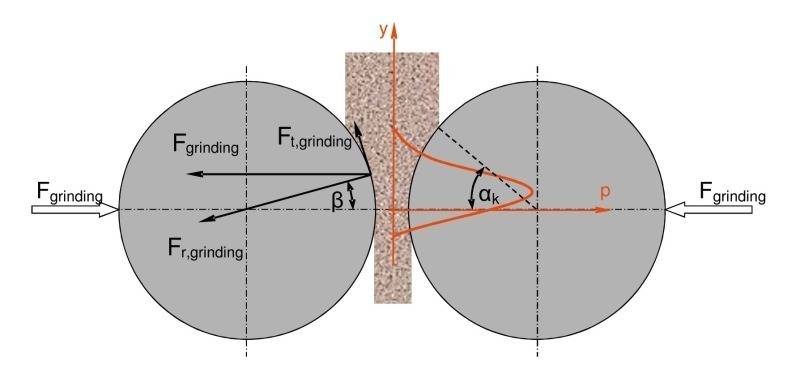
The high-pressure interparticle comminution of the POLYCOM® is based on the following principle: The brittle material is fed to the HPGR from a feed bin. The grinding elements are two counter-rotating rolls, between which the material is crushed. The required comminution pressure (up to 250 MPa in the gap between the rolls) is transmitted via the hydraulic system. The high-pressure interparticle comminution produces compacted cakes of material containing a high proportion of fines and with coarser particles showing extensive cracking. Whereas the grinding action of a ball mill involves a mixture of compressive and shear forces, the POLYCOM® imposes virtually pure compressive force on the layer of material between the rolls (Fig. 3). The resultant compression stress inside a particle is more than five times higher than shear stress would be.

In conventional closed circuit ball mills, the retention time of the material being ground is up to 30 min. The circulating material is not separated until it has been subjected to numerous grinding ball impacts. This results in overgrinding and a correspondingly large amount of ultrafine particles in the finished product. In contrast, the material retention time in the ­POLYCOM® is in the order of milliseconds. The circulating material is separated after just one comminution event. Unlike conventional ball mill systems, there is a strict segregation of grinding and separation processes in the ­POLYCOM® circuit.

2.3 Wear protection concepts
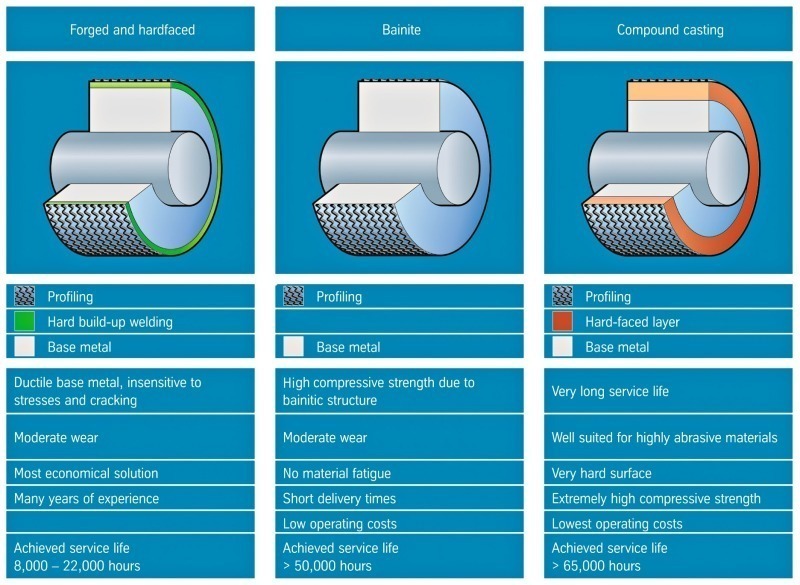
Since the introduction of the POLYCOM®, the wear protection concept has been constantly improved to meet the requirements of different feed materials and the needs of the cement market. As solutions for different requirements, ThyssenKrupp Polysius offers:

forged, hardfaced rolls,

chill cast tyres made of bainite and

chill cast tyres made of compound casting.

The forged, hardfaced roll tyres are the preferred choice for grinding granulated blast furnace slag and cements containing granulated blast furnace slag. Bainitic roll tyres are currently the standard wear protection for grinding cements that do not contain a significant amount of granulated blast furnace slag. In future, compound-cast tyres will find increased use. These have a lower wear rate and thus achieve longer service lives (Fig. 4).

The profiles welded onto the grinding rolls have been optimized as a result of operational experience. They improve the material infeed behaviour and minimize the relative movement between the material being ground and the roll surface. This results in higher throughput rates and also extends the service lives.

3 The static-dynamic separator SEPOL® PC

3.1 Design features
The newly developed SEPOL® PC is the combination of a very compact static cross-flow separator with a dynamic rotor separator. The benefits of this two-stage separation concept are:

high separation efficiency with minimum construction height,

high achievable finenesses,

the ability to optimally guide the streams of material (feed material, finished material, grits) and

high wear resistance against coarse material in the compacted cakes.

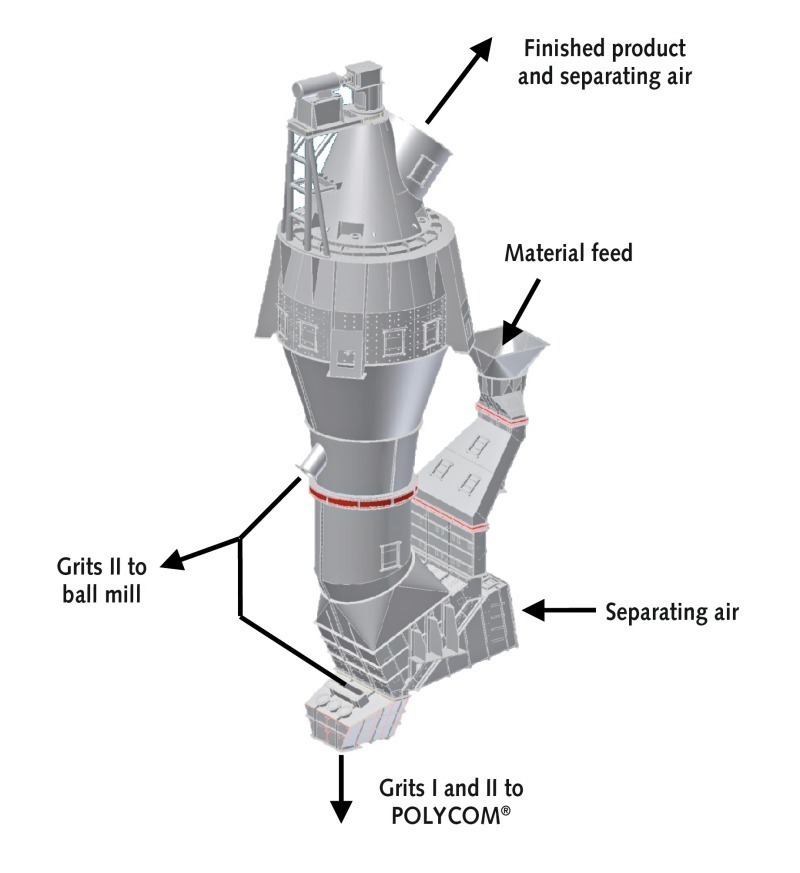
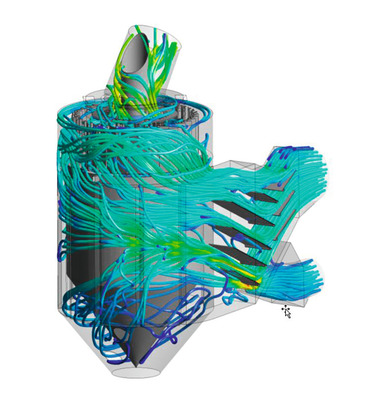
The high wear resistance allows relatively coarse material to be fed to the cross-flow separator. Thus the dynamic rotor separator only receives material that has already been pre-separated. Fig. 5 presents a 3-D sketch of the SEPOL® PC.
3.2 The static cross-flow separator
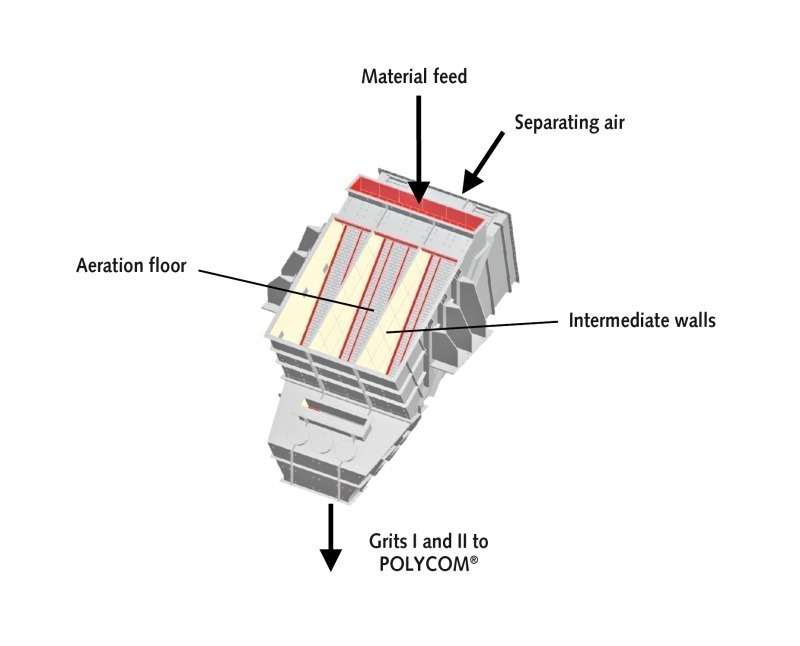
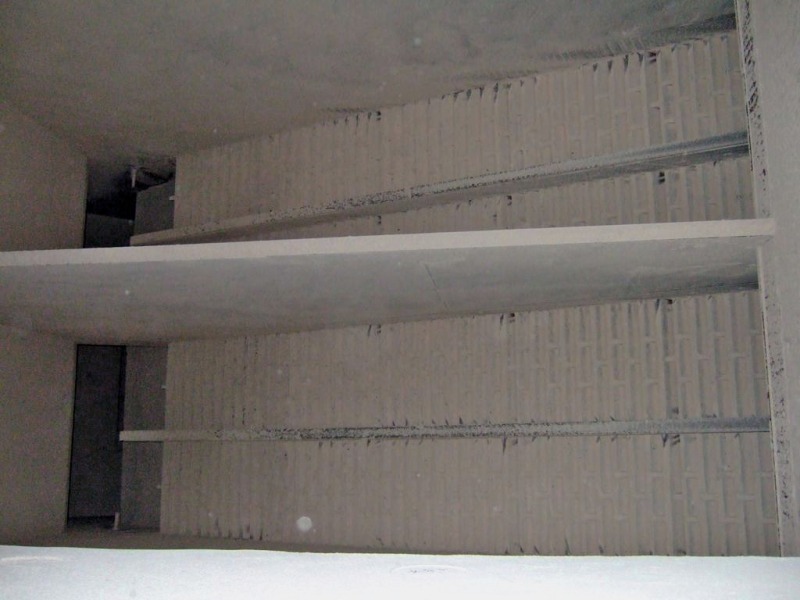
The feed material and the compacted cakes from the HPGR are fed into the cross-flow separator via a distributing chute. The feed material is dispersed on impact plates and then separated as it passes over an aeration floor consisting of modular, wear-resistant cast steel segments (Fig. 6). The finer material fractions are lifted up by the air stream to the dynamic separator and the coarse material (grits I) is guided to the material feed system of the POLYCOM® for further grinding.

The use of the aeration floor enables the very compact construction of the cross-flow separator. No horizontal baffle plates are needed; the unit is only equipped with vertical guide vanes to improve the material lifting performance of the separating air (Fig. 7).

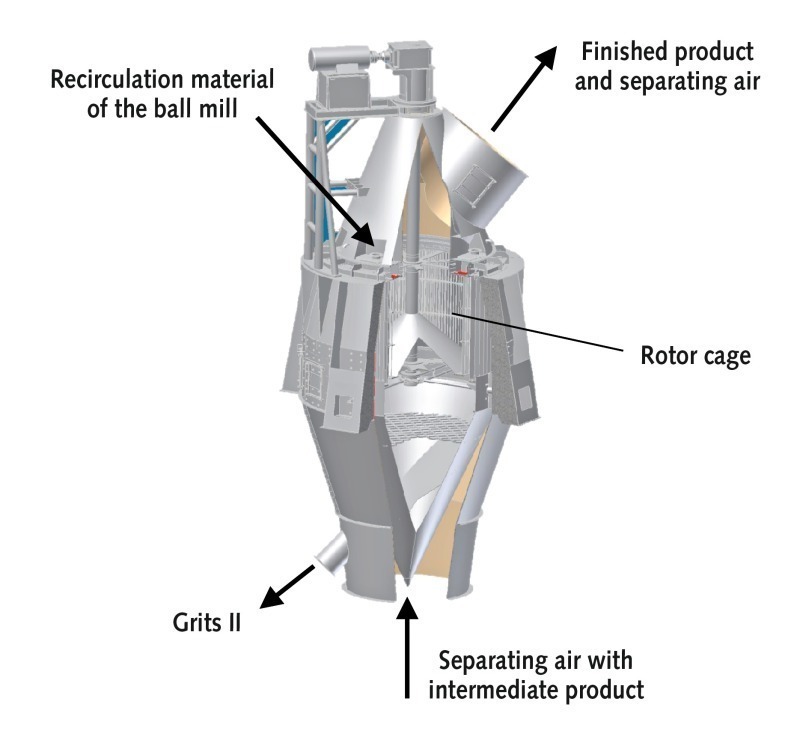
3.3 The high-efficient dynamic separator SEPOL® LM
The dynamic separator is the high-efficiency separator SEPOL® LM (Fig. 8). The intermediate product discharged by air flow from the cross-flow separator is fed into the dynamic separator from below. The swirl required for optimum separation is provided by guide vanes that are adjustable from outside the machine. The cage rotor separates the finished material from the grits (grits II), which is subsequently returned via the grit cone together with grits I to the POLYCOM®. In a combi grinding system, these grits II are split in a controlled ratio between the POLYCOM® and the subsequent ball mill for further grinding. The finished material passing the rotor cage is collected in subsequent cyclones or filters.

4 Process technological system configurations

The POLYCOM® HPGR can be installed in different pro­cess variants in new and existing grinding systems.
4.1 POLYCOM® as finish grinding system
Fig. 9 shows a typical process flow sheet of a POLYCOM® in a finish-grinding circuit. This application provides the greatest possible energy savings compared to a ball mill circuit. There is no overgrinding of the clinker or the additives. Furthermore, for the separate grinding of the individual cement components the POLYCOM® can be set to the respectively optimal process conditions, leading to the best possible energy utilization.
4.2 POLYCOM® as combi-grinding system
The term combi-grinding system means the use of a HPGR POLYCOM® in combination with a subsequent ball mill. In combi-grinding systems, the advantages of POLYCOM® finish grinding (high energy efficiency) are combined with those of conventional cement grinding in a ball mill. The obtained product is similar to ball mill cement, but the energy utilization of the grinding system is significantly better. For a CEM I cement, present combi-grinding systems achieve production rates of up to 400 tph.

A new installation (Fig. 1) has the advantage that the POLYCOM® and the ball mill jointly use a single SEPOL® PC separator, so that only one product stream leaves the system. A shared separator also requires just one separating air circuit, from which only the dedusting air has to be extracted.

For increasing the grinding capacity of an existing ball mill (Fig. 10), the POLYCOM® circuit is installed upstream and the ball mill circuit including separator is generally left unmodified. In this case, the product is made up of the finished materials from the POLYCOM® circuit and the ball mill circuit.

5 Polysius plant design

The HPGR is the heart of the grinding system. However, it has to be decided where this heart should be located.

What if the static cross-flow separator is installed above the POLYCOM®?

Then the POLYCOM® is in a significantly lower position so that the high loads are closer to the ground, which greatly simplifies the execution of structures.

Only one bucket elevator is required for feed and circulating material.

No additional conveying equipment is needed for the feed material.

Because of the common conveying to the cross-flow separator, the feed material and the circulating material are optimally blended.

Furthermore, the mechanical conveying impacts lead to disagglomeration of the compacted cakes from the POLYCOM® and enable a significantly improved distribution of the feed material over the cross-section of the separator. This assures higher separation efficiency in the cross-flow separator.

The dynamic separator SEPOL® LM is directly connected with the cross-flow separator to form a compact separating unit.

Individual transition elements can be fitted to adapt both the cross flow separator and the dynamic separator to the respective requirements.

The grits from cross-flow and dynamic separator are thoroughly mixed and fed directly to the POLYCOM® feed system.

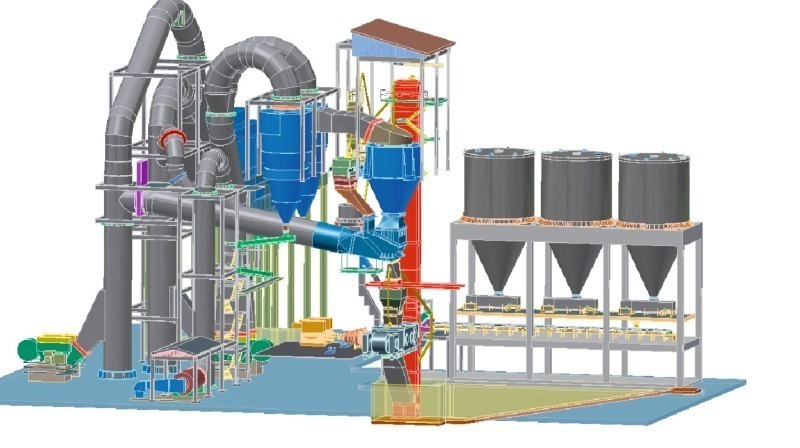
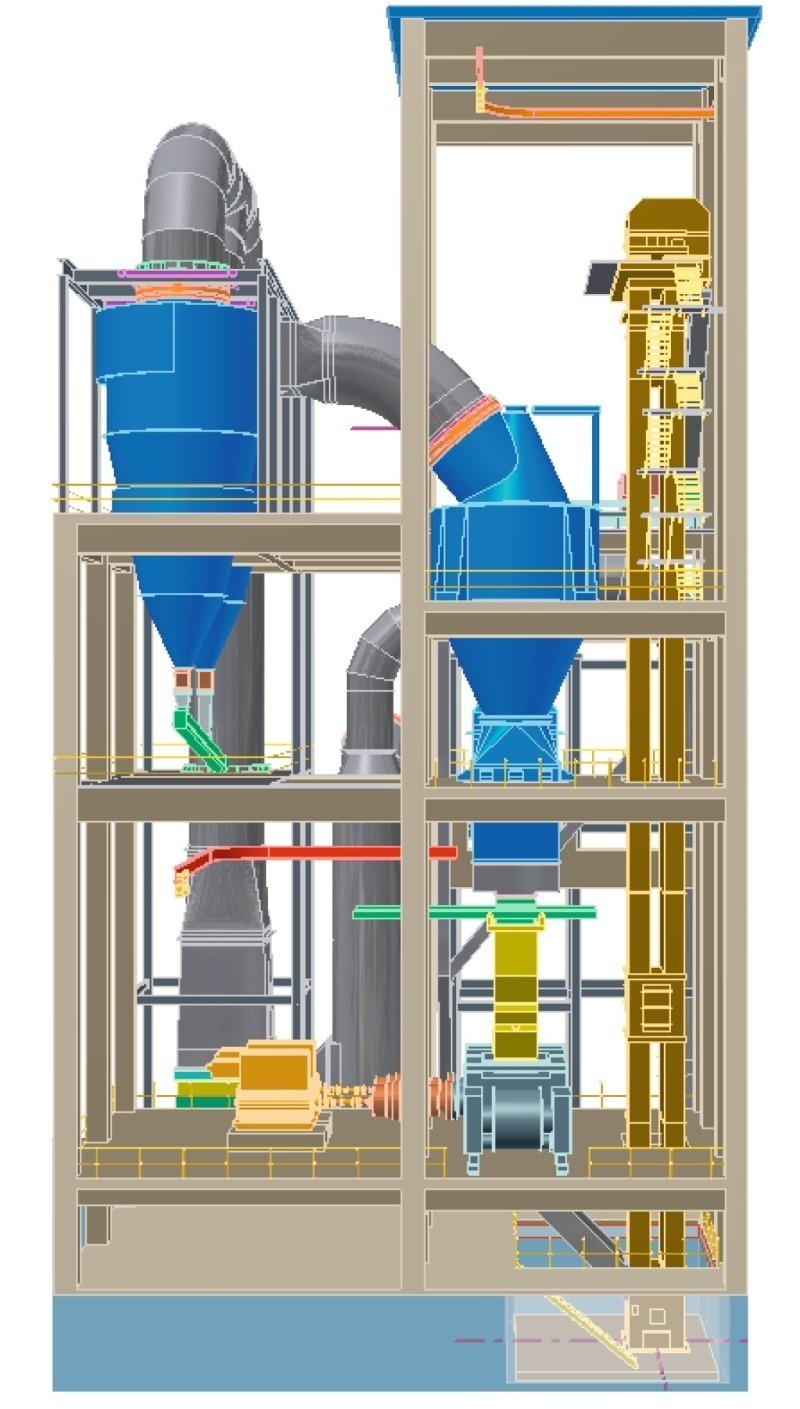
Due to the advantages mentioned above, in Polysius systems both the cross-flow separator and the ­dynamic separator are located as a compact separating unit above the POLYCOM® , as can be seen in Figs. 11 and 12 as well as in the process flow sheets.
Why not a middle installation of the POLYCOM®, i. e. with the cross-flow separator located underneath the HPGR?

Then the HPGR is in a considerably higher position, making it necessary for the high machine loads to be supported far from the ground. This results in significantly more complex structures.

Additional conveying units are required for the fresh feed.

The very compact cakes of HPGR  are fed directly into the cross-flow separator without further mechanical impacts. This and the poorer distribution over the cross-section of the separator have a negative effect on the separator efficiency.

Because of the construction volume of the cross-flow separator the recirculating bucket elevator has to be installed further away from the HPGR.

The Polysius system configuration has the further advantage that the entire mill feed, consisting of fresh feed and circulating material, will be checked by a metal detection and removal system. This provides optimum protection of the grinding rolls against tramp metal and thus minimizes the risk of roll surface damage. The plant design also permits positioning of the bucket elevator very close to the POLYCOM® and also to the infeeding point of the cross-flow separator, thereby a low building height can be realized. The feed material is loosened up during the mechanical conveying to the cross-flow separator by bucket elevator and belt conveyor, resulting in optimum distribution in the feed chute to cover the full cross-section of the separator. Thanks to the horizontal conveyor belt, the recirculating bucket elevator can be designed shorter. Furthermore, the illustrated plant design permits an infeeding point for the fresh feed at a very low level, allowing a simple design of material feeding into the grinding process.
The described considerations led to optimization of the system configuration for the combination of HPGR and ball mill, resulting in an optimum footprint solution for a grinding system equipped with POLYCOM® and ­SEPOL® PC.

6 Flexibility of the grinding system

One further positive characteristic of a combi-grinding system is the possibility to change over to POLYCOM® finish grinding if the need arises. This may become necessary if, for example, the ball mill has to be stopped for maintenance or if there is a short-term drop in cement sales. For this purpose, the grits II route to the ball mill is closed and the ball mill is isolated from the grinding system. In this case, the absolute cement output of the grinding system is reduced, but the system operates with higher energy efficiency.

In order to achieve higher production rates or to manufacture several finished products simultaneously, several identical grinding systems can be installed. For instance, one grinding system could produce CEM I with clinker and gypsum while another grinding system produces granulated blast furnace slag, each with process conditions optimally adjusted to the respective feed materials, and the products are subsequently blended to make CEM II. This solution has the additional charm of minimizing the cost of the spare parts inventory.

The construction of identical but separate grinding systems assures greatest possible flexibility, operational reliability and plant availability. The process technological separation of the systems applies to both the grinding and the separation process. In case one system is shut down for maintenance, the others continue their independent operation.

Installing several separate grinding systems allows each one to be operated with optimum process technological conditions. This results in high energy efficiency and thus minimizes the energy costs and environmental impact in comparison to conventional closed circuit ball mills.

7 Summary

The use of high-pressure grinding rolls for cement grinding provides a reduction of up to 50 % in mass-related energy requirement compared to cement grinding in conventional ball mill systems. For more than a quarter of a century, ThyssenKrupp Polysius has been designing and supplying the successful high-pressure grinding roll POLYCOM®. This mill is characterized by the interaction of grinding force, controlled material feeding and provision of the required torque. The newly developed static-dynamic separator SEPOL® PC is used for separating the finished product from the coarser particles. This separator combines a very compact static cross-flow separator with the dynamic rotor separator SEPOL® LM. For grinding cement, the POLYCOM® and the SEPOL® PC can be installed as a finish-grinding circuit or, in combination with a ball mill, as a combi-grinding system. In such configurations, the SEPOL® PC is installed as a compact separating unit above the POLYCOM®.

Überschrift Bezahlschranke (EN)

tab ZKG KOMBI EN

4,99 € / Woche* (Test EN)

This is a trial offer for programming testing only. It does not entitle you to a valid subscription and is intended purely for testing purposes. Please do not follow this process.

This is a trial offer for programming testing only. It does not entitle you to a valid subscription and is intended purely for testing purposes. Please do not follow this process.

Bestellbutton in Angebotsbox (EN)

tab ZKG KOMBI Study test

2,49 € / Woche* (Test EN)

This is a trial offer for programming testing only. It does not entitle you to a valid subscription and is intended purely for testing purposes. Please do not follow this process.

This is a trial offer for programming testing only. It does not entitle you to a valid subscription and is intended purely for testing purposes. Please do not follow this process.

Bestellbutton in Angebotsbox (EN)

Related articles:

Issue 04/2012

Cement grinding plant with POLYCOM for India

For its new cement grinding plant, Mangalam Cement Ltd. selected a grinding system from ThyssenKrupp ­Polysius. The new grinding plant is to be installed in Aligarh near New Delhi in the Indian state...

more
Issue 10/2010

Polysius activities in India

Very positive operating experience, together with significantly lower energy requirement and resultant cost reductions, are good reasons to invest in grinding plants equipped with ­POLYCOM®...

more
Issue 05/2010

New cement grinding plants

Birla Corp. Ltd./India placed an order with ­Polysius for three new cement grinding plants. The two grinding plants installed at the Chanderia factory will each be equipped with a POLYCOM®...

more
Issue 4/2023 MASCHINENFABRIK KÖPPERN GMBH & CO. KG

Koesep® separator with innovative quality and performance

High Pressure Grinding Rolls (HPGR) have been used in the cement industry since 1986. The first few years as pregrinder but the energy benefits came with its use as a semi-finish grinder. For GGBS and...

more
Issue 06/2014 ULTRATECH

Substantial gain in cement mill output with minor investment – a case study

1 Introduction The manufacturing process of cement is a highly electrical energy intensive process. Size reduction in a plant consumes 55-65 % of the total electrical energy consumption accounting...

more