Clean and efficient cement production in the UAE
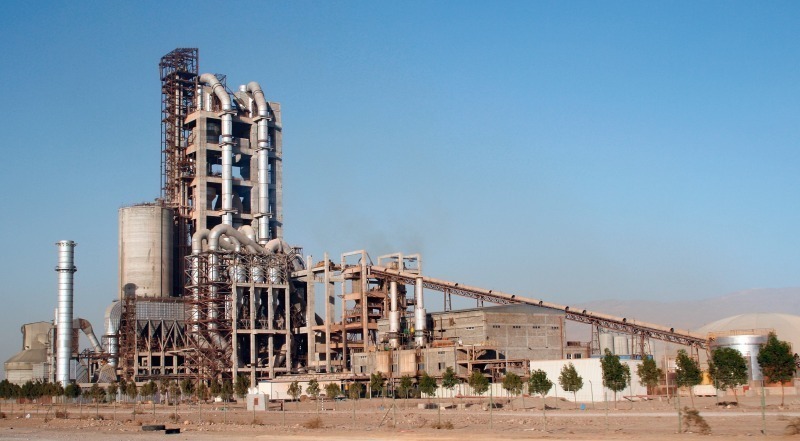
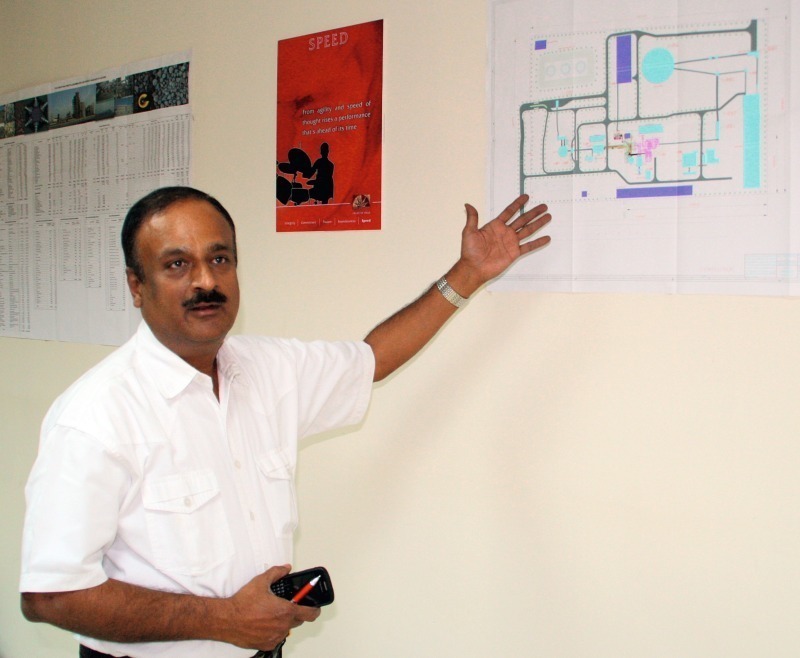
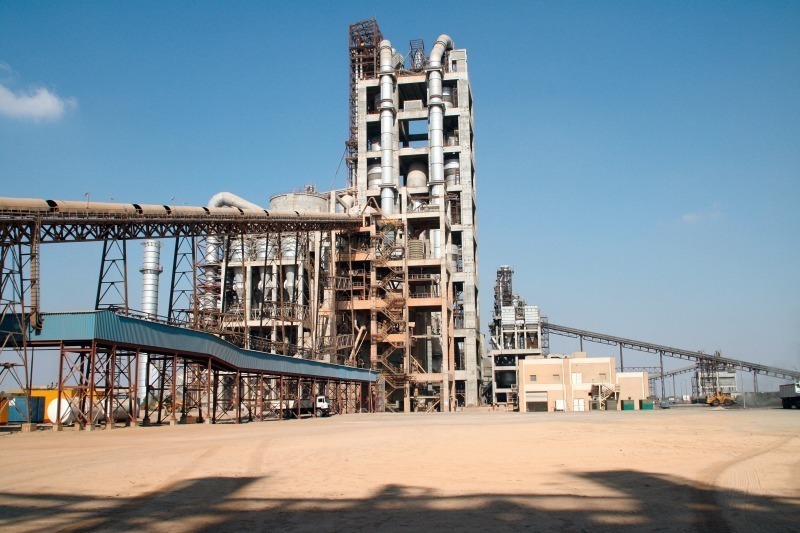
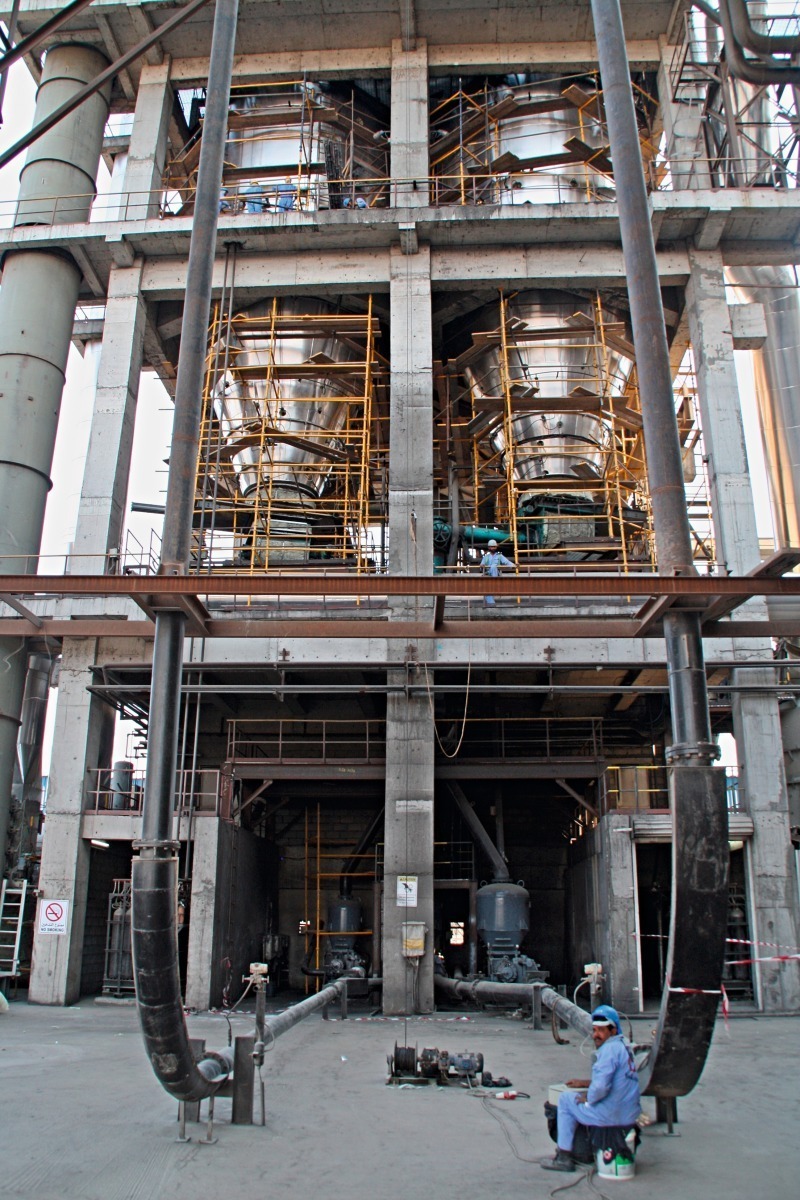
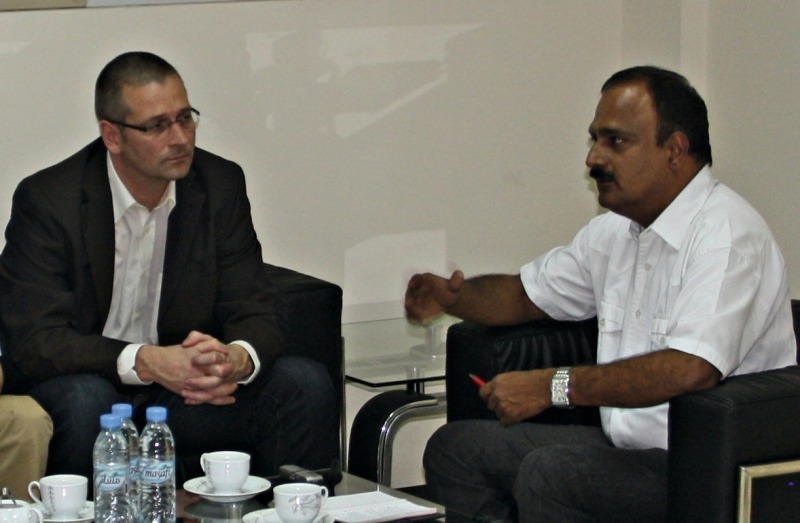
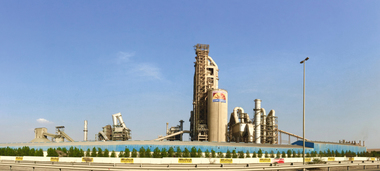
At the end of 2010, Dr. Thomas Weiss and Christian Reinke from ZKG INTERNATIONAL visited the Star Cement plant in Ras Al Khaimah/UAE (Fig. 1). After an introduction in the history and overall plant concept of the plant by the Chief Operating Officer, Mr. T.V.S. Chidambaram (Fig. 2), Assistant Manager (Process) Rajeev Bhushan Garg, guided the ZKG team through one of the most modern plants in the region.
In 2007 Star Cement began working with FLSmidth to build its own clinker plant in Ras Al Khaimah/UAE. This 6500 t/d plant supplied by FLSmidth was put into operation...
At the end of 2010, Dr. Thomas Weiss and Christian Reinke from ZKG INTERNATIONAL visited the Star Cement plant in Ras Al Khaimah/UAE (Fig. 1). After an introduction in the history and overall plant concept of the plant by the Chief Operating Officer, Mr. T.V.S. Chidambaram (Fig. 2), Assistant Manager (Process) Rajeev Bhushan Garg, guided the ZKG team through one of the most modern plants in the region.
In 2007 Star Cement began working with FLSmidth to build its own clinker plant in Ras Al Khaimah/UAE. This 6500 t/d plant supplied by FLSmidth was put into operation successfully during July 2009. Star Cement chose the Ras al-Khaimah region because it is close to important raw materials, especially shale – a key component in clinker. FLSmidth, Loesche and LVT designed an energy-efficient plant that could deliver an annual capacity of 2.3 million tonnes. Now fully operational, the plant has state-of-the-art process bag filters, kiln filters and clinker cooler filters that combine to keep dust emissions well below 15 mg/Nm3, exceeding international environmental standards. By keeping an eye on the costs, the project could be implemented at a reasonably lower cost than other plants which were executed at the same time in that region. This includes a 25 MW power plant. The approximate cost for this clinkerization plant including a second-hand 25 MW power plant was at US $ 70 per ton of installed capacity.
Raw material grinding
Originally, Star Cement operated its own quarry, right behind the Emirates Cement plant. “Due to the prevailing market situation nowadays it is more economical for us to buy the raw material from the local market” said Mr. Chidambaram. As the construction industry is undergoing recession, a large number of aggregate quarries surrounding the cement plant have a huge stock of usable limestone which could be purchased at much more competitive prices than their own mining.
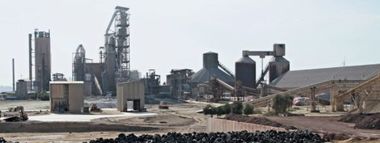
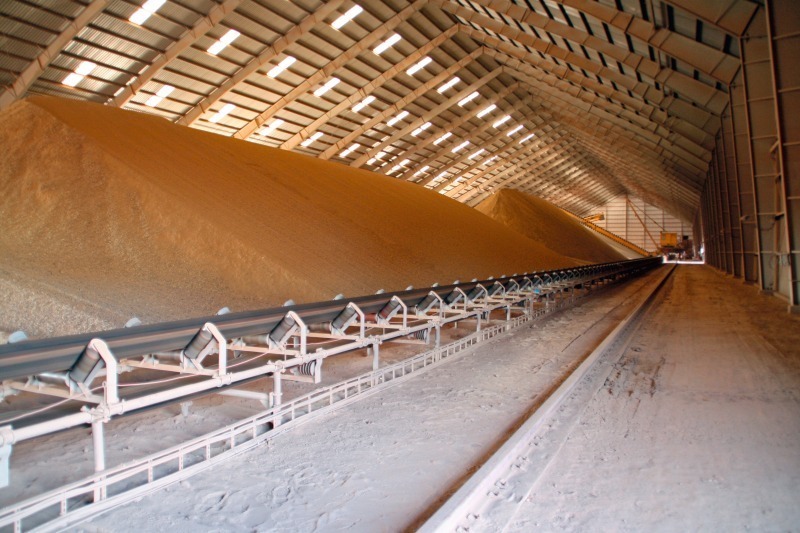
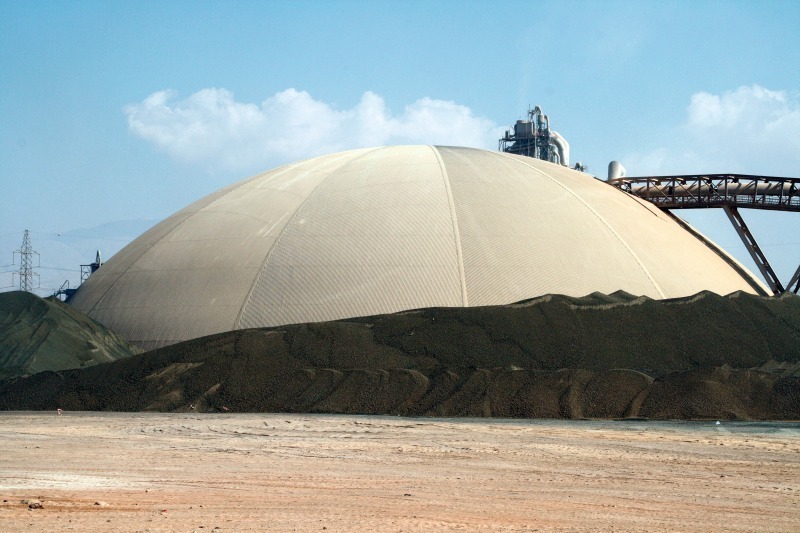
The location of the plant is at the foot of a limestone mountain range which stretches from Iran to Oman. However, local limestone is used to balance the supply from outside. After a proper evaluation of the available limestone deposits, quarrying and blasting is done to expose the limestone which is then fed to the twin crusher system, to achieve the required size reduction. The crushed material is currently being transported by trucks and eventually Star Cement is in the process of installing a long belt conveyor from quarry to plant to transport the material. The location of the plant is chosen strategically, i.e. it is surrounded by very high grade and pure raw material components required for the cement production. In the mountains there is a large number of aggregate plants that accumulate reject materials during production which are rich in aluminium and calcium. They can be used as correctives in cement production. Furthermore, shale is used as an SiO2 and alumina source and as a corrective to adjust the CaCO3 content of the raw material. Iron ore is imported from Oman. The plant has two dump hoppers, one to receive the limestone, one for the correctives. Through these the material is transported to the raw material storage. The cement raw materials are limestone (69-71 %), screen reject (~20 %), shale (~10 %) and iron ore (~1.5-2 %). The raw material is stored in an FLS longitudinal store (Fig. 3) with a side scraper (correctives) and an FLS circular store (limestone preblending; Fig. 4). The raw material blending silo made by FLS allows for a nominal feed rate of 457 t/h and is designed for a maximum of 535 t/h.
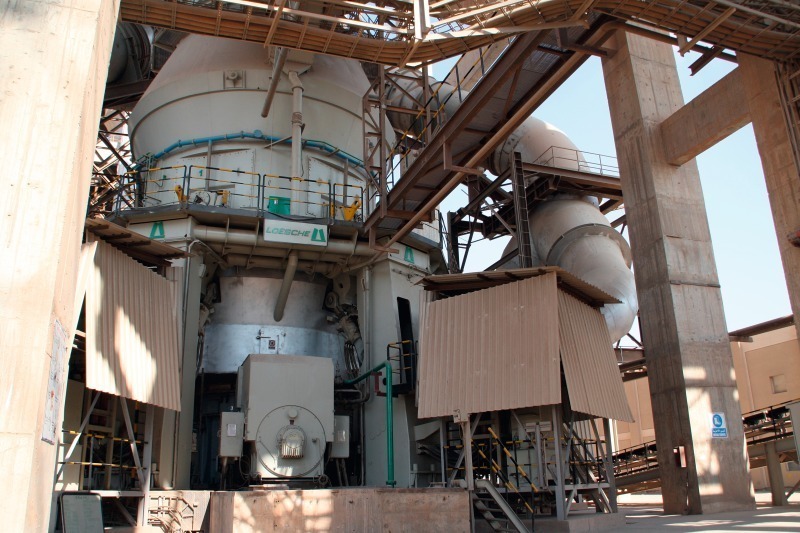
The first decision, whether one large single grinding unit or two smaller ones should be used, was made in favour of the single line solution. For this purpose, an LM 69.6 raw mill (Fig. 5) from Loesche was chosen that has a capacity of 560 t/h. Six rollers with a diameter of 2360 mm grind the material at 1 % R 212 µm. The mill is equipped with a gearbox (power 5100 kW) from Flender and a LSKS 107 classifier. The grinding table has a diameter of 6900 mm at a weight of 145 t. At the time of erection, this mill was the largest in a cement plant. The raw mill is fed from the storage. After the raw mill there are two raw meal silos with a capacity of 18 000 t each.
From the raw meal silos the material is fed into the 6-stage ILC preheater via bucket elevators from Aumund and Beumer (Fig. 6). “The raw material we use is very dry, i.e. below 2 % moisture. Therefore, a 6-stage preheater with an in-line calciner was chosen” said Mr. Chidambaram. In the pyro-line concept a 10 % bypass is included.
It was initially planned for the plant to be fired with gas. However, during construction of the plant it was clear that 100 % insurance for the supply of gas could not be guaranteed. “Volume, quality and supply were not reliable” said Mr. Chidambaram. In order to be flexible with such a large cement plant, the plans were switched over to coal as fuel. The kiln line was supplied by FLSmidth/India. Tyres, rollers and girth gears were supplied by Ferry Capitain/France and were machined in Germany. The kiln itself is 5x80 m, was manufactured in Spain and is a three-station self-aligning kiln with a 4° slope, followed by an FLS SF4x6f clinker cooler. The complete pyro-line is from FLSmidth India. The coal mill from LVT in Thailand supports both the main burner and the calciner burner (Fig. 7).
Today the production amounts to about 7500 t/d cement, this means that the supply from both the installed coal and raw mill is quite stable. Currently the raw mill is capable of meeting the raw meal requirement for the clinker production. The raw mill bag filter is designed for a volume flow of 1.1 million m3/h at an air-to-cloth ratio of about 1.2 m3/min/m2. The cooler bag filter is designed for a volume flow of about 444 240 m3/h at an air-to-cloth ratio of 1.19 m3/min/m2. Reserves for the clinker cooler and bag filter allow such an expansion, currently the required measures are being determined to achieve that goal, i.e. the revision of the fans. With dust emissions below 15 mg/Nm3 Star Cement is currently one of the plants in the region with the lowest emmissions. Included in the project design is a 25 MW power plant right beside the cement plant.
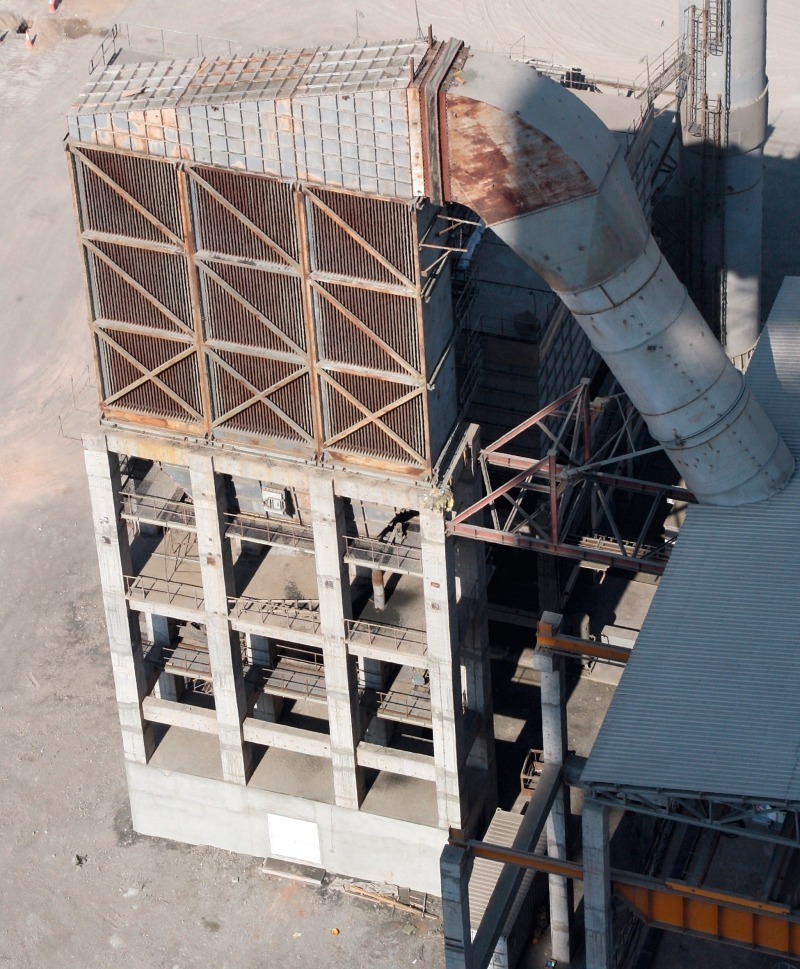
Filtration is achieved with a bag filter that has a heat exchanger (Fig. 8) to reduce the exhaust temperature and to achieve a good recuperation rate. For both the raw mill and the kiln a bag filter is used, supplied by FLSAirtech. After the cooler there are two clinker silos, one for the reject material and one for the clinker. The clinker is then directly transported by lorries to Ajman and Abu Dhabi. “With our facilities we can dispatch all the clinker stored in only 10 h”, concluded Mr. Chidambaram.
Even though the plant currently runs on coal, plans exist to burn tire chips as alternative fuel. Automatic feeding is planned for the tires that will be fed into the precalciner allowing about 10 % substitution rate. Another option is a plastics recycling plant in Ajman, even though the quantity offered there is very small.
The plant is planning to install a waste heat recovery system behind the cooler that makes possible energy savings of about 4-5 MW. The second energy minimizing measure is that the outcome duct of the preheater is not insulated. Even if the raw mill is not running the exhaust air can be fed into the bag filter without feeding dilution air.
The plant is well suited for future demands on cement production. Recently the plant has been taken over by the Aditya Birla Group from India. With their corporate guidelines and objectives, projects related to environmental, operation efficiency, utilization of alternate fuels and power generation from waste heat are under active consideration. Some of these projects are under advanced stage of implementation and expected to be completed by the 3rd quarter of 2011. The remaining projects will be completed by the end of 2012. Star Cement Ras Al Khaimah is one of the most modern and efficient plant and all efforts are being undertaken to make it one of the best eco-friendly cement plants in the Middle East.
ZKG INTERNATIONAL thanks Mr. T.V.S. Chidambaram and his crew from Star Cement/RAK for their support.

Überschrift Bezahlschranke (EN)
tab ZKG KOMBI EN
This is a trial offer for programming testing only. It does not entitle you to a valid subscription and is intended purely for testing purposes. Please do not follow this process.
This is a trial offer for programming testing only. It does not entitle you to a valid subscription and is intended purely for testing purposes. Please do not follow this process.
tab ZKG KOMBI Study test
This is a trial offer for programming testing only. It does not entitle you to a valid subscription and is intended purely for testing purposes. Please do not follow this process.
This is a trial offer for programming testing only. It does not entitle you to a valid subscription and is intended purely for testing purposes. Please do not follow this process.