Several years’ rejuvenation treatment – modernization of a cement plant
Summary: The energy factor in production is one of the greatest challenges for the cement sector. For this reason it is a matter of systematically implementing sustainable efficiency gains – from resource management through to productivity control and cutting unnecessary costs. The introduction of modern process control technology can contribute to reducing raw material and energy costs and minimizing emissions. The measures needed for such a modernization program have a rapid pay back if professionally planned and implemented.
HeidelbergCement AG is one of the largest cement manufacturers in the world: the corporation operates more than 2500 locations in over 40 countries of the world – from extraction sites for sand, gravel and hard rock, through to cement production centers and crushing mills, right up to ready-mixed concrete and asphalt production. The mission statement of the corporation rests on environmentally sound and sustainable operational activities. Given the highly intensive nature of energy and raw material consumption in the production processes of cement and concrete there is a special...
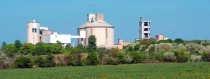
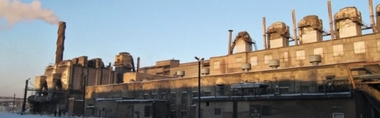
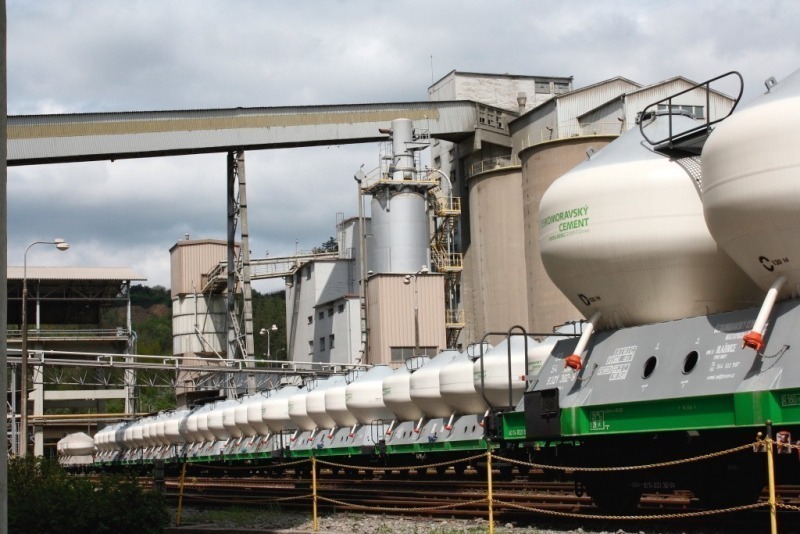
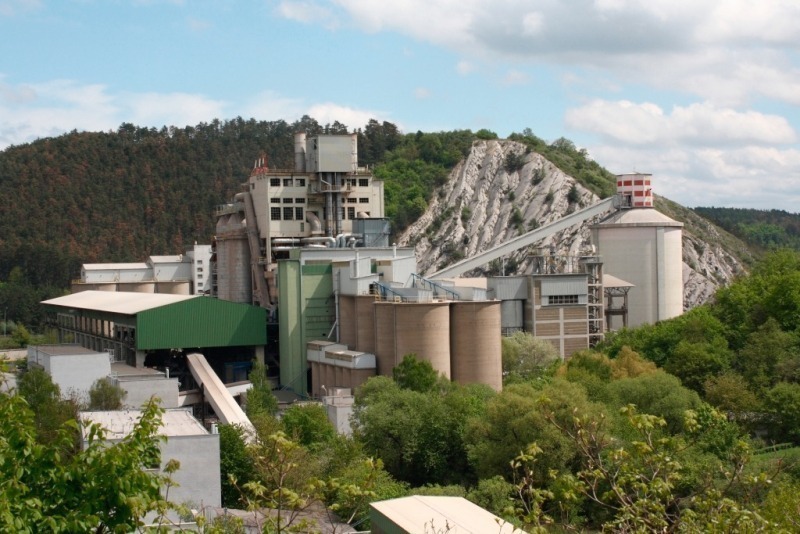
HeidelbergCement AG is one of the largest cement manufacturers in the world: the corporation operates more than 2500 locations in over 40 countries of the world – from extraction sites for sand, gravel and hard rock, through to cement production centers and crushing mills, right up to ready-mixed concrete and asphalt production. The mission statement of the corporation rests on environmentally sound and sustainable operational activities. Given the highly intensive nature of energy and raw material consumption in the production processes of cement and concrete there is a special responsibility which rests on the producer. The optimization of the production process and the intelligent and environmentally friendly use of secondary fuels while maintaining the highest level of product quality demand a control and automation technology in line with the most modern standards. As a consequence, HeidelbergCement AG follows a policy of systematic and continual modernization of its plants. This is also of course the case in Radotin near to the Czech capital city Prague where Cˇeskomoravský Cement a.s. a cement plant with a yearly production output of 600000 tons operates its business (Fig. 1).
The scheduled drastic reduction in nitric oxides and the increased use of substitute fuels made it necessary to introduce technological advances which could not be implemented without additions to the otherwise reliably operating Coros/Simatic S5 Control Technology. A total of 24 control systems and ten operating stations in four automated sectors were installed for the automated control of all production stages from the conditioning of the raw materials through to the combustion of the clinker and right up to the dispatch of the cement. Data communication across sectoral boundaries was only partly possible. In addition, great demands were placed on the control systems by a modernization program in the furnace section of the plant, which was aimed at enhancing the eco-friendly nature of the operational process.
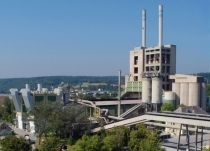
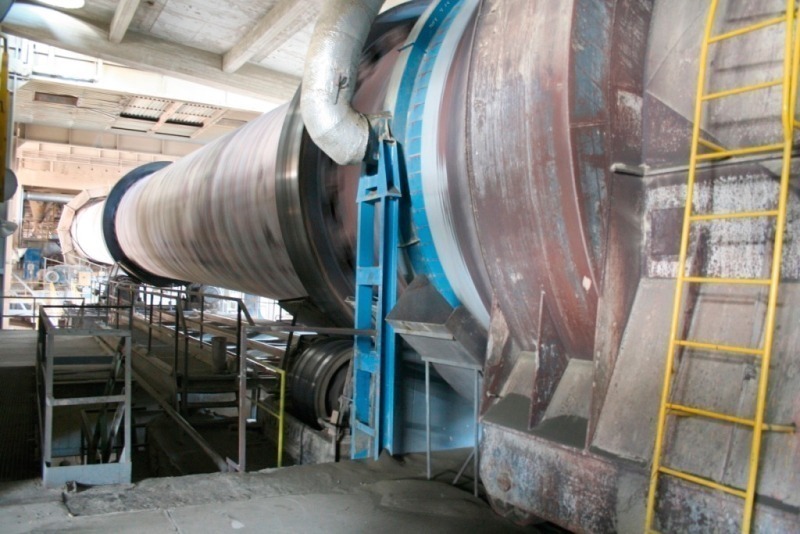
In recent years rising energy prices have strongly impacted energy intensive industrial sectors like the cement industry. While up to now pure single source fuels such as gas, coal and heavy fuel oil were used to fire the furnaces, so-called secondary fuels made from garbage are replacing up to 45 % of the conventional fuel materials. This brings many advantages with it: operators can reduce their energy costs, the movement away from fossil fuels conserves the environment and the use of garbage relieves the pressure on landfill sites. In the kilns, where input raw materials such as limestone, clay, marl and suitable additive materials are sintered to produce cement clinker, temperatures up to approximately 1450 °C are registered. The secondary fuels, used in this process and which are produced from fragments of industrial and residential garbage, old timber, and sewage treatment products etc, burn effectively free of residues. The alternative fuel materials, however, raise new challenges for the process control and the furnace operation. One problem is dealing with the increased chlorine and sulfuric concentration in the gas circulation, the other is the necessary monitoring of the combustion processes and the conditioning and regulating of the gas emissions required for a consistent product quality. A decisive role in the quality of the cement finished product is played by the process of manufacturing the clinker, in which a precise regulating of energy input is essential (Fig. 2).
In order to make the Radotin plant fit for these challenges and to regenerate the level of automation which had not been unified structurally up to that point, HeidelbergCement decided on a multi-stage modernization program: the plan scheduled in the period from 2005 to 2010 the replacement of all the existing control systems and operating stations with a modern control system with integrated universal communications, centralized engineering and unified operating control throughout the plant. The planning and implementation of this project was contracted by Cˇeskomoravský Cement to the Czech system integrator Sidat, spol. s.r.o., an already established and proven partner with whom the plant operator already had at that time an excellent 10 year working relationship. As the service provider Sidat reliably covers the entire spectrum of services throughout nearly all sectors of the plant automation program, proposed a strong and convincing concept which was based on established Siemens technology: through Cemat®, a process control system based on Simatic PCS 7 which was developed specifically for the cement industry, Sidat, as a certified Siemens Solution Partner Specialist, selected a distributed control system which best met the challenges and requirements and which could be extended as needed by means of tailor-made user software. Cemat® offers, alongside the standard performance features of the basic system, the error diagnostics, function modules and interlocking mechanisms required by the cement industry.
A decisive factor in the success of the project was undoubtedly a detailed schedule which ensured that the modernization operation impacted as little as possible on the day-to-day running of the plant, that the technological upgrades functioned faultlessly at the required times and that the planned plant closures for one month each winter could be used to the best effect. As part of this planning was the recognition that at every single stage of the project the following stage already had to have been completely thought through and that with a project duration of five years it was essential to build into the calculations several version updates of the control system. For this reason, the validated upgrade capability and compatibility of the system was a further key factor in the success of the project.
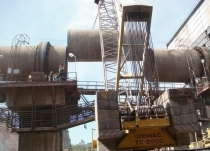
Thanks to many years of experience in the cement industry the experts at Sidat were able to gradually upgrade the whole plant stage by stage to a unified concept of automation. By virtue of the transparency and flexibility of the chosen distributed control system the field bus level with its entire distributed I/O – and as part of this the existing actively operating investment infrastructure – remained intact. Alongside the integration of existing sections of the plant, new technologies could also be fully integrated into the new system, for example a new gas-bypass unit for controlling chloride circulation or the equipment for nitric oxide reduction, as well as the extensive raw material analysis system. With the completion of the work the cement plant in Radotin is now not only equipped with state-of-the-art automation technology and extensively expanded capabilities for greater productivity and environmental protection but it is also now structured much more efficiently. All the production process stages, from the raw mill through to the loading depots where round the clock trucks and rail cars can be loaded fully automatically with different grades of cement, are now operated and controlled by a consistently distributed control system (Fig. 3).
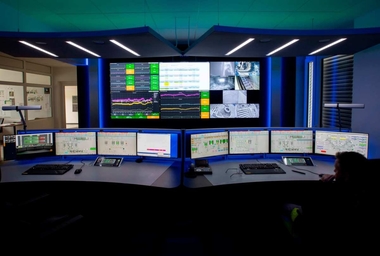
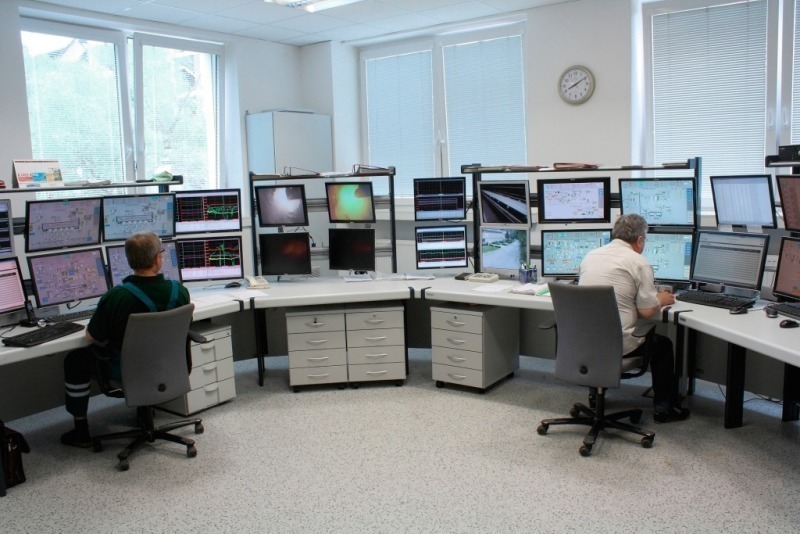
In place of 24 Simatic S5 control systems there are now ten highly efficient Simatic S7-400 automation systems in operation. These are located in a central control room and are linked from there to the field bus level through Profibus, fiber optic and wireless LAN. All the data, that is over 13000 digital and some 1000 analog measured readings, is sent to two redundantly structured pairs of servers. The visual display of all the production processes is shown on eight operator stations which are located in the central control room and in three further on-site operating stations. Optimization of production processes and increases in plant throughput can be controlled through the whole plant from one central engineering station (Fig. 4).
The advantages which modernization brings to the customer are on many levels. Alongside the benefits of simplified and intuitive plant operation via standard faceplates, of extensive and concise diagnostic functions and of enhanced displays of trend trajectories, the new control system is defined above all by its efficient automation and data storage capabilities. Some examples of these among production processes are the reduction of nitric oxide through measured injection of process additives such as Satamin or the use of secondary fuels with varying combustion rates by means of sophisticated control loops. Today a single stand-alone Simatic IT Historian server processes the storage of all the production data which before used to be handled manually with paper systems: production process data, trend trajectories and analyses over a long time period can now all be displayed at the click of a mouse.
Thanks to the latest automation technology and the professional system implementation by the Simatic PCS 7 Specialist Sidat, the cement plant in Radotin is today on top form: it is meeting strict environmental conditions, is saving scarce energy resources through the use of secondary fuels and is making a significant contribution to ecological waste management. In addition, the productivity of the plant and the quality of the cement manufactured have been improved.

Überschrift Bezahlschranke (EN)
tab ZKG KOMBI EN
This is a trial offer for programming testing only. It does not entitle you to a valid subscription and is intended purely for testing purposes. Please do not follow this process.
This is a trial offer for programming testing only. It does not entitle you to a valid subscription and is intended purely for testing purposes. Please do not follow this process.
tab ZKG KOMBI Study test
This is a trial offer for programming testing only. It does not entitle you to a valid subscription and is intended purely for testing purposes. Please do not follow this process.
This is a trial offer for programming testing only. It does not entitle you to a valid subscription and is intended purely for testing purposes. Please do not follow this process.