The latest technology for a variety of applications
Chalk Workshop, Sagard/Germany (09.–10.09.2009)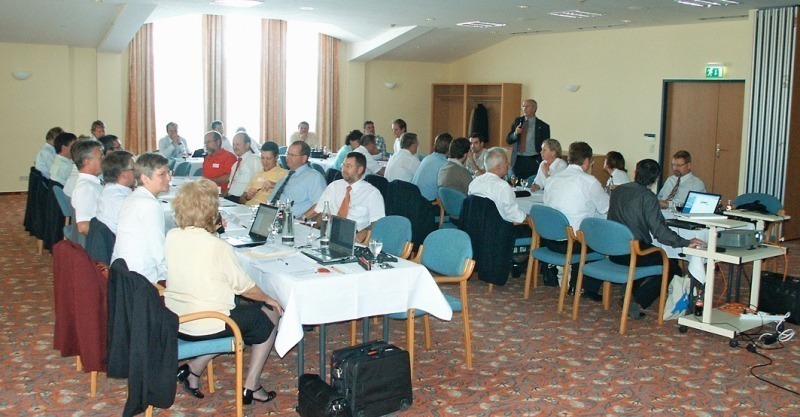
Nearly 40 experts accepted the invitation from Norbert Peschen (Fig. 1), General Manager of the Vereinigte Kreidewerke Dammann KG, to attend the Chalk Workshop in Sagard on the island of Rügen on 9-10.09.2009. The Vereinigte Kreidewerke Dammann KG produces fine chalk, coarse chalk and lime fertilizer at its three plants in Söhlde, Lägerdorf and Klementelvitz (Rügen).
The introduction by Norbert Peschen was followed by Botho-Ekkehardt Hendel, Works Manager of the plant on Rügen, who described the extraction and production of chalk products. He pointed out that, because of its extremely...
Nearly 40 experts accepted the invitation from Norbert Peschen (Fig. 1), General Manager of the Vereinigte Kreidewerke Dammann KG, to attend the Chalk Workshop in Sagard on the island of Rügen on 9-10.09.2009. The Vereinigte Kreidewerke Dammann KG produces fine chalk, coarse chalk and lime fertilizer at its three plants in Söhlde, Lägerdorf and Klementelvitz (Rügen).
The introduction by Norbert Peschen was followed by Botho-Ekkehardt Hendel, Works Manager of the plant on Rügen, who described the extraction and production of chalk products. He pointed out that, because of its extremely fine-grained nature and the chemical purity and high reactivity of the chalk products produced from it, chalk is highly suitable for use as a sorbent in the desulfurization process. He used the example of the various processing stages to illustrate the production of chalk. Norbert Peschen then described the influence of different calcium carbonates on flue gas desulfurization. The comparatively high reactivity of chalk means that it has become established as an alternative to burnt lime products and limestone meal for FGD. Helmut Weiler, AIE Association of Independent Engineers GmbH, followed with a lecture on “New developments for maintaining environmental standards in coal-fired power stations”. He described the systems that are used for flue gas desulfurization and their special features and advantages.
Carsten Marschner, Vattenfall Europe Generation AG & Co. KG, then presented an innovative approach. A first CCS (carbon capture and sequestration) pilot plant is to be installed at the Schwarze Pumpe power station and will be operated with “oxifuel” as well as with the “post-combustion process”. Marschner pointed out that the reserves of lignite are still sufficient for more than 1000 years. This means that it is not a question of whether but of how they will be used in the future. Innovative power stations, such as the “700 °C power station” could catch up with coal-fired power stations in the future with respect to energy efficiency. The CO2 captured in the pilot plant will be liquefied at about 80 bar and be available for further processing. The contract for the pilot plant is due to be awarded at the end of 2010 and test operation should start in 2015.
After the lectures on the first day there was the option of visiting the Rügen chalk plant. The authorized reserves of
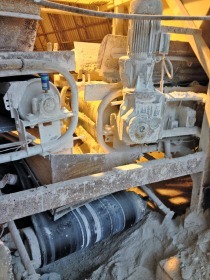
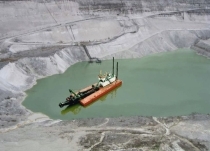
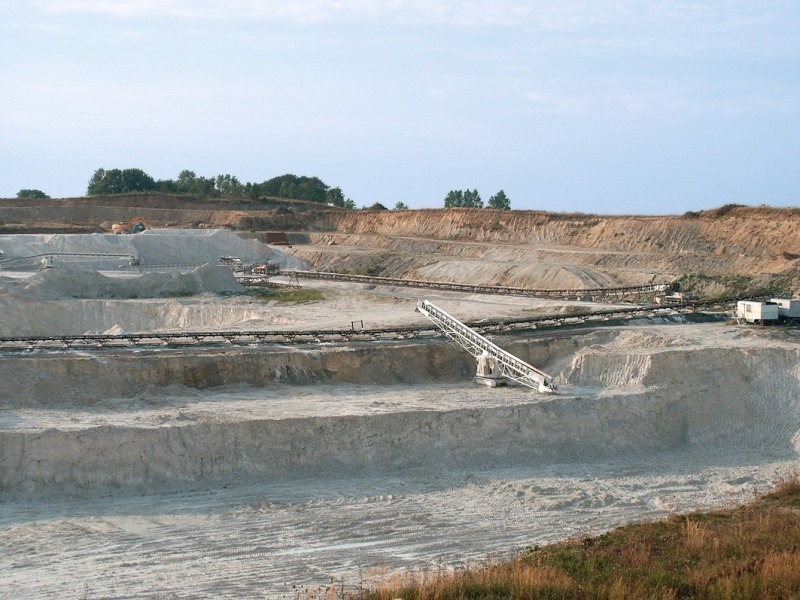
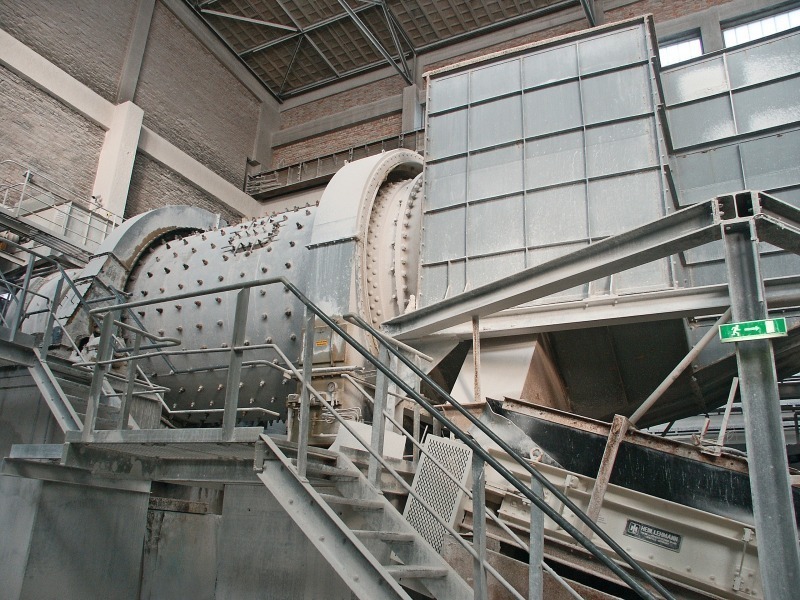
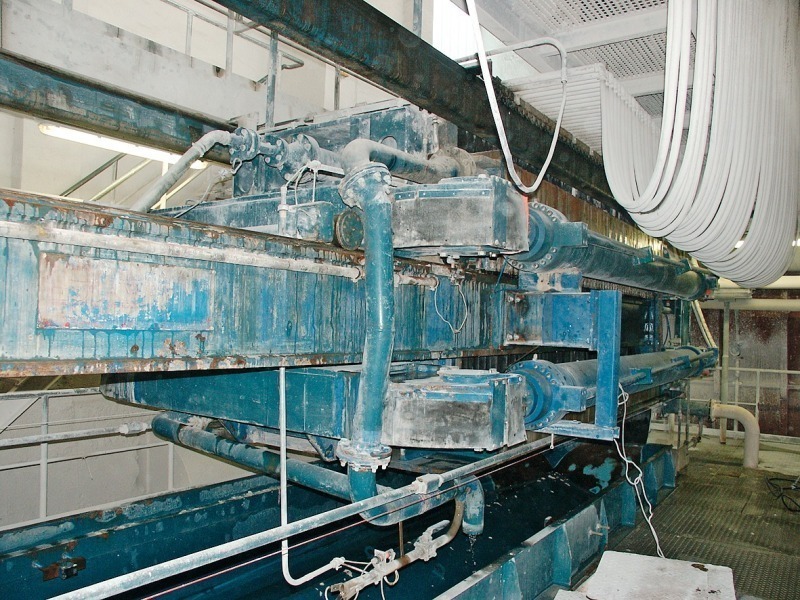
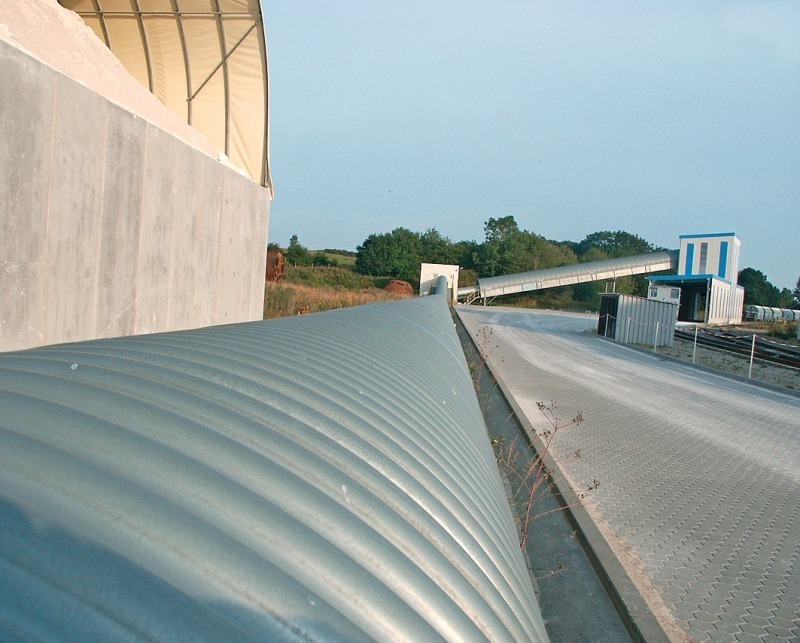
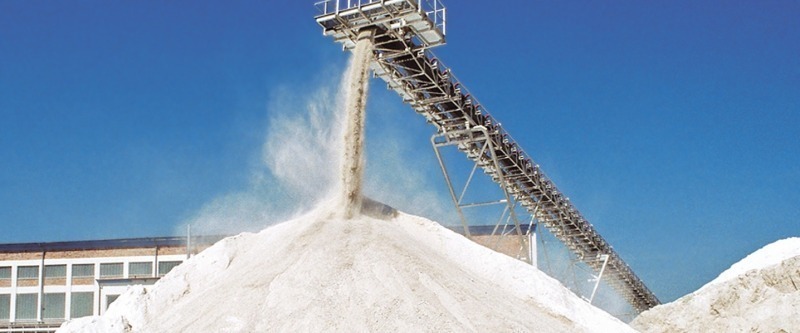
23 million, to which a further 35 million t will be added soon after completion of the planning approval procedure, mean that extraction is now secure for over 200 years (Fig. 2). The chalk on Rügen is quarried at night to take advantage of the favourable off-peak power tariff. The Rügen chalk is a Maastricht chalk that is characterized by its fine grain structure and a high calcium carbonate content of at least 97 %. Most of the calcite crystallites with a size of 0.3 – approx. 3 µm have an isometric shape and form microporous aggregates. The chalk is extracted with a backhoe excavator. The raw material is fed onto a crawler-mounted belt system and transferred to a 2 km belt conveyor that transports the chalk to the plant. The chalk is slurried in a continuous process in a wet mill (Fig. 3) with a throughput of 100 –120 t/h. After the coarse fraction larger than 0.5 mm has been screened off the wet processing of the suspension is carried out by classification in multi-stage hydrocyclones. The chalk slurry is then dewatered to a moisture content < 16 % in mechanical chamber filter presses (Fig. 4). Moisture levels < 0.2 % can be achieved by thermal dewatering in a Hazemag flash drier with a throughput of 30 t/h. The chalk raw material is already characterized by its extremely fine-grained nature. Ultrafine product particle size compositions can be achieved by subsequent air classification.
The participants had the opportunity to find out more at a communal evening meal in congenial company.
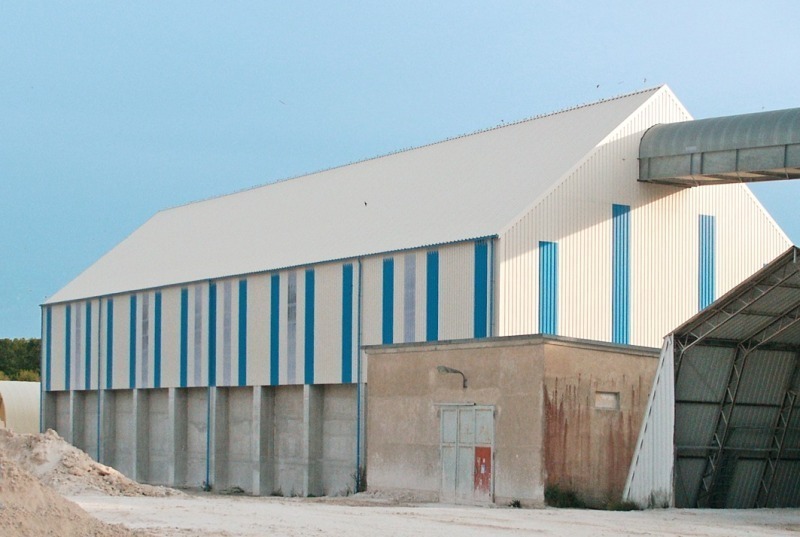
The next day was devoted entirely to power station technology. Frank Menge, Vattenfall Europe Generation AG & Co. KG, started with a description of the technical design basis for delivering, processing and metering the chalk at the Jänschwalde Vattenfall power station. With about 200 000 t/a chalk the Jänschwalde Vattenfall power station is one of the plant’s main customers. The first system for loading complete trains with chalk was opened at the Rügen plant in 2005 (Figs. 5 and 6) [1]. The reason for the additional use of chalk for FGD was that the useful lives of the limestone grinding plants were too short and the plants had reached the limits of their capacity. 23 000 MWel were consumed every year just for grinding the limestone. This deficit could be offset by using chalk, and most of the existing transport routes could be utilized. The chalk supplied by the complete train-load is delivered to a transfer station at Jänschwalde built by FAM.
Andreas Sparmann, Vattenfall Europe Generation AG & Co. KG, then dealt with the effects on the desulfurization process, including the dewatering of the gypsum. Experience has shown that the use of alternative fuel has a great influence on the stability of the FGD plant. By using the pH value to control the quencher circuit, optimization of the quencher hydrocyclones and balanced metered addition of chalk/limestone in a ratio of 40/60 it has been possible to optimize the FGD plant and achieve better leaching properties of the gypsum. Rob van Rij and Roel Koopman of E.ON Benelux Generation b.v. described how it has been possible to improve the gypsum quality at the E.ON power station in Maasvlakte by the use of chalk and in this way produce a more marketable gypsum product. The technical programme was concluded by Toralf Schönfelder, KNG Kraftwerks- und Netzgesellschaft mbH, who described 10 years of experience with desulfurization and gypsum dewatering at the Rostock power station. After some optimization work, e.g. improved quality control, and changes to the process operation, the chalk from Rügen has been used continuously in the power station. 210 000 t chalk have already been converted to about 370 000 t gypsum since April 1994.
The event has once again demonstrated that chalk is a high grade product for flue gas desulphurization, and the development of the product portfolio is not yet complete. A granulation plant costing € 7 million for producing fertilizer granules, like the one at the Lägerdorf plant, is to be built in the near future. The products, with which lime fertilizer can be adjusted with other additives to suit the particular requirements, have good export potential and will also open up the Rügen chalk plant to the international markets.

Überschrift Bezahlschranke (EN)
tab ZKG KOMBI EN
This is a trial offer for programming testing only. It does not entitle you to a valid subscription and is intended purely for testing purposes. Please do not follow this process.
This is a trial offer for programming testing only. It does not entitle you to a valid subscription and is intended purely for testing purposes. Please do not follow this process.
tab ZKG KOMBI Study test
This is a trial offer for programming testing only. It does not entitle you to a valid subscription and is intended purely for testing purposes. Please do not follow this process.
This is a trial offer for programming testing only. It does not entitle you to a valid subscription and is intended purely for testing purposes. Please do not follow this process.