Lifelong commitment to cement science
Fred Glasser Cement Science Symposium, Aberdeen/Großbritannien (17.–19.06.2009)
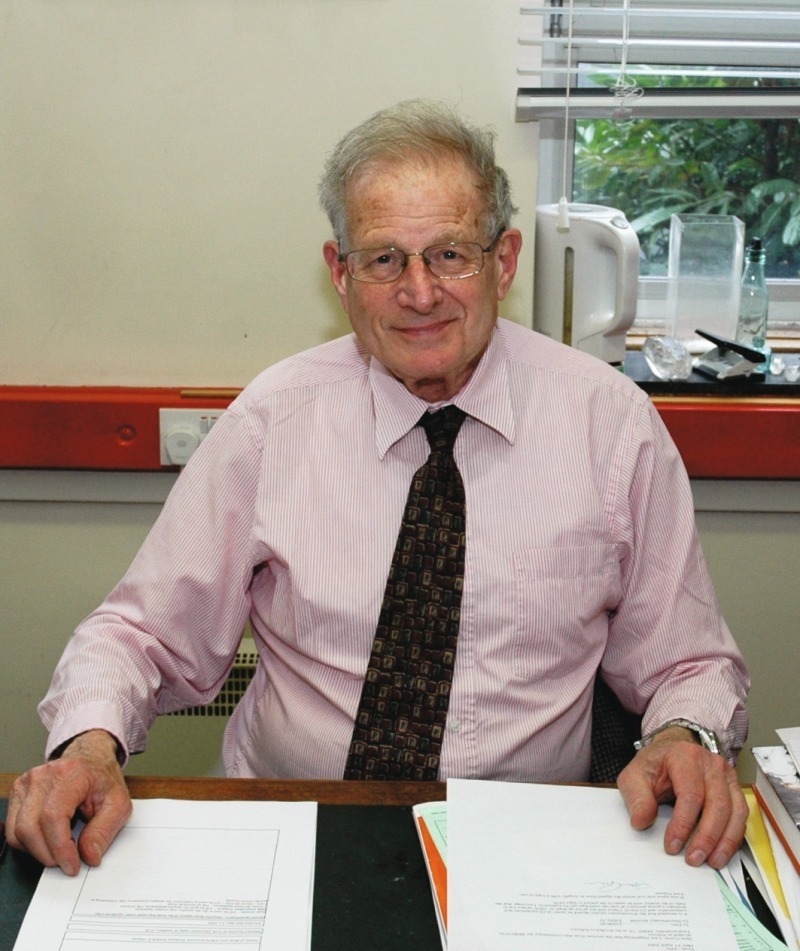
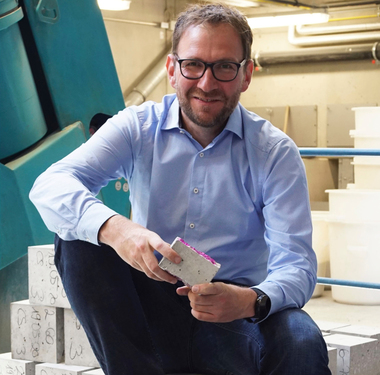
In honour of his outstanding contributions to cement science and other relevant research areas and to celebrate Professor Glassers 80th birthday the Fred Glasser Cement Science Symposium was held in Aberdeen from 17.-19.06.2009. Over the past 50 years Professor Glasser (Fig. 1) published more than 450 scientific papers, edited several books, consulted worldwide active authorities in the treatment of nuclear waste und received several awards.
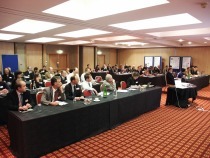
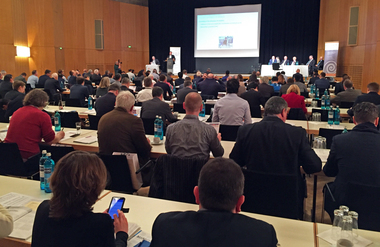
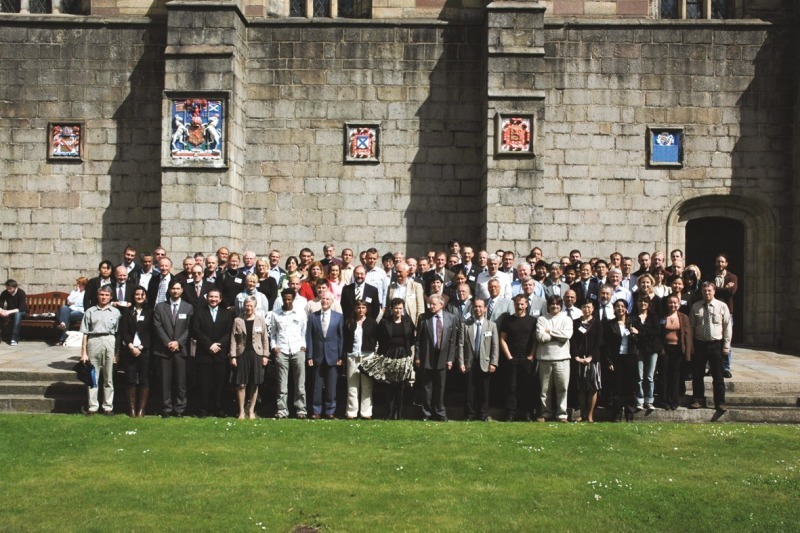
More than 100 delegates from industry and academia attended the two-day symposium (Fig. 2). Many of the attendees had the chance to work together with...
In honour of his outstanding contributions to cement science and other relevant research areas and to celebrate Professor Glassers 80th birthday the Fred Glasser Cement Science Symposium was held in Aberdeen from 17.-19.06.2009. Over the past 50 years Professor Glasser (Fig. 1) published more than 450 scientific papers, edited several books, consulted worldwide active authorities in the treatment of nuclear waste und received several awards.
More than 100 delegates from industry and academia attended the two-day symposium (Fig. 2). Many of the attendees had the chance to work together with Professor Glasser during their professional career.
On the eve of the conference at the Kings College Conference Center of Aberdeen University, Karen Scrivener, EPFL Lausanne/Switzerland, opened the meeeting with a short journey through time including Professor Glassers scientific achievements and his “long-term commitment” to cement science.
The symposium covered six thematic sessions, each of which included three presentations, reflecting Professor Glasser’s main contributions to cement science during his scientific career. The session topics are listed as follows:
1) Clinker chemistry
2) Novel cement systems (Sustainability)
3) Hydration and durability
4) Thermodynamic modelling
5) Cements for waste management
6) Hydrate characterisation
In the session “Clinker chemistry” Vagn Johansen, Switzerland, gave an overview of the history of Portland cement and its manufacture, while Duncan Herfort, Aalborg Cement/Denmark, explained the importance of phase equilibria and thermodynamics in cement clinkering and possible process improvements. Subsequently Francois Sorrentino, France, showed his visions of cement clinker in 2050, whereby ideal clinkering reflects a symbiosis of optimal process technology and mineralogy modifications.
Under the theme “novel cement systems” Donald Macphee, University of Aberdeen/UK, Bruno Touzo, Kerneos/France, and Ellis Gartner, Lafarge/France, presented their ideas of alternative sustainable cementitious systems. Their presentations focused mainly on binder systems with reduced CO2 emissions during production. Beside the optimal use of secondary cementitious materials keywords such as alkali activated binders and calcium (sulfo)aluminate systems were discussed.
In the next session Andre Nonat, University Dijon/France, and Karen Scrivener showed the latest results in the kinetics of hydration of OPC and its main clinker phases, whereas Doug Hooton, University of Toronto/Canada, focussed his talk on durability problems including ASR.
Another focus of the symposium dealt with the application of thermodynamic modelling in hydrated cement systems. Denis Damidot, Ecole des Mines de Douai/France, spoke about the complexity of thermodynamic-kinetically induced processes in the course of cement hydration. Barbara Lothenbach, EMPA Dübendorf/Switzerland, and Thomas Matschei, Holcim Group Support/Switzerland, gave an overview of the potential of thermodynamic equilibrium models to predict the mineralogy of hydrated cement systems and related applications. In addition, Jaques Marchand, Université Laval/Canada, introduced the use of reactive transport models to predict the service life of concrete in dependence on their chemical environment.
The second day of the meeting was dedicated to (i) possibilities of characterisation of hydrate phases and (ii) cements for
waste management. Ian Richardson, University of Leeds/UK, Jorgen Skibsted, University Aarhus/Denmark and Leon Black, University of Leeds/UK, focussed their presentations mainly on the characterisation of C-S-H by high resolution transmission electron microscopy, nuclear magnetic resonance (NMR) and Raman spectroscopy. In the following last session of the conference Annette Johnson, Eawag Dübendorf/Switzerland, and Carol Jantzen, SRNL/US, who was connected via video conference from the US, explained the historic as well as the currently applied possibilities to immobilise waste materials (e. g. heavy metals and nuclear waste) with the help of cementitious systems.
In addition to the main presentations there was a poster session including a total of 24 exemplars. Magdalena Balonis, University of Aberdeen/UK, received an award for the best poster contribution for her work regarding the influence of calcium nitrate and nitrite on the mineralogy of hydrated cement paste.
Finally at the end of the symposium Professor Glasser presented his visions of the future of cement research and pointed out that a close collaboration between industry and academia is the basic for the development of affordable and sustainable building materials. In the closing remarks Markus Tschudin, Holcim Group Support/Switzerland, expressed his appreciation once again of Professor Glasser’s contributions to the cement community.
The social programme of the meeting was also typically Scottish. The attendees had the chance to enjoy a whisky tasting as well as to dance at a typical Scottish ceilidh. At the conference dinner Francis Young, New Zealand, gave a very entertaining talk to honour Professor Glasser’s commitment to cement science.
At the end of the successful meeting I would personally conclude that despite the undoubtedly increasing complexity of future cementitious systems, these binders will follow the fundamental laws of physical chemistry like any other system in the world. Especially under this aspect Professor Glasser did, and still does, pioneering work, the results of which will continue to find broad application in the research and development of future cementitious binders.

Überschrift Bezahlschranke (EN)
tab ZKG KOMBI EN
This is a trial offer for programming testing only. It does not entitle you to a valid subscription and is intended purely for testing purposes. Please do not follow this process.
This is a trial offer for programming testing only. It does not entitle you to a valid subscription and is intended purely for testing purposes. Please do not follow this process.
tab ZKG KOMBI Study test
This is a trial offer for programming testing only. It does not entitle you to a valid subscription and is intended purely for testing purposes. Please do not follow this process.
This is a trial offer for programming testing only. It does not entitle you to a valid subscription and is intended purely for testing purposes. Please do not follow this process.