Wondrous return
 Westfälisches Volksblatt/Besim Mazhiqi
 Westfälisches Volksblatt/Besim Mazhiqi
 Westfälisches Volksblatt/Besim Mazhiqi
 Wilfried Limpinsel
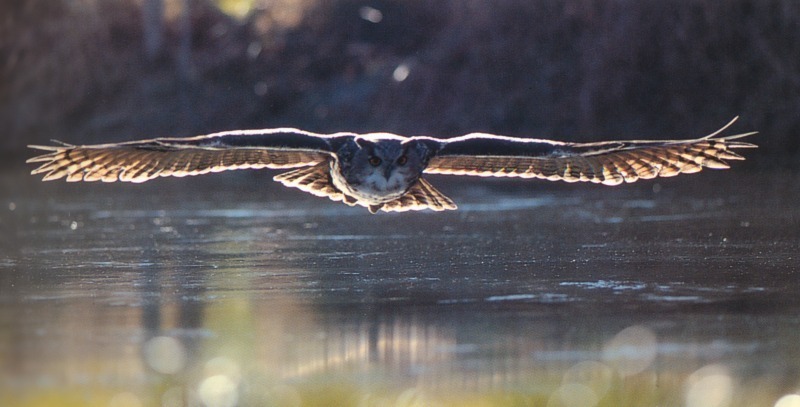
Rock quarrying and nature are not in conflict with one another. Recently, a young Eagle Owl was returned to the wild in the quarry of the Paderborn Cement Works. Plant personnel had found the sick or injured young bird and taken it to the “Essentho Mill” animal care and rehabilitation station.
1 Introduction
Bubo bubo L. is not the name of an exotic pop group, but of one of the world’s largest owls. The taxonomical name is onomatopoeic and reflects the characteristic call of the Eagle Owl, a species which was first scientifically described by Carl Nilsson Linnæus (later Carl von Linné) in 1758.
According to a study conducted by the University of Göttingen into the Eagle Owl’s population density and status, this species prefers quarries as its habitat, as these provide practically optimal nest locations. In the two quarries of the Paderborn cement plant, signs indicating the presence...
1 Introduction
Bubo bubo L. is not the name of an exotic pop group, but of one of the world’s largest owls. The taxonomical name is onomatopoeic and reflects the characteristic call of the Eagle Owl, a species which was first scientifically described by Carl Nilsson Linnæus (later Carl von Linné) in 1758.
According to a study conducted by the University of Göttingen into the Eagle Owl’s population density and status, this species prefers quarries as its habitat, as these provide practically optimal nest locations. In the two quarries of the Paderborn cement plant, signs indicating the presence of breeding Eagle Owls had been found some time earlier, according to the Plant Manager Michael Tebbe: “In the course of our inspections, we had discovered the empty, inside-out skins of hedgehogs. The Eagle Owls’ attack flight is so quiet that the hedgehogs do not even have time to erect their spines before they are killed by the owl’s long talons.”
2 The location
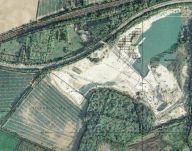
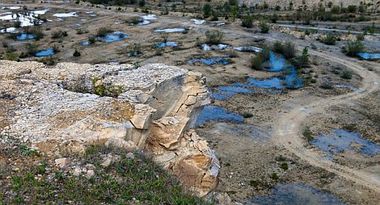
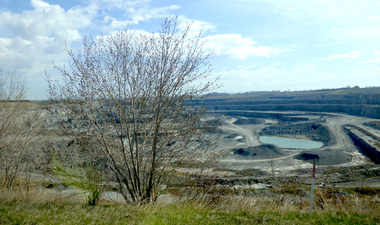
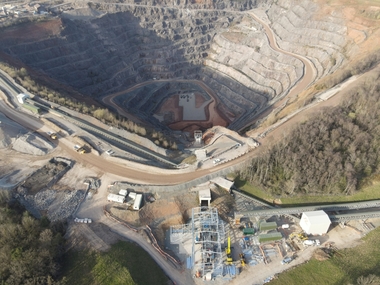
The quarry directly adjacent to the Paderborn plant is 30 hectares in size. On two working levels, limestone-marl rock is excavated down to a depth of around 50 m. This rock was quarried as early as the Middle Ages to build churches such as the Paderborn Cathedral. It was created by marine deposits laid down in the upper cretaceous period, around 90 million years ago, when our planet was still inhabited by dinosaurs. Today, the rock is used as raw material for the nearby cement plant, whose product range comprises the classical Portland cements, as well as blastfurnace slag cements of a wide range of strength classes. One of the “highlights” among the structures built using Paderborn cement is the new Nuttlar Valley Bridge in the Sauerland region of Germany.
Michael Tebbe and his personnel are also aware of their active quarry’s significance as a “protected zone”. For nature conservation, quarries count as important secondary biotopes harbouring a surprisingly large range of species in a landscape that is being exploited with increasing intensity. The bare rock and “poor” soil of quarries are home to the last remnant stands of rare plants that cannot exist on the heavily fertilized agricultural terrain. Amphibians such as the Natterjack and Midwife Toads, as well as reptiles like lizards, prefer the sparsely vegetated soils. Birds requiring privacy during their breeding period also find refuge in quarries. The Eagle Owl, with its broad range of prey species, can hunt wild pigeons and doves, crows, rabbits, rats and hedgehogs around the quarries. Young Eagle Owls leave the nest in the quarry wall before they are able to fly, and then scramble around the rock face. Constant mobility helps them to avoid possible predators, while their begging calls make sure that the adult birds can always locate them when they bring food.
3 The finding of the bird
A year ago, plant personnel picked up an unfledged young Eagle Owl that was clearly not just “on a walk-about” but was ill or injured, and exhausted. Laboratory Manager Raymund Hötger informed the nature conservancy authorities and the biological Station of Paderborn, which took the bird to the “Essentho Mill” care and rehabilitation station. The mill had been inherited by Wilfried Limpinsel and converted into the largest animal care station in Northrhine-Westphalia. Limpinsel has been working in an honorary capacity for decades in co-operation with the Northrhine-Westphalian Department of Nature Conservancy, Environment and Consumer Protection (LANUV). Even as an eight-year-old he had already looked after nest boxes and fed birds. Today, he cares for an average of 240 injured birds of prey and owls per year, and readies them for their return to the wild.
In the case of the young Eagle Owl from Paderborn, an illness was initially suspected, but then it was found that a spine was sticking in its crop. Wilfried Limpinsel was able to heal the wound and rear the owl until it was fully fledged.
4 Return to Paderborn
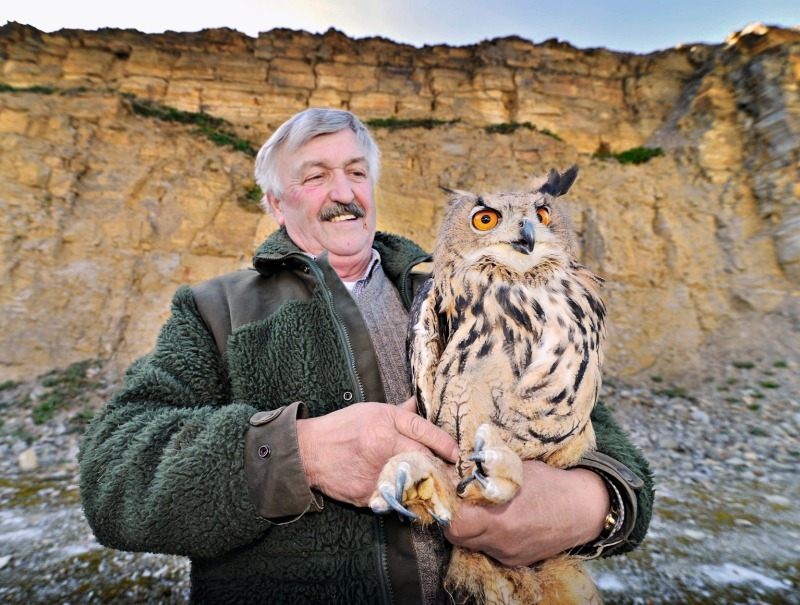
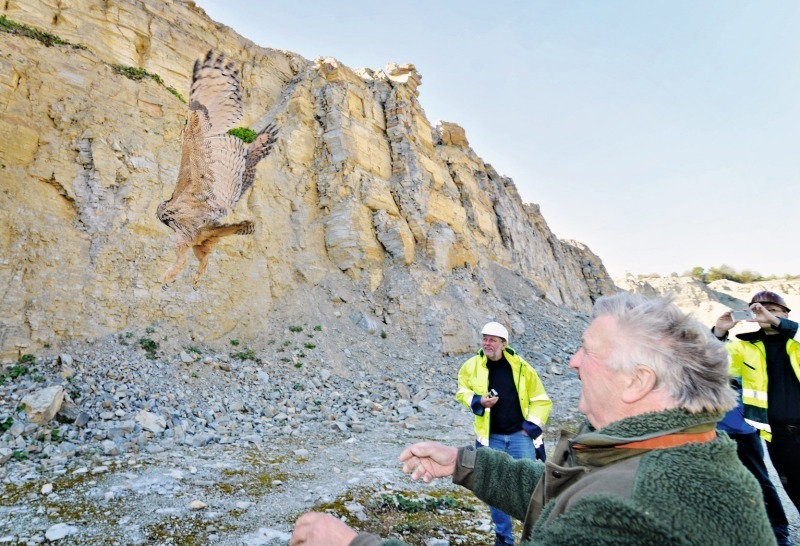
Two things were important for a successful return to the wild: during its six months in captivity it was essential to avoid “imprinting” the bird to humans, and it had to learn to catch live prey by itself. Fortunately for the captive rearing process, much of a young bird’s development is genetically predetermined. On the day that it was released into the wild, ornithologist Limpinsel took the Eagle Owl back to the place of its birth (Fig. 1). Plant Manager Tebbe and Laboratory Manager Hötger eagerly watched (Fig. 2) its first attempts at flight: “I was quite anxious, because a Buzzard immediately drew near, and our Eagle Owl was still flying rather clumsily”, said Tebbe.
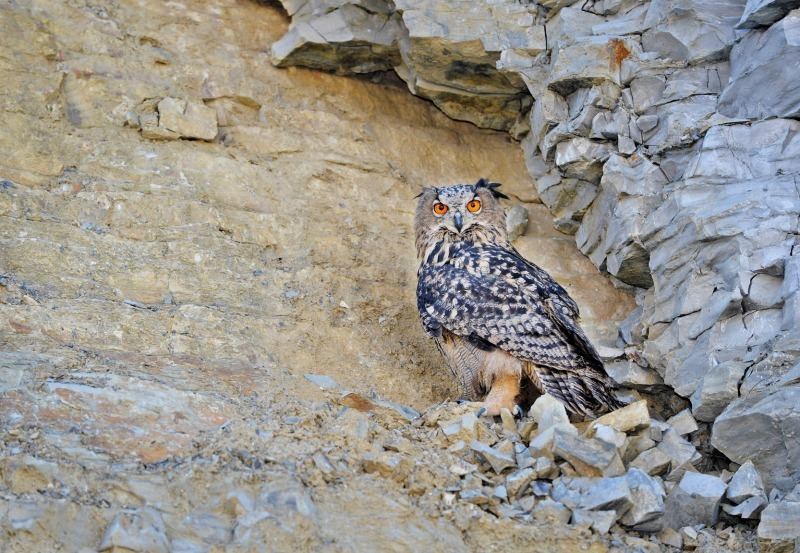
Wilfried Limpinsel is used to saying farewell to birds that he has reared. “The purpose of the whole procedure is to rehabilitate the patient (Fig. 3) and ultimately return it to freedom”, he said. Eagle Owls are now not so rare as they were 30 years ago. “But it always gives me a feeling of real satisfaction when I can successfully return one to the wild.” Limpinsel is glad that the quarry is still being worked, and that those in a position of responsibility are Eagle Owl fans. “Having got used to the ongoing quarrying operations, the Eagle Owl has optimum living conditions there and the whole area is fenced off, protecting the breeding birds against unwanted intrusion.”

Überschrift Bezahlschranke (EN)
tab ZKG KOMBI EN
This is a trial offer for programming testing only. It does not entitle you to a valid subscription and is intended purely for testing purposes. Please do not follow this process.
This is a trial offer for programming testing only. It does not entitle you to a valid subscription and is intended purely for testing purposes. Please do not follow this process.
tab ZKG KOMBI Study test
This is a trial offer for programming testing only. It does not entitle you to a valid subscription and is intended purely for testing purposes. Please do not follow this process.
This is a trial offer for programming testing only. It does not entitle you to a valid subscription and is intended purely for testing purposes. Please do not follow this process.