EU: OECD-wide carbon credit market by 2015
Commissioner for Environment, Stavros Dimas, reveals the European Union’s visions for a successful outcome of the UN Climate Conference in Copenhagen (07–18.12.2009).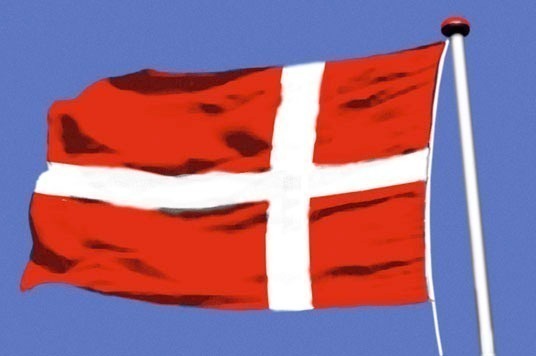
“Our vision is to build an OECD-wide carbon market by 2015 by linking the EU emissions trading system with compatible cap-and-trade systems being set up in other industrialized countries,” Stavros Dimas, EU Commissioner for Environment, said in a speech at a seminar on climate change on the 6th March 2009.
“The moves underway to introduce a US federal cap-and-trade system, point to the real possibility that a transatlantic carbon market could be in place from around 2012, and this is enormously encouraging,” Mr. Dimas added at the seminar which was held in Stockholm. Sweden will be President of...
“Our vision is to build an OECD-wide carbon market by 2015 by linking the EU emissions trading system with compatible cap-and-trade systems being set up in other industrialized countries,” Stavros Dimas, EU Commissioner for Environment, said in a speech at a seminar on climate change on the 6th March 2009.
“The moves underway to introduce a US federal cap-and-trade system, point to the real possibility that a transatlantic carbon market could be in place from around 2012, and this is enormously encouraging,” Mr. Dimas added at the seminar which was held in Stockholm. Sweden will be President of the EU during the crucial UN Climate Conference in Copenhagen in December.
Recognizing that developed nations will need to take the lead, both in cutting their own emissions and in financing climate-friendly technologies in developing countries, Stavros Dimas said: “The EU is committed to taking on its fair share of this financing, which we believe must come from a mix of public and private sources … including an expanded international carbon market … The international carbon market … is an essential tool for achieving the deep emission cuts needed in the most cost-effective way. The carbon market can also be a major source of the additional financing needed. (EU) Member States have agreed that at least 50 % of revenues from the auctioning of emission allowances in the EU should be used to combat climate change, both at home and abroad.”
The Commissioner took the opportunity to put forward a vision consisting of seven points which the EU believes may bring success in Copenhagen. Firstly, a Copenhagen agreement should aim for keeping average global warming at less than
2 degrees Celsius above the temperature in pre-industrial times – leaving only a window of 1.2 degrees above today’s temperature. Secondly, developed countries should reduce their emissions to 30 % below 1990 levels by 2020.
Thirdly, developing countries should keep their emissions
15 to 30 % below business as usual levels in 2020. “Central to our proposals for developing countries are low-carbon development strategies which would cover all key emitting sectors while encouraging further economic growth,” Mr. Dimas said while adding: “Developing countries would draw up these
strategies setting out what they intend to do to mitigate emissions … A mechanism to be established under the Climate Convention would then assess the adequacy of these actions and match up the identified needs with the necessary support.”
Fourthly, tropical deforestation should be at least halved by 2020 and global forest cover loss should be halted by 2030. Furthermore aviation and shipping (both excluded from the Kyoto Protocol) should have reduction targets.
Fifthly, an adaptation strategy for vulnerable countries and regions should be agreed. Sixthly, financing from both public and private sources should be stepped up. Seventhly, the international carbon market should be expanded. The Commissioner concluded his speech by stating: “The stakes could not be higher. Copenhagen is the world’s last chance to put global emissions on a track that can prevent dangerous climate change. It is a historic opportunity we cannot afford to miss.”

Überschrift Bezahlschranke (EN)
tab ZKG KOMBI EN
This is a trial offer for programming testing only. It does not entitle you to a valid subscription and is intended purely for testing purposes. Please do not follow this process.
This is a trial offer for programming testing only. It does not entitle you to a valid subscription and is intended purely for testing purposes. Please do not follow this process.
tab ZKG KOMBI Study test
This is a trial offer for programming testing only. It does not entitle you to a valid subscription and is intended purely for testing purposes. Please do not follow this process.
This is a trial offer for programming testing only. It does not entitle you to a valid subscription and is intended purely for testing purposes. Please do not follow this process.