2014 – Pfeiffer Convention celebrates 150 years anniversary
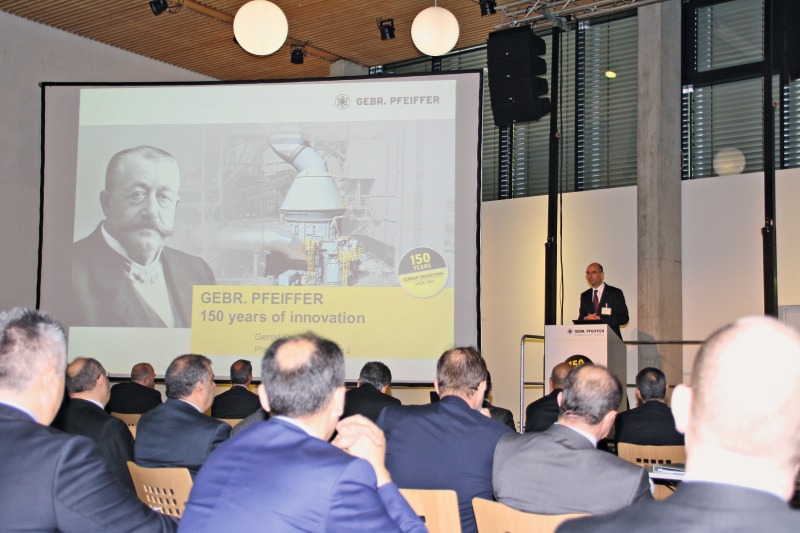
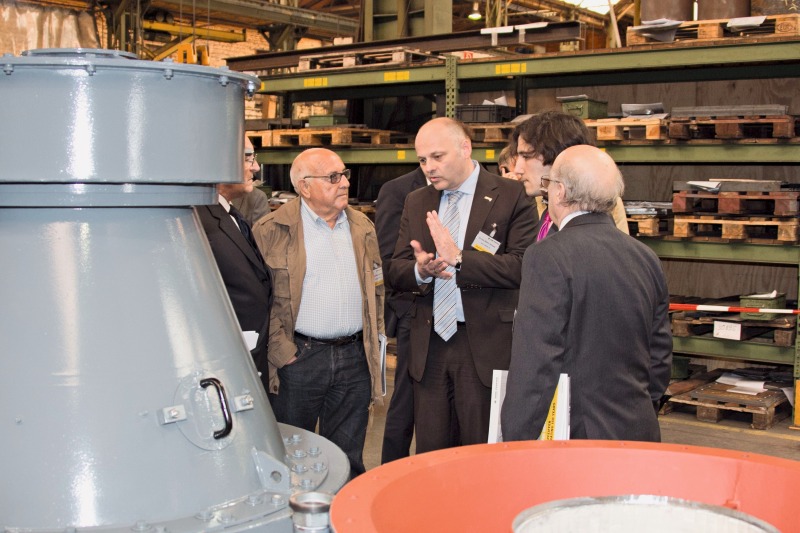
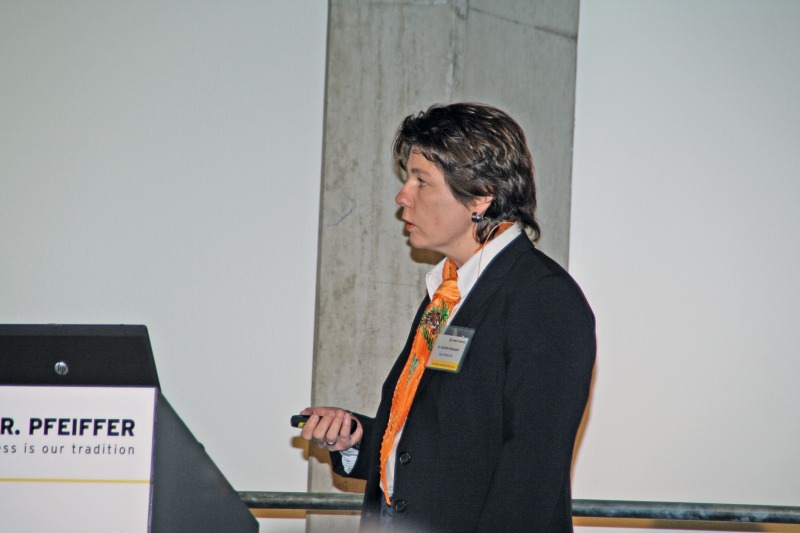
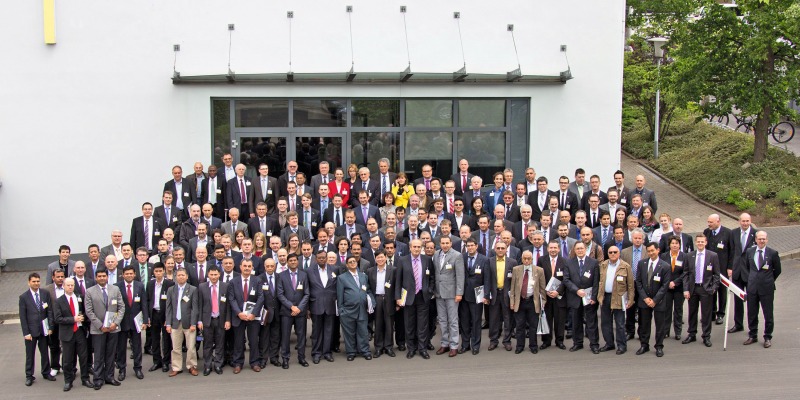
Patrick Heyd (General Manager Projects and Sales) opened the event with a warm welcome to the 200 guests from 35 countries and led the audience through the Pfeiffer Convention on 8–9 May 2014. The 150th anniversary was celebrated at the Gartenschau Convention Centre in Kaiserslautern, Germany.
The CEO and Commercial Director, Gerold Keune, looked back on 150 years of innovation, when, in 1864 Jacob Pfeiffer Sr.’s two sons Karl and Jacob founded Gebr. Pfeiffer, which today is still a family-owned company and which was boosted by the commercial application, based on a British patent for wind...
Patrick Heyd (General Manager Projects and Sales) opened the event with a warm welcome to the 200 guests from 35 countries and led the audience through the Pfeiffer Convention on 8–9 May 2014. The 150th anniversary was celebrated at the Gartenschau Convention Centre in Kaiserslautern, Germany.
The CEO and Commercial Director, Gerold Keune, looked back on 150 years of innovation, when, in 1864 Jacob Pfeiffer Sr.’s two sons Karl and Jacob founded Gebr. Pfeiffer, which today is still a family-owned company and which was boosted by the commercial application, based on a British patent for wind separators. Gebr. Pfeiffer started as a manufacturer of steam engines and large rotary kilns, but soon went on to comminution by ball mills. Since then, the company has specialized in grinding using vertical roller mills (VRM), launched in 2010 around the globe. The company’s focus has recently shifted to France, Russia, the UK, Japan, Asia, Africa and the US market.
Dr. Robert Schnatz, Technical Director, spoke about the end of the boom year in 2007. Nearly 300 mills are now sold in 2012 in the global cement industry, around one third of these are VRMs. With ball mills and high pressure grinding a total of 97 % of the coal mills and 90 % of the slag mills are VRMs partly due to their high performance. VRMs dominate the comminution of raw materials, slag and coal, and the market share for cement is still increasing. Mills with more than 6000 kW are becoming common and the trend towards turnkey is also becomes obvious. Additionally, Dr. Robert Schnatz announced the new approach of taking on EPC contracts of GPSE, which was suggested in greater depth by Axel Auerbach (Head of After Sales Service) and Jens Reimers (Executive Director) in later sessions.
Bernd Henrich (Sales Director Asia) spoke next about the operation of the MVR without external heat, presenting the Balaji 5600 C-4 mill in India for grinding OPC and PPC. He explained how the energy input is used for comminution by transfer from the motor and gearbox into the grinding table and rollers in order to reduce particle size by crushing, transforming energy into heat. In Balaji it was shown that the energy from the 115°C hot clinker and the energy from grinding was sufficient to allow optimized operation of the mill. However, when additional external heat is available there are more options for grinding of for example wet fly ash or FGD with residual moisture.
Dr. Caroline Woywadt (Head of Process Engineering Dept.) next talked about the largest VRM (6m table diameter and 76t weight) in Australia, at the sea terminal grinding plant Port Kembla with a capacity of 1.1 million tpy. Large pre-assembled modules were shipped from Spain from the contractor Cemengal to reduce site works. The Pfeiffer MVR mill was designed with MultiDrive to work fully automated, maximizing operational time, and to minimize operational costs and down-time and to reduce storage of spare parts. The effect during grinding is a relatively low heat level, leading to a lower degree of gypsum dehydration and reactivity, consequently the formation of hemihydrate can be adjusted in a better manner, which is important for the regulation of the setting time.
So far, having bought 24 mills from Gebr. Pfeiffer, H.M. Bangur (Managing Director of Shree Cement) explained its experiences with operating MVR mills in India at Ras, Raipur and Bihar. Jens Reimers then returned to a topic from earlier day and gave details on GPSE plans to become a major player in the EPC - Engineering, Procurement and Construction business for turnkey projects, adding construction capability to its offering. GPSE will partner with SNEF/Cemprocim and with Triplan AG/Cresta of Austria to provide EPC contracts.
After the first day of sessions the delegates were entertained by musicians and acrobats at an exquisite gala dinner at the beautifully restored former indoor market the Fruchthalle in Kaisers-lautern.
The next day, in his lecture, Dr. Joe Harder (OneStone Research) demonstrated new trends in the rise in global cement demand, which increased by 6.8 % to 3.99 billion t in 2013 and is forecast to grow by 4.5 % in 2014. He made many remarks on the Chinese cement industry, regarding jumbo mergers and capacity concentration as well as development of the clinker factor and its required investment in additional mill capacities.
Sascha Hamm (Sales Engineer at GPSE) spoke about a cost-efficient solution with Pfeiffer projects in Turkey for grinding petcoke, lignite and raw materials at Limak Cimento, which already operates nine VRMs. GPSE is continuously replacing its ball mills in order to reduce its specific energy requirements and operational costs.
Patrick Heyd focussed on solid fuel grinding with the Pfeiffer MPS mill, where a great many have been sold to the cement industry but also to the power plants as well. The mill housing is explosion-proof up to 8 bar, and has no horizontal surfaces for deposit of dust. Among other things, he presented the largest lignite mill in the world, which is operated by PT Cemindo Gemilang in Indonesia. This mill has a 4.5m diameter grinding table and can produce 100tph with a feed humidity of 37 %.
Eckhard Sander (Executive Director) next drew attention to the grinding-calcination of gypsum. GPSE has two systems for producing plaster by direct calcining and indirect calcining in the GK gypsum kettle. In the MPS mill, the gypsum is ground and flash-calcined in one step. With a lower exhaust gas temperature the flash calcination leads to pseudomorphical b-hemihydrate crystals, which are perfect for the production of wallboard, while the slower calcining from the kettles produce a higher quality g-hemihydrate with a longer setting time. Pfeiffer has supplied the world’s largest mill with 2.8m diameter for grinding and calcining, where FGD gypsum can be fed up to a humidity of 50 %.
The final presentation at the convention was given by Axel Auerbach, who put the GPSE service on two pillars – the mechanical and the process-related one. Starting with a technical assessment of the mill and its operation, mechanical and process optimization can proceed.
Finally, Patrick Heyd closed this excellent conference and on behalf of the entire Management Board he wished all delegates a safe trip back home and a warm “Goodbye, see you soon – Tschüss, bis bald!”

Überschrift Bezahlschranke (EN)
tab ZKG KOMBI EN
This is a trial offer for programming testing only. It does not entitle you to a valid subscription and is intended purely for testing purposes. Please do not follow this process.
This is a trial offer for programming testing only. It does not entitle you to a valid subscription and is intended purely for testing purposes. Please do not follow this process.
tab ZKG KOMBI Study test
This is a trial offer for programming testing only. It does not entitle you to a valid subscription and is intended purely for testing purposes. Please do not follow this process.
This is a trial offer for programming testing only. It does not entitle you to a valid subscription and is intended purely for testing purposes. Please do not follow this process.