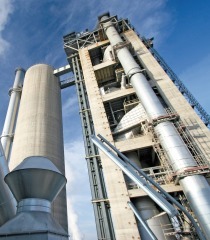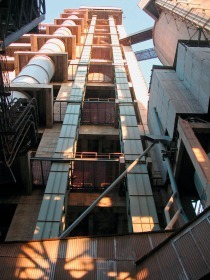
Belt bucket elevator with heavy-duty technology
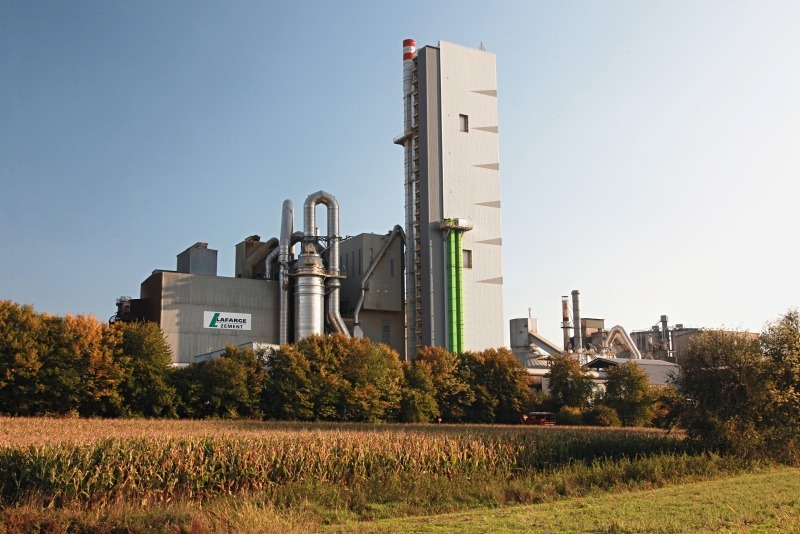

In the seventies the plant was taken over by Lafarge. “Thanks to the state-of-the-art technology and a high sense of...
In the seventies the plant was taken over by Lafarge. “Thanks to the state-of-the-art technology and a high sense of responsibility, we produce approximately 800 000 tons cement a year for various applications and requirements at our Wössingen site”, explains Stephan Schenk, Head of Servicing & Development at Lafarge Zement. Lafarge places particular value on production methods that are both energy-efficient and environmentally sound. For this reason, the systems were modernised for more than 60 million euros in 2008 and 2009. Now, the cement plant has a 5-stage heat exchanger and a new clinker cooler.
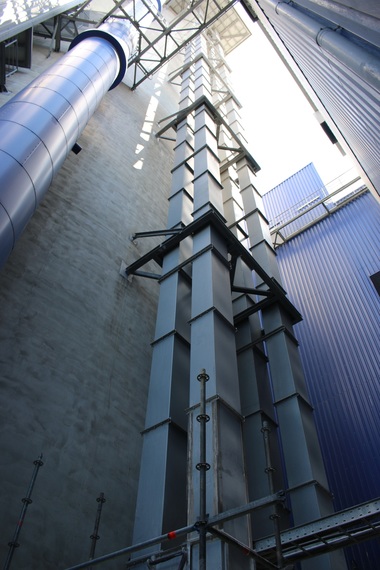
“We changed from the Lepol process to the energy-saving dry process with heat exchanger and precalciner with no interruption to the operation. To make the production more cost-effective and environmentally sound, we changed from the two-kiln operation to a single rotary kiln”, explains Schenk. “The kiln line now has a considerably higher capacity. The system is fed with approximately 150 tons per hour of raw material. Accordingly, the complete production has changed”, explains the engineer. Due to the increase in performance and modernisation of the kiln line, the flow rate of the bucket elevator for the raw mill had to be increased considerably. The bucket elevator transports limestone to the mill bunker.
High wear of the belt
New heavy-duty technology gets the job done
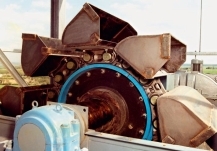
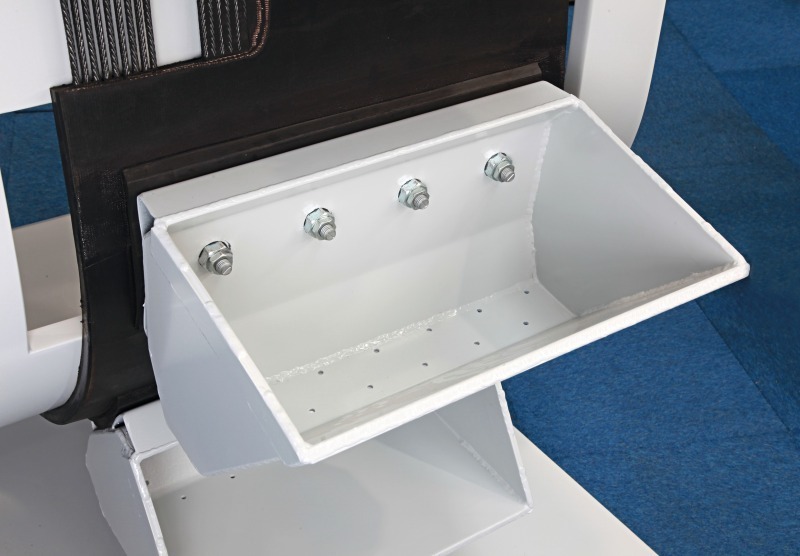
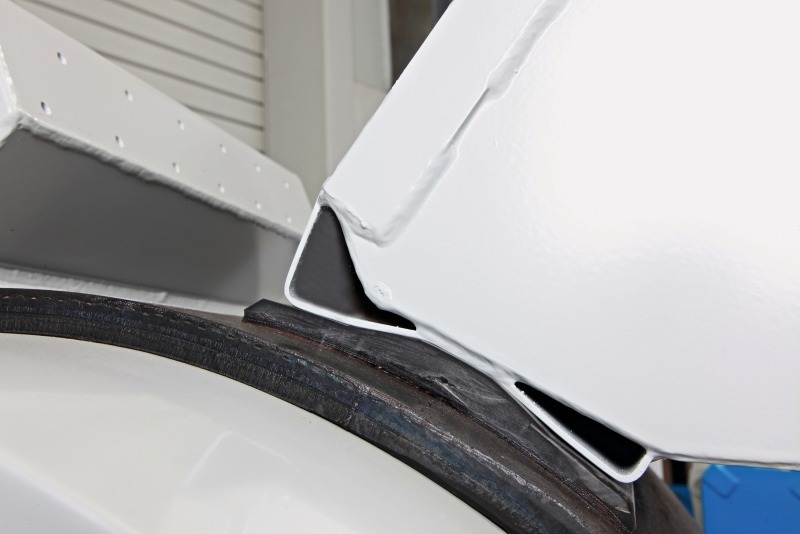
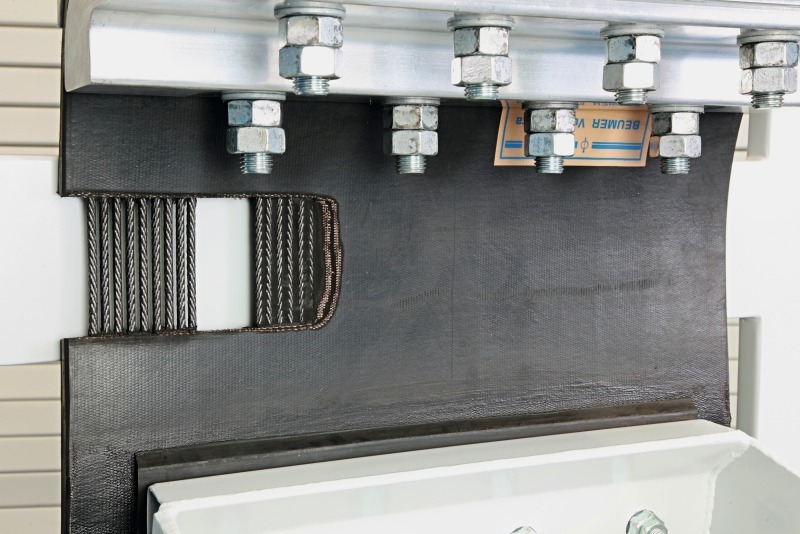
This is possible thanks to the new bucket geometry (Fig. 2). There is no longer a gap between belt and bucket (Fig. 3). Coarse-grained material does not jam during the scooping and filling process. The buckets are mounted firmly to the back of the belt by segments and bolts. Belts with wire-free zones are used for the new heavy-duty bucket elevators just as with all Beumer belt bucket elevators. The buckets can be fastened to the belt without damaging the steel wires or even cutting them. The traction forces of the bucket elevator belt are maintained to the full extent. The new bucket shape also ensures smoother running and thus less noise.
Depending on the material to be conveyed, Beumer offers buckets which are adapted to the material or mounts a dynamic bottom into the bucket elevator boot. This prevents wet and sticky material from accumulating in the bucket elevator boot. If explosive material is to be conveyed, all components are available in the ATEX version.
A belt that resists high loads
The timeline was tight, just two months for planing and realising the modification. “We got the ball rolling in October. The date of delivery was at the beginning of January and the bucket elevator was in operation at the end of February”, Schenk says. Employees at Lafarge carried out the assembly under the watchful eye of the Beumer specialists. The expenditive for the cement plant was very low. “Beumer handled all the planning, we only had to mount the buckets and the belt.”
“This solution saved us a lot of money”, says Schenk. The complete modification cost about 80 000 €. In comparison, a new conventional belt would have cost only 60 000 €, but: „If we assume that the Beumer solution lasts twice as long, the modification will amortise after a short period of time”, emphasizes Schenk. “Even after six months of operation there are no signs of wear. This was quite different with the old belt.”
www.beumer.com