Kiln system upgraded to present state of the art
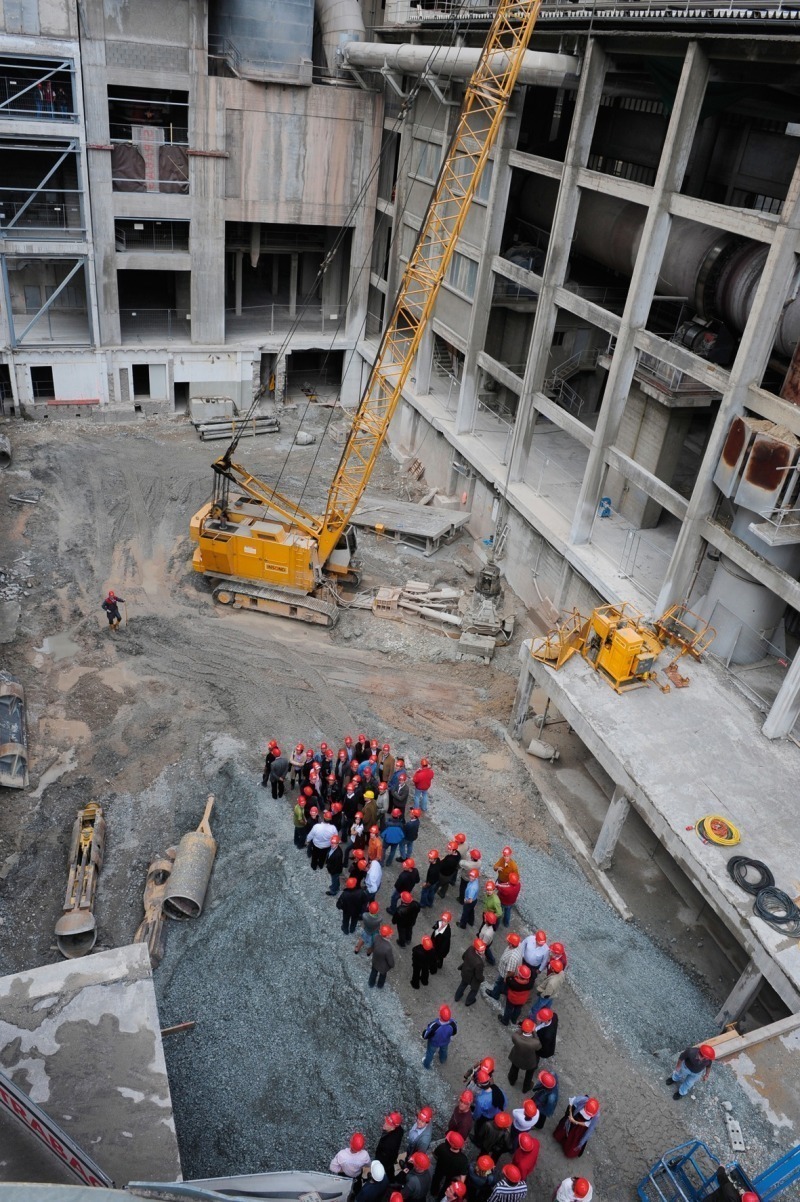
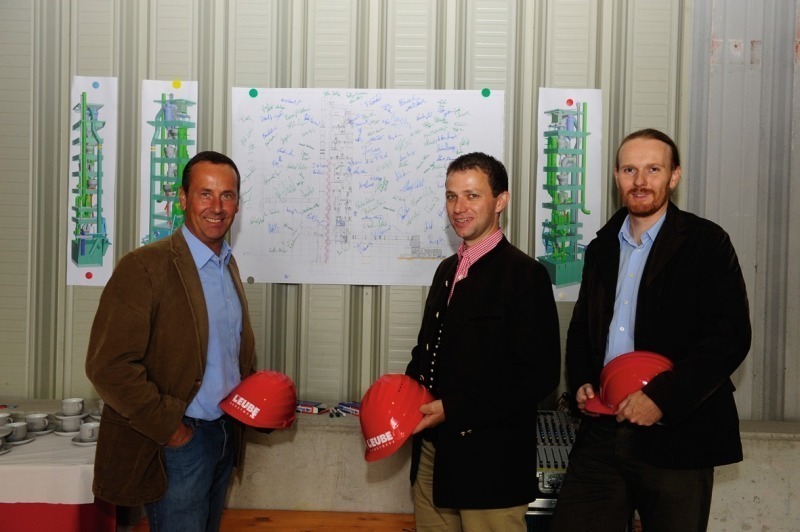
On 22.07.2009 the groundbreaking ceremony for the clinker production upgrade project at the cement factory of Leube GmbH in St. Leonhard/Austria marked the beginning of an approx. € 30 m modernization measure that will also have the effect of securing jobs at this location. The project team of the cement factory had worked out the concept together with A TEC Production & Services GmbH. On 09.10.2009 the foundation stone was laid during a staff celebration (Fig. 1). As a symbolic act the current construction drawing was signed by all the employees present at the celebration and then imbedded...
On 22.07.2009 the groundbreaking ceremony for the clinker production upgrade project at the cement factory of Leube GmbH in St. Leonhard/Austria marked the beginning of an approx. € 30 m modernization measure that will also have the effect of securing jobs at this location. The project team of the cement factory had worked out the concept together with A TEC Production & Services GmbH. On 09.10.2009 the foundation stone was laid during a staff celebration (Fig. 1). As a symbolic act the current construction drawing was signed by all the employees present at the celebration and then imbedded in the foundation of the new clinker production line (Fig. 2). ZKG INTERNATIONAL spoke with Dr. Günter Waldl and project manager Klaus Czepl of the Leube cement factory, and with Daniele Sabadelli of A TEC about the decision-making process, the concept and the status of work.
Dr. Günter Waldl: At present, the Leube cement factory operates two KHD preheater kilns. Rotary kiln plant 1 was built in 1960 and kiln line 2 in 1966. Both were originally designed for a capacity of 700 t/d. Since 1987, line 2 has been equipped with a Pyroklon preheater, which increased its capacity to 1100 t/d and in 2003 a modern pendulum grate cooler (an IKN cooler for a capacity of 1400 t/d) was added. Shredded tyres and plastics have been used as secondary fuels in kiln line 2 since 1996, at a substitution rate of 40 %. Since 2007 we have also been burning plastic in kiln line 1.
Dr. Günter Waldl and Klaus Czepl: Following an inhouse pilot study in 2006, contact was made with various plant engineering firms with respect to conducting a feasibility study. In 2007, A TEC produced a study for the conversion of kiln line 2. The conversion options contained in this study did not correspond to Leube‘s long-term concept, because the capacity of the new plant was limited to 1400 t/d due to the existing, reverse-mounted IKN cooler. Furthermore, assurance of our own clinker supplies during the conversion phase would have been a relatively complex matter. In mid 2007 the concept was altered to increasing the capacity of kiln line 1 to 1800 t/d and implementing this step by step. The plan was to perform the first step in 2009 with the replacement of the cooler, then to disassemble the preheater by 2012 and finally to construct the new preheater at the same location. The first action was to order the cooler in May 2008. In the course of 2008 it became progressively clearer that economic considerations would compel us to quickly implement the overall project and complete it in autumn 2010. For this reason, a variant already discussed in advance, constructing a complete new kiln line, was again taken up. After a short replanning phase, it was clear that this variant was feasible and that it would be possible to build the line with practically no loss of production in kiln lines 1 and 2. These findings allowed the representatives of the owners to approve the quick implementation of this variant in April 2009, so that clinker production at the factory could be fundamentally modernized by autumn 2010.
Daniele Sabadelli: The points given highest priority were minimizing the energy consumption, minimizing the emissions and obtaining flexibility with regard to the production quantity, the fuel grades, and the produced clinker quality.
To match the raw material moisture content, a 5-stage gas suspension preheater was selected. Its design offered the possibility of 4-stage operation, as well as all conceivable intermediate stages for covering moisture peaks. It is possible to optimally adjust the exhaust gas temperature downstream of the preheater to individually suit the respective raw material moisture content and consequently to minimize the thermal energy consumption.
Thanks to optimum configuration of all plant components, such as the cyclone stages, with regard to pressure drop, gas velocities and geometry of the ductwork, as well as to the exclusive application of motors of energy efficiency grade 1, the future electrical energy requirement will be significantly lower. Due to the reduction in thermal energy consumption and to substitution of fossil energy sources, there will also be an enormous reduction in CO2 emissions.
The new kiln system will be equipped with a calcining system incorporating the split supply of air and fuel and a reducing atmosphere zone, which will ensure more than 50 % NOx conversion.
Moreover, when designing the machines and plant components, particular attention was paid to providing a capability for operating at a nominal range of almost 1:2 without any significant increase in energy requirement. The aim of minimizing the use of fossil energy sources was achieved on the one hand by maximizing the calciner fuel ratio and on the other hand by installing a calcining system with combustion chamber. The combustion chamber provides optimum burning conditions thanks to combustion zone temperatures in excess of 1100 °C, achieved only with hot tertiary air, i.e. without kiln exhaust gases.
In order to obtain the highest clinker qualities, great care is taken to achieve outstanding material homogeneity from the existing quarry right up to the cement loading facility, for instance by installing new dosing systems for raw meal and fuels.
Daniele Sabadelli: At present we are in the middle of arranging the purchasing of new equipment and erection and assembly services. A TEC is particularly responsible for drawing up the necessary tender documents, advising the Leube project team about possible suppliers, comparing the technical quotations and clarifying any unresolved points with the manufacturers. Leube will then conduct the price negotiations on the basis of the information prepared by A TEC and will take the ultimate decisions. The primary advantage of this procedure for Leube is that they will be able to select the best technological and economical solution from the different vendors without having to make compromises. The necessary clarification of the interfaces between the equipment from the nominated suppliers, the existing equipment and the structures will then again be the responsibility of A TEC.
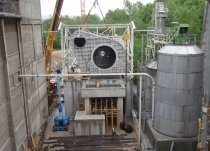
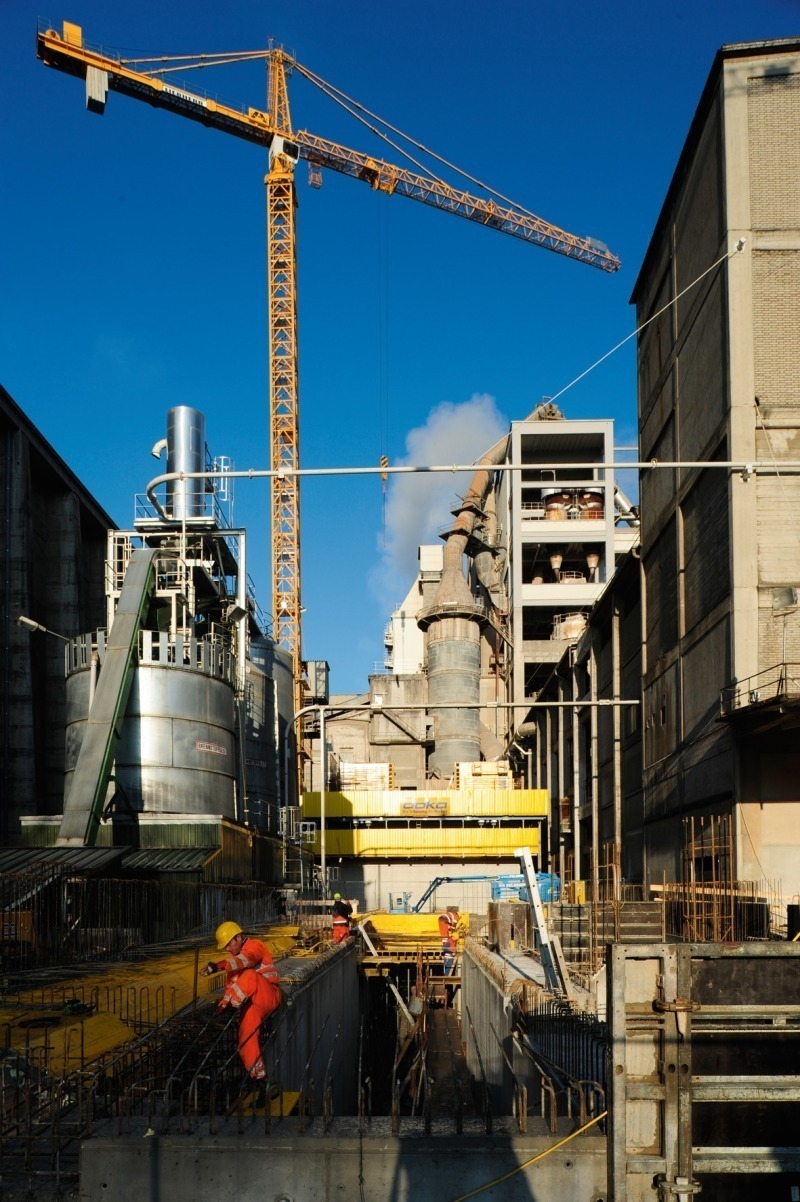
Klaus Czepl: We are currently carrying out the final planning work for the fuel logistics in the calciner. The foundations have been completed and the concrete work for the preheater tower (Fig. 3) is progressing well because of the good weather at present. We expect this work to be concluded by March 2010. Parallel to that, the construction of the cooler building is also in progress and should be finished by the end of 2009. As from April 2010, the erection work for the preheater and then the installation of refractory lining will be commenced. So far, we have fortunately not been confronted by any unforeseen challenges, so that we are within our planned framework for both the schedule and the budget.
Klaus Czepl: We are now comparing the quotations for steel construction and erection. The refractory work has already been contracted and the bag filter for the cooler has just been ordered. The next job is to start erection of the clinker cooler. As from March 2010 the remaining construction work will be commenced, including the kiln foundations and construction of the basement and its ceiling. May 2010 will see the final shutdown of rotary kiln 1. The existent rotary kiln shell will be dismantled and refurbished. As from September, the shell will be reused in the new production line as rotary kiln 3.

Überschrift Bezahlschranke (EN)
tab ZKG KOMBI EN
This is a trial offer for programming testing only. It does not entitle you to a valid subscription and is intended purely for testing purposes. Please do not follow this process.
This is a trial offer for programming testing only. It does not entitle you to a valid subscription and is intended purely for testing purposes. Please do not follow this process.
tab ZKG KOMBI Study test
This is a trial offer for programming testing only. It does not entitle you to a valid subscription and is intended purely for testing purposes. Please do not follow this process.
This is a trial offer for programming testing only. It does not entitle you to a valid subscription and is intended purely for testing purposes. Please do not follow this process.